Choosing the right Low Voltage Power Supply in 2026 requires more than comparing prices and wattage. Global buyers must match voltage, current, installation space, climate, and equipment sensitivity. A compact 12V adapter may suit a retail sensor, while a 24V DIN rail unit may better serve factory controls. For LED systems, a constant-voltage driver can prevent flicker and premature failure. Small details matter.
The market includes wall-mounted adapters, enclosed switching supplies, open-frame models, DIN rail supplies, industrial converters, and battery-backed units. Each type brings practical strengths and limitations. Enclosed supplies offer protection in dusty workshops. Open-frame designs save space but need safer integration. DIN rail models simplify cabinet installation. High-efficiency units can reduce heat around sensitive electronics, especially in warm shipping containers or crowded control panels.
Reliable selection begins with the load profile, not the product photograph. Check start-up current, continuous demand, standby consumption, polarity, connector type, and required protection features. Confirm applicable regional requirements and documentation, including testing records from recognized laboratories where relevant. A supplier’s datasheet should show operating temperature, overload behavior, isolation details, and warranty terms. Marketing language is not enough.
No single type wins.
In practice, buyers sometimes choose excess capacity without considering inrush current or ventilation. That decision may appear safe, yet it can increase cost and installation problems. Another overlooked issue is serviceability. Replacing a supply in a remote warehouse can take weeks. This guide compares major Low Voltage Power Supply types for international purchasing, emphasizing dependable performance, transparent specifications, and realistic application conditions. The best choice is rarely the cheapest unit. It is the one that remains stable after shipment, installation, and daily use.
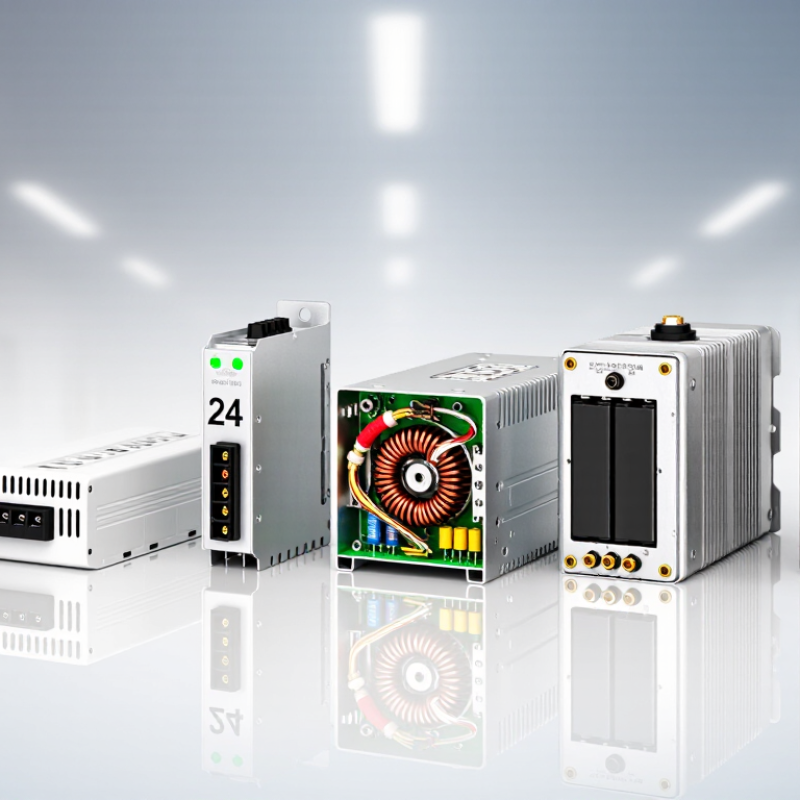
Low voltage power supplies convert mains electricity into safer output levels for equipment, lighting, controls, and communication devices. “Low voltage” is not defined identically in every market. Extra-low-voltage limits, insulation rules, and installation practices can differ by country. Buyers should confirm the destination requirements before selecting an AC/DC adapter, enclosed supply, DIN-rail unit, or board-level converter.
IEC 62368-1 commonly guides safety for information and communication equipment. IEC 61558 standards address many transformers and power supply units. Household appliances may follow different requirements. A compliant design normally needs reinforced insulation, overvoltage protection, short-circuit protection, and controlled temperature rise. Check the input range, output tolerance, leakage current, earthing method, and connector polarity. Small details matter. A label showing 24 V does not prove universal suitability.
Global compliance also involves electromagnetic compatibility, environmental restrictions, and regional approval procedures. Request current test reports from an accredited laboratory, not only a printed declaration. Confirm whether the report covers the exact model, input frequency, enclosure, and intended use. IP ratings can help in dusty or damp locations, but they do not replace electrical safety testing. In practical purchasing reviews, teams sometimes trust familiar specifications too quickly. That is risky. Standards are updated, translations can mislead, and a supply accepted in one market may require additional evaluation elsewhere. Leave space for engineering review.
Main Types of Low Voltage Power Supplies in 2026
Low voltage power supplies mainly include linear, switching, regulated, and unregulated designs. Each type suits different operating conditions. Linear supplies provide clean, stable output with very low electrical noise. They work well for audio equipment, sensors, and laboratory instruments. However, they are larger, heavier, and less efficient than switching models.
Switching power supplies use high-frequency conversion to reduce size and energy loss. They support LED systems, industrial controls, networking equipment, and automation cabinets. Regulated versions maintain output voltage when input or load conditions change. Unregulated versions cost less but may produce voltage variation. That difference matters when powering sensitive electronics.
Enclosed, open-frame, and DIN-rail formats are common installation choices. Enclosed units suit machinery and exposed factory areas. Open-frame models fit inside protected equipment housings. DIN-rail supplies install neatly inside control panels. Check input range, output tolerance, ripple, overload protection, cooling, and terminal spacing before purchase. Global buyers should also verify applicable safety and electromagnetic compatibility requirements in the destination market. In practical evaluations, heat buildup often causes more trouble than advertised efficiency figures. No type is perfect. A compact switching unit may create unwanted noise, while a linear model may waste energy as heat. Selection should match the load, enclosure, environment, and maintenance plan, not only the purchase price.
For global buyers, low-voltage power supplies should be compared by application, not headline wattage. Efficiency matters across the entire load range. Check performance at 10%, 50%, and 100% load. A unit that performs well only at full load may waste energy in sensors and control panels.
Heat is useful evidence. Measure the case temperature after two hours of operation. Also verify standby consumption and the regional input range. Real installations rarely match catalog conditions.
Output quality includes voltage tolerance, ripple, and transient response. A 24 V control circuit can misbehave when voltage dips during motor startup. Request test data under realistic loads.
Protection should include overload, short circuit, overvoltage, and overtemperature control. Automatic recovery is convenient, but repeated cycling may stress components.
Reliability claims require context. Review temperature range, humidity, vibration, capacitor life, and burn-in procedures. MTBF is not a promise. It depends on assumptions.
Verify safety and EMC documents are current and model-specific. My own comparison mistake was trusting a high efficiency figure without checking heat at partial load.
Tips: Compare like with like. Use identical input, load, and ambient conditions. Leave 20–30% capacity headroom. Log voltage and temperature during testing. Ask for sample-based verification, not only a datasheet. Low price can hide weak protection.
Global buyers should match low voltage power supplies to local voltage and frequency, not only output ratings. IEC 60038 lists 230 V and 50 Hz as common nominal values across Europe, Asia, Africa, and Australia. North American systems commonly use 120 V and 60 Hz. Japan remains unusual, using 100 V with 50 or 60 Hz. Check the installation site.
Small linear supplies suit low-noise laboratory equipment. Switched-mode supplies offer better efficiency and lower weight. DIN-rail models fit control cabinets, while enclosed supplies tolerate harsher industrial conditions. The IEA Electricity 2024 report projects global electricity demand growth of about 3.4% annually through 2026. Efficiency matters more as equipment fleets expand. DOE external power-supply rules also set minimum active-mode and no-load efficiency requirements in the United States.
Certification must match the destination. EU shipments generally require Low Voltage Directive compliance for 50–1,000 V AC or 75–1,500 V DC equipment. IEC 62368-1 is widely used for audio, video, information, and communication technology supplies. North American procurement often requests evaluation against equivalent safety requirements. CE marking is not a universal safety certificate. It is a manufacturer’s conformity declaration. That distinction is often missed.
Frequency conversion deserves attention. Some supplies accept 50/60 Hz automatically; others need a selector or transformer. Confirm input range, plug configuration, grounding, EMC limits, and local approval records. A global compatibility table helps, but it can still fail on site. Regional wiring practices vary. Test the exact model before volume purchasing.
Voltage, frequency, certification, and regional compatibility
External adapters are suitable for consumer and office equipment. Enclosed and DIN-rail supplies are commonly used in industrial control cabinets. Desktop adapters are useful where a protected, user-accessible enclosure is required.
A universal-input model typically supports 100–240 V AC and 50/60 Hz, reducing regional configuration issues. Japan commonly uses 100 V, while Brazil has both 127 V and 220 V systems.
Common compliance references include IEC 62368-1 for many information and audio/video products, IEC 61558 for relevant transformers and power supply units, CE requirements for the European market, and UKCA requirements where applicable. Local approval requirements should be verified before shipment.
Chart values show representative nominal single-phase mains voltage and frequency. Japan operates at 50 Hz or 60 Hz depending on the region; Brazil uses both 127 V and 220 V systems and is represented here by 127 V.
Choosing a low voltage power supply starts with the load, not the price. Linear supplies produce clean, low-noise output for sensors, audio circuits, and laboratory instruments. They run quietly but may waste energy as heat. Switch-mode supplies suit control panels, displays, and communications equipment. They are smaller and more efficient, although sensitive circuits may require additional filtering.
Match the output style to the application. Constant-voltage supplies work well with LED modules and many control devices. Constant-current models protect LEDs and other regulated loads from excessive current. Motors and solenoids need extra attention because their startup current can exceed the label rating. A supply that works on a bench may fail inside a warm cabinet. Allow headroom.
Global purchasing adds practical risks. Select an input range that covers local mains conditions, such as 100–240 V AC, when appropriate. Check output tolerance, ripple, overload protection, cooling, and terminal spacing. DIN-rail models fit industrial cabinets, while sealed units suit dusty or damp locations. Verify the enclosure rating for the actual environment, not an imagined one.
In field evaluations, installers often overlook cable voltage drop. A long, thin cable can deliver less voltage at the device. Measure the load at its terminals. Review test reports and required market approvals before ordering. I still find thermal calculations underestimated when airflow changes after installation. Small details matter.
It converts mains electricity into safer output levels for equipment, lighting, controls, and communication devices. Output limits vary by market. Check destination requirements.
Look for reinforced insulation, overvoltage protection, short-circuit protection, and controlled temperature rise. Also check leakage current, earthing, polarity, and connector design.
No. A 24-volt label does not prove universal compatibility. Confirm input range, local rules, insulation, connectors, and the intended installation environment.
Linear supplies offer very clean output and low noise. Switching supplies are smaller and more efficient. Regulated models hold voltage better. Unregulated models may vary.
DIN-rail units fit neatly inside control panels. Enclosed units suit exposed industrial areas. Open-frame models need protection inside a suitable equipment housing.
Measure efficiency at 10%, 50%, and 100% load. Record standby consumption and input conditions. A unit may perform well at full load but waste energy at light load.
Run the supply for two hours, then measure case temperature. Check ventilation, spacing, and ambient temperature. Heat buildup can matter more than a headline efficiency figure.
Compare voltage tolerance, ripple, transient response, and overload behavior. Test realistic loads, such as motor startup. Small voltage dips can disrupt control circuits.
Review temperature range, humidity, vibration, capacitor life, and burn-in procedures. Reliability figures depend on assumptions. They are not promises.
Request current safety and electromagnetic compatibility reports from an accredited laboratory. Confirm the exact model, enclosure, input frequency, and intended use. Printed declarations may be incomplete.
This guide explains the essential role of a Low Voltage Power Supply in modern electrical and electronic systems, beginning with basic operating principles, safe installation practices, and the importance of meeting recognized global safety standards. It reviews the main power supply types expected in 2026, including linear, switching, enclosed, open-frame, DIN-rail, desktop, and application-specific designs. Readers will learn how to compare efficiency, voltage regulation, output stability, thermal performance, protection features, service life, and overall reliability when evaluating different solutions.
The article also highlights the importance of checking input voltage, frequency, environmental conditions, plug and wiring requirements, and regional certification compatibility before purchasing. Practical guidance is provided for selecting suitable power supplies for industrial controls, automation equipment, lighting, communications, consumer electronics, and other applications. By matching electrical specifications, protection requirements, installation conditions, and compliance needs, global buyers can make safer, more efficient, and more dependable purchasing decisions.

Wemax Power