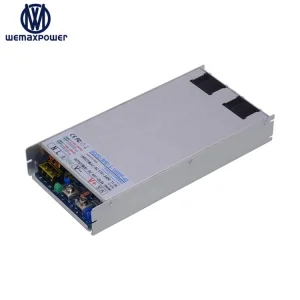
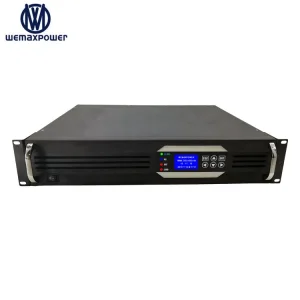
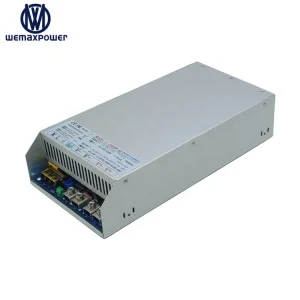
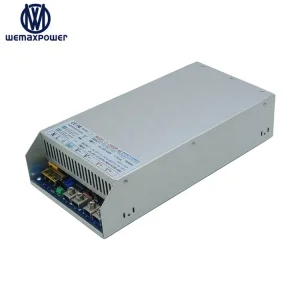
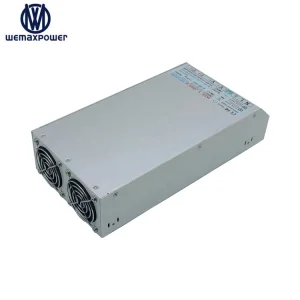
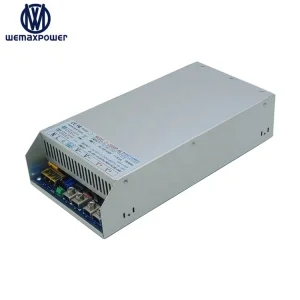
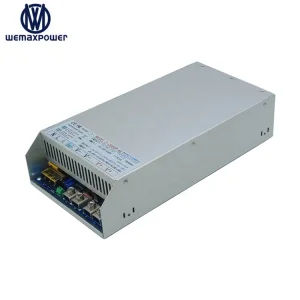
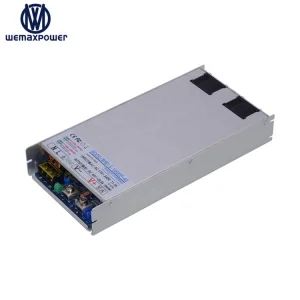
Explore our high-performance 1KW to 2KW switching industrial power supplies equipped with advanced active power factor correction circuitry.
Years OEM/ODM Expertise
Power Factor Rating
Full Load Aging Tested
Peak Energy Efficiency
Power Factor Correction (PFC) is a critical standard in global power management. As heavy machinery, telecommunication switches, and electric vehicles draw massive amounts of electrical current, they create non-linear loads. Without mitigation, these loads introduce high harmonics and phase shifts between current and voltage, resulting in wasted energy and severe strain on electrical grids.
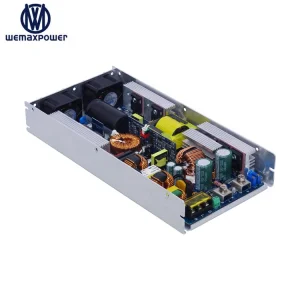
Active PFC circuits utilize advanced silicon controllers and boost converters to actively shape the input current waveform. This process aligns the current with the input voltage, pushing the Power Factor to a near-perfect 0.99. In comparison to passive configurations, Active PFC power supplies support universal AC input ranges (100-240VAC), operate with substantially lower Total Harmonic Distortion (THD), and prevent local grid instability.
Supports fluctuations from 100VAC to 240VAC without sacrificing performance.
Meets strict international regulations restricting harmonic current emissions.

A technical breakdown comparing power management topologies and their industrial implications.
| Performance Metrics | Active Power Factor Correction (PFC) | Passive Power Factor Correction | Non-Corrected Power Supply |
|---|---|---|---|
| Power Factor (PF) Value | 0.97 to >0.99 (Optimal) | 0.70 to 0.85 (Moderate) | 0.40 to 0.60 (Poor) |
| Harmonic Distortion (THD) | < 5% (Compliant with EN 61000-3-2) | 30% to 50% (High distortion) | > 80% (Extreme grid contamination) |
| Input Voltage Range | Universal Auto-sensing (100-240VAC) | Narrow ranges, manually switched | Single input, highly sensitive |
| Weight & Physical Footprint | Lightweight, compact high frequency | Heavy due to massive inductors | Standard, but requires larger cabling |
| Overall Efficiency | Typically 89% to 92% | 75% to 82% | 65% to 75% |
Leveraging Chinese manufacturing infrastructure, deep R&D capacity, and agile global shipping networks.
Located in Shenzhen, the heart of the global electronics supply chain, Wemaxpower sources tier-1 semiconductor components directly, lowering unit costs while ensuring continuous production.
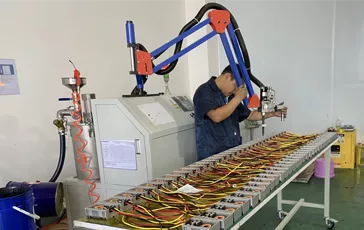
Our operational framework ensures zero defects. Every unit undergoes rigorous evaluation before delivery, validating electrical tolerances under extreme conditions.
We serve industrial projects across North America, Europe, Southeast Asia, and South America. All export shipments are packaged with maritime-grade ESD-shielding.
Our commitment as a top-tier exporter rests on an uncompromising testing protocol that guarantees durability.
Incoming inspection of all primary capacitors, MOSFETs, copper chokes, and control microchips. Components failing nominal specs are instantly rejected.
Testing PCBs post-SMT assembly. Functional trace analysis, soldering joint inspection, and initial switching cycle evaluation.
Post-assembly system check. Over-voltage protection (OVP), over-current protection (OCP), short-circuit protection (SCP), and efficiency ratios verification.
The ultimate endurance run. All switching units are subjected to continuous full-load operation under elevated ambient temperatures to eliminate premature component failures.



Navigating varying standards across different markets can be challenging for global procurement managers. As a dedicated global exporter, Wemaxpower ensures that our power modules carry necessary certifications for target regions, such as CE (Conformité Européenne), FCC Class B, and RoHS. By design, our active PFC models meet the stringent IEC/EN 61000-3-2 limits, preventing industrial operators from facing penalties regarding electrical line pollution.
Additionally, we offer localized OEM/ODM product adjustments. This includes customizing wire harnesses, implementing special chassis shapes for tight machinery enclosures, or programming tailored analog external control signals (0-5V or 0-10V) to adjust output voltages remotely. This ensures seamless integration with your existing industrial controllers.
Programmable parameters via external analog control loops, optimal for industrial automation.
Built-in smart fans adjust speed dynamically based on heat generation, maximizing operational lifetimes.
Demanding environments where high power factor, stability, and clean output are critical.
Precision servo motors and PLC networks require ultra-stable DC rails. Active PFC power supplies prevent grid voltage drops caused by motor starts, avoiding expensive downtime.
With thousands of servers drawing energy simultaneously, telecommunications infrastructures mandate Active PFC. High PF reduces energy costs and minimizes system heat buildup in data rooms.
Charging high-capacity lithium battery packs for electric vehicles or light scooters demands continuous, high-wattage current. Active PFC structures prevent excessive grid draw and reduce charging times.
The power electronics landscape is transitioning towards higher power densities and intelligent architectures. Wide Bandgap (WBG) semiconductors, such as Gallium Nitride (GaN) and Silicon Carbide (SiC), are replacing traditional silicon transistors in boost converter stages. These modern materials support much higher switching frequencies, decreasing the physical size of inductors and capacitors by up to 40% while pushing system efficiencies beyond 95%.
Additionally, modern supply chains are incorporating IoT capabilities into industrial power supplies. In the near future, devices will communicate real-time diagnostic metrics, operating temperatures, and power factor status directly to SCADA control systems, allowing maintenance crews to address issues before an actual failure occurs.
Improves thermal thresholds, slashes system size, and minimizes switching losses.
Replaces old analog control ICs with DSPs (Digital Signal Processors) for faster transient response.

Frequently asked technical and commercial questions regarding Shenzhen Wemaxpower exports.
Active PFC employs a boost converter circuit that actively aligns current and voltage waves to maintain a power factor >0.99, adjusting automatically to universal AC inputs (100-240VAC). Passive PFC uses heavy, bulky components to filter harmonics but only achieves a power factor of around 0.70-0.80 and is restricted to fixed input voltages. Active PFC operates cooler, uses less space, and conforms to international regulations like EN 61000-3-2.
We deploy a strict 4-step quality assurance pipeline. All raw components undergo initial testing. The PCB is verified post-assembly (semi-finished stage). Every finished module is subjected to functional test routines. Finally, 100% of all units are placed in a thermal burn-in chamber to simulate extended high-load operations, effectively eliminating early failures.
Yes. Select models support analog control voltage loops (0-5VDC or 0-10VDC). This allows external controllers (like PLCs or microcontrollers) to adjust the output voltage or current limits on the fly. This function is ideal for industrial testing, battery charging systems, and automated testing setups.
Wemaxpower designs feature multiple protection layers: Over-Voltage Protection (OVP), Over-Current Protection (OCP), Over-Temperature Protection (OTP), and Short-Circuit Protection (SCP). If an electrical anomaly occurs, the unit safely shuts down or enters a hiccup cycle until the fault is cleared, protecting both the supply and your equipment.
Our core product lines meet international compliance standards including CE, RoHS, and FCC. These certifications ensure that the EMI/EMC parameters and harmonic emissions comply with regulations for entry into markets such as Europe and North America.
Explore our complete catalog of industrial converters, battery chargers, pure sine wave inverters, and variable DC supplies.

 Wemax Power