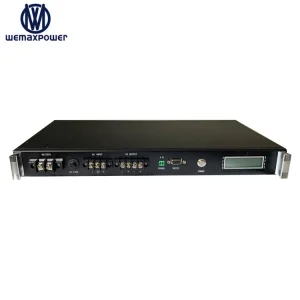
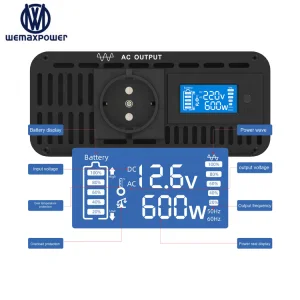
High-performance 19-inch rackmount designs and pure sine wave engineering for stable DC-to-AC conversion.
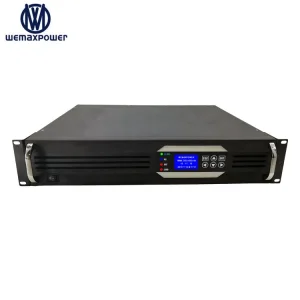
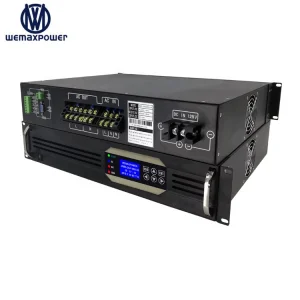
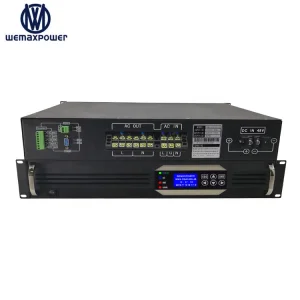
Executive Abstract: Modern telecommunications infrastructure demands continuous, high-efficiency power networks. In rural base stations, micro-datacenters, and industrial switching stations, DC battery back-up banks (typically operating at 48Vdc, 110Vdc, or 125Vdc) must be converted into high-stability, low-noise AC power (120Vac or 220Vac) to run mission-critical computing, transmission, and monitoring gear. This white paper covers technical paradigms, site localized engineering requirements, and supply-chain mechanisms for global procurement optimization.
The evolution of 5G, micro-edge data hubs, and remote transceiver operations has shifted standard power requirements. Unlike typical commercial power supplies, telecommunications-grade equipment relies on dual paths: direct current (DC) backup modules combined with dynamic utility-side alternating current (AC). Telecom inverters are the vital link that ensures seamless power continuity, filtering out harmonic distortion and voltage fluctuations that damage sensitive digital processors.
A critical factor is the transition from high-voltage DC battery plants (like 110Vdc or 125Vdc arrays) to stable utility AC. Our line of pure sine wave inverters has been designed to mitigate critical power risks. Featuring a power factor profile optimized up to 0.8, these inverters deliver clean sine wave output with total harmonic distortion (THD) under 3%, maintaining signal integrity across fiber-optic transceivers, network gateways, and signal repeaters.
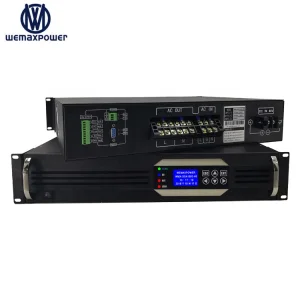
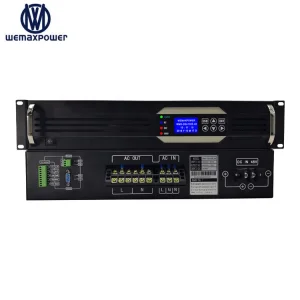
To choose the right power architecture, engineers must analyze the performance profiles of High-Frequency vs. Low-Frequency topologies. Our 19-inch 2U rackmount models utilize high-frequency switching technology to optimize size, heat dissipation, and dynamic line regulation.
High-frequency conversion uses high-speed semiconductor switches (IGBTs and MOSFETs) operating at tens of kilohertz (kHz). This significantly reduces the size of internal magnetic components (transformers and inductors), fitting high-power capacities (up to 6KVA) into space-saving 2U heights. This technology allows for very fast transient response times to load steps, making it ideal for rack-level computing nodes.
For telecom networks, isolating the DC battery circuit from the AC load circuit is critical. This galvanic isolation prevents AC feedback noise from degrading DC backup lines, protecting telecommunications devices from cross-talk and transient surges. Additionally, it improves system safety, preventing fault voltages from spreading through the entire infrastructure.
| Parameter / Feature | High-Frequency (Wemaxpower) | Conventional Low-Frequency | |
|---|---|---|---|
| Chassis Form Factor | 19-inch 2U Rackmount (Ultra-compact) | Heavy Floor Cabinets (Bulky) | Modular Scalability |
| Weight | Optimized (< 15 kg for 5KVA) | Heavy (> 50 kg for 5KVA) | Easy single-operator maintenance |
| Transient Response | < 2 ms (Dynamic correction) | 20 - 50 ms | Crucial for high-speed routers |
| THD (Total Harmonic Dist.) | < 3% (Pure Sine Wave) | 5% to 8% (Modified/Quasi) | Protects sensitive transceiver hardware |
How our telecom inverters are engineered for extreme field environments worldwide.
In areas with unstable grids, such as remote regions of Africa, South America, and Central Asia, telecom towers run on hybrid solar-diesel-battery setups. Frequent generator cycles generate severe voltage surges and frequency drift. Our 48Vdc to 220Vac telecom inverters isolate these fluctuations, delivering clean, stable power to critical transceivers and microwave links.
Operating equipment at high altitudes (e.g., >3,000 meters in the Andes or Central Asia) presents challenges due to thin air and reduced cooling efficiency. Our inverters feature smart thermal derating controls and larger clearances to prevent electrical arcing, ensuring continuous 24/7 operation in harsh mountain climates.
Utility and railway dispatch rooms run on standard 110Vdc and 125Vdc control battery banks. Our 110Vdc/125Vdc to 220Vac pure sine wave inverters convert this DC power to run remote terminal units (RTUs), emergency lighting, and signaling systems, protecting against grid outages.
Salt air, high humidity, and water ingress damage standard electronics. Our outdoor and marine-grade converters feature conformal-coated PCBs, anti-corrosion chassis, and IP-rated enclosures, ensuring reliable performance in harsh coastal areas.
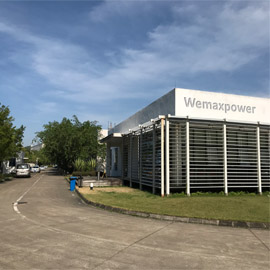
Shenzhen Wemaxpower Technology Co., Ltd. builds reliable products supported by an integrated supply chain.
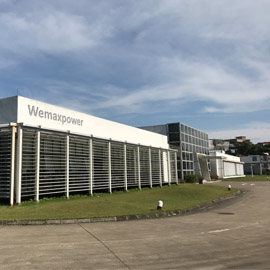
Based in Shenzhen, the global hub for power electronics, Shenzhen Wemaxpower Technology Co., Ltd. leverages over 7 years of manufacturing experience. We design and build programmable DC power supplies, high-efficiency DC-DC converters, and specialized telecom inverters for global markets.
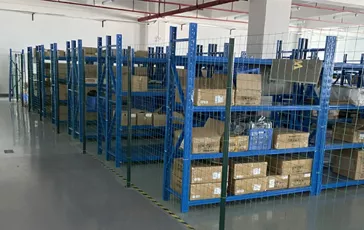
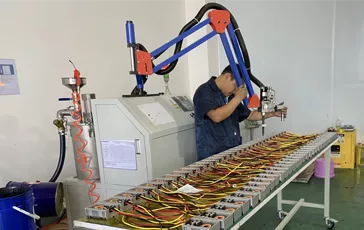
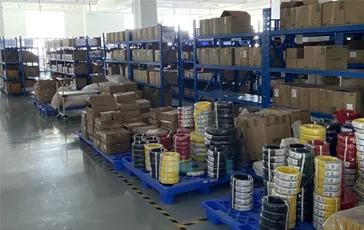
Operating within the Pearl River Delta supply chain allows us to secure premium raw components, execute rapid engineering changes, and reduce shipping lead times. Every system undergoes a strict 4-step Quality Control (QC) process to guarantee reliable field performance:

Key design trends that will shape the next generation of industrial power conversion.
The industry is moving from standard Silicon MOSFETs to Wide Bandgap (WBG) semiconductors like SiC and GaN. These materials enable higher switching frequencies with lower thermal losses. This transition will allow inverters to operate at up to 98% efficiency, reducing cooling requirements and fitting more power capacity into 1U rack dimensions.
Modern power management systems require remote, real-time diagnostics. Future models will feature advanced digital signal processors (DSP) that track voltage performance, dynamic temperature profiles, and component degradation, reporting this data via SNMP or Modbus protocols to centralized NOC dashboards.
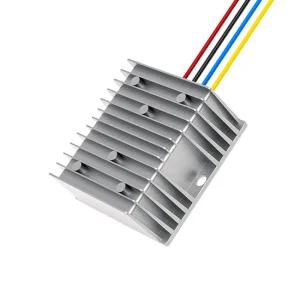
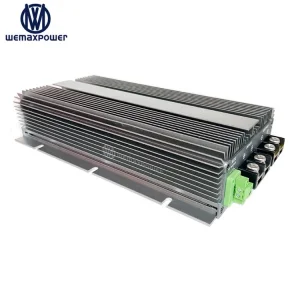
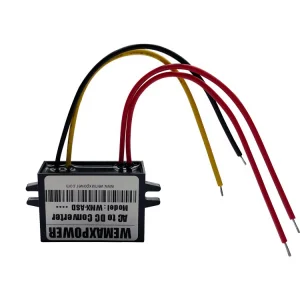
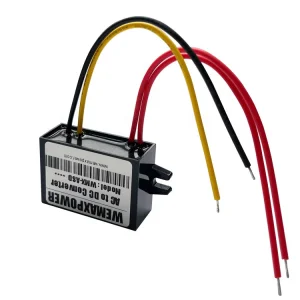
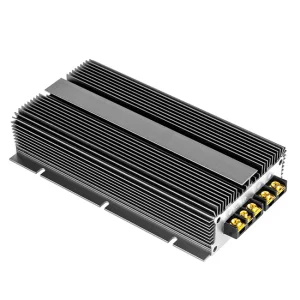
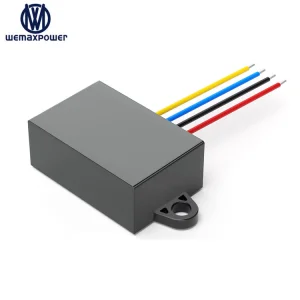
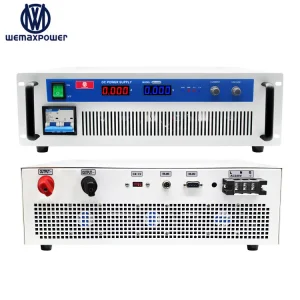
Explore our industrial-grade DC-DC converters, buck modules, and high-power laboratory power supplies.
Reliable support and engineering integration services for key international markets.
Deploying telecom infrastructure globally requires strict compliance with international standards. Our systems are built and tested to meet essential regulatory requirements, helping our customers avoid field issues and installation delays:
We provide dedicated technical support for complex deployments, including customized input/output voltage configurations, bespoke rack configurations, and direct engineering consultations during project design stages.
Common technical questions about telecom inverters and power conversion systems.
 Wemax Power