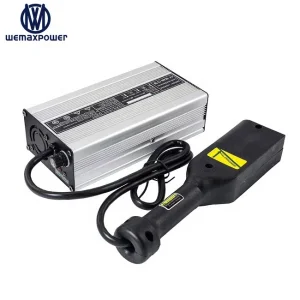
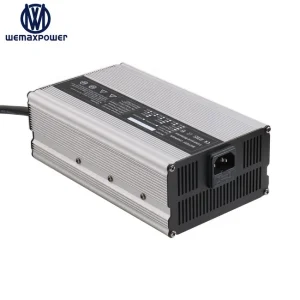
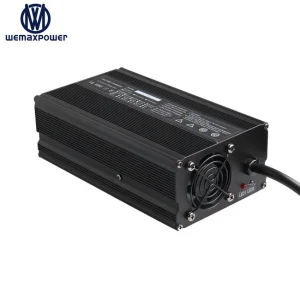
Explore our high-efficiency, multi-chemistry compatible battery chargers engineered for commercial mobility, golf carts, rickshaws, and material handling vehicles.
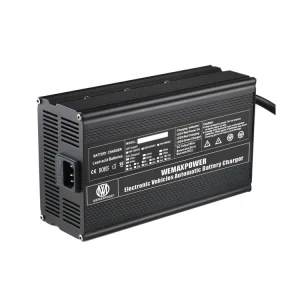
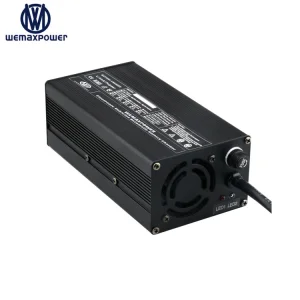
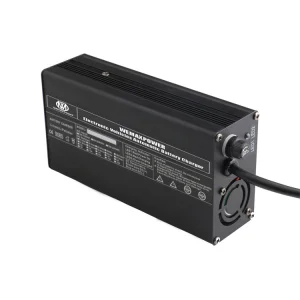
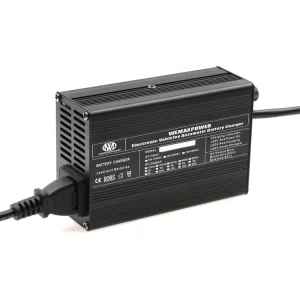
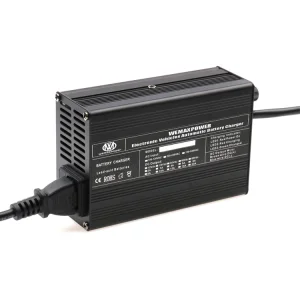
Established as a premier technological pioneer in high-power conversion solutions, Shenzhen Wemaxpower Technology Co., Ltd. has accumulated over 7 years of deep manufacturer expertise. We design, engineer, and mass-manufacture high-reliability charging systems that power global micro-mobility networks, commercial warehousing operations, and specialized utility vehicles.
Our product portfolio ranges from programmable DC power supplies and custom DC-DC converters to cutting-edge smart battery chargers. By deploying high-efficiency topologies and implementing intelligent MCU-controlled logic, our chargers maximize the lifecycle and safety profiles of modern battery chemistries.
Our engineering teams utilize advanced circuit simulations and state-of-the-art power electronics testing instrumentation to develop highly efficient AC-to-DC profiles, ensuring minimal energy dissipation during charging operations.
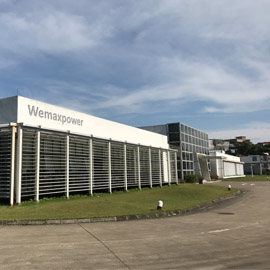
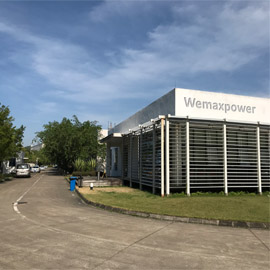
Every industrial unit undergoes strict validation protocols to comply with global commercial standards.
Incoming inspection of semiconductors, magnetic components, and enclosures using specialized automated parameter analyzers.
In-circuit testing (ICT) of PCB assemblies to verify voltage regulators, PWM controllers, and gate drivers prior to final potting or assembly.
Full functional verification under dynamic input voltage swings and transient load adjustments to check overall efficiency and ripples.
100% of manufactured units are placed into specialized burn-in chambers under full thermodynamic loading conditions for extended cycles.
The factory team will deliver you quality-guaranteed orders
B2B procurement professionals require more than standard off-the-shelf specs. We customize and supply chargers that meet the rigorous operational criteria of industrial buyers.
Enterprise procurement demands absolute safety. Our battery chargers incorporate short-circuit, over-current, over-voltage, reverse-polarity, and thermal runaway protection mechanisms to safeguard high-value fleet assets.
Industrial applications frequently require scalable charging rates. By developing modular topologies, Wemaxpower allows for standard power modules to stack, adjusting charge output from 10A up to 60A and beyond.
For operations extending across the US, EU, and UK, local grid compatibility is critical. Our chargers support universal input voltage ranges (110VAC/220VAC) with integrated active power factor correction (PFC).
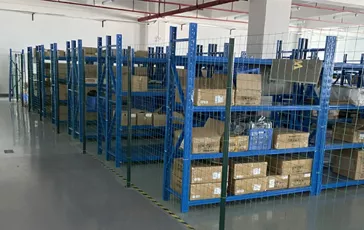
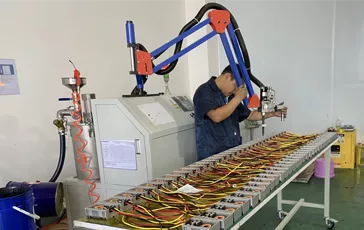
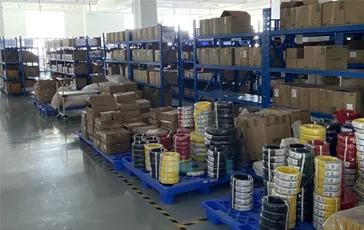
Wemaxpower tailors advanced DC conversion architectures to support massive electrification trends across commercial and municipal sectors.
Electric bikes, scooters, and light vehicles operate under heavy duty cycles. We provide high-reliability 24V, 36V, 48V, and 60V chargers featuring IP65 enclosures and dynamic heat dissipation profiles. These units withstand daily industrial usage while delivering rapid top-offs and trickle charge maintenance.
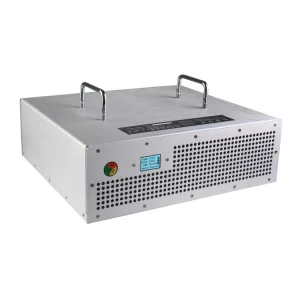
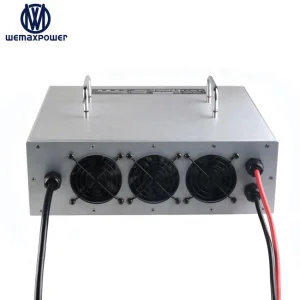
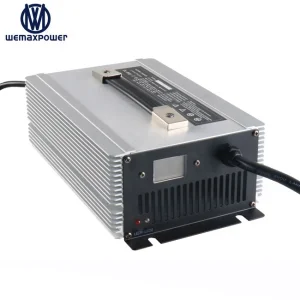
Electric rickshaws, golf carts, and small sightseeing patrol cars are central to modern urban and hospitality logistics. Our high-power chargers, such as the 48V 60A and 72V 40A models, feature integrated LCD displays to show real-time diagnostics, charge states, and system health status.
Forklifts and floor scrubbers cannot afford unexpected downtime. Wemaxpower's automatic chargers optimize battery replenishment, implementing automated shutoffs and float transitions to ensure forklifts are ready for multi-shift industrial routines.
From automated electric weeders and lawn mowers to heavy-duty powered wheelchairs, specialty machinery requires intelligent power curves. Our multi-chemistry chargers sense inner resistance and cell state to prevent over-charging on variable capacity loads.
Modern battery chemistries exhibit widely different absorption limits, thermal characteristics, and nominal cell voltages. Standard unregulated chargers can compromise battery safety. Our modern charger portfolio utilizes complex microcontroller processing to deploy highly refined charge curves. For example, LiFePO4 cells require stable CV threshold limits to prevent cathode degradation, while Lead-Acid batteries require periodic desulfation cycles. Our chargers dynamically adjust current curves to suit the connected pack's precise requirements.
By implementing a highly structured 3-stage system—Constant Current (CC), Constant Voltage (CV), and Float/Trickle—our systems optimize charge times while keeping thermal stress minimal. Under CC mode, the maximum rated current is safely delivered to the pack until the threshold voltage is reached. At CV mode, current delivery tapers off as the battery capacity tops out, minimizing cell stress. The final Float stage provides a small compensating current to offset self-discharge, keeping fleet equipment ready for operation at a moment's notice.
The charging landscape is shifting toward interconnected control and localized smart-grid integration. Wemaxpower's upcoming R&D path focuses on embedded CAN-bus and RS485 communication protocols. This allows our chargers to interface directly with vehicle battery management systems (BMS), exchanging cell-level telemetry data. Fleet operators can monitor charging efficiency, forecast battery life, and regulate utility loads to avoid peak grid charges.
Operating across international distribution zones requires adaptable electrical safety configurations and robust physical constructions.
Industrial charging operations require hardware designed to handle harsh commercial environments. Our aluminum alloy-enclosed battery chargers feature high structural rigidity and are engineered for optimal thermal convection. This eliminates the need for noisy, dust-prone cooling fans in demanding warehouse environments.
Additionally, our global products are equipped with versatile plug configurations, including standard EU, US, and UK power cords. They also feature heavy-duty output connectors such as Anderson plugs, XLR interfaces, and classic Crowfoot connectors for systems like Club Car and EZ-GO golf carts. By matching localized grid dynamics and connector preferences, Wemaxpower simplifies deployment for fleet managers worldwide.
Wemaxpower guarantees product safety, international standards compliance, and reliable logistics support for all overseas shipments.
Our electrical power units align with global electromagnetic compatibility (EMC) and low-voltage directives, reducing noise feedback back into standard electrical circuits.
We provide remote technical engineering support to help clients configure charge rates, calibrate multi-chemistry voltages, and diagnose system faults on site.
Every OEM/ODM production run is accompanied by comprehensive operation guides, technical schematic drawings, and validation reports for your records.
Get answers to common technical queries about industrial battery charger selection, safety, and compatibility.
A: Some chargers feature selectable profiles, but standard chargers should not be used interchangeably without proper adjustments. Lead-Acid profiles often include desulfation and higher equalization voltages that can damage a Lithium BMS. Our specialized multi-protection chargers offer distinct voltage configurations (e.g., 14.6V for LiFePO4, 14.7V for Gel) to ensure safe charging for each chemistry.
A: Aluminum alloy enclosures provide superior thermal conductivity, allowing the housing to act as a heat sink. This enables efficient fanless or low-noise fan-assisted operation in harsh, dust-filled industrial environments. Additionally, aluminum offers excellent electromagnetic interference (EMI) shielding and high structural durability for busy industrial sites.
A: The 3-stage process ensures efficient charging while protecting the battery. Constant Current (CC) delivers fast bulk charging up to 80% capacity. Constant Voltage (CV) slows down charging to prevent overheating as the battery tops off. The Float/Trickle stage maintains the battery at full charge without over-charging it, which is ideal for vehicles left connected overnight.
A: Global grid inputs vary, with the US commonly using 110VAC/60Hz and the EU/UK using 220-240VAC/50Hz. Wemaxpower designs chargers with wide input tolerances or dedicated dual-voltage compatibility, allowing seamless integration across various international electrical grids.
A: Our chargers are built with comprehensive safety features, including reverse-polarity protection, short-circuit shutdown, over-voltage/over-current limiting, and thermal sensor controls that lower output current if temperatures rise too high.
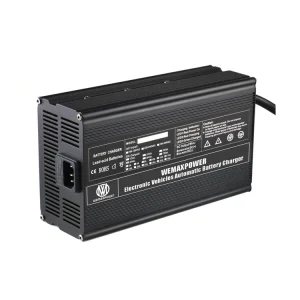
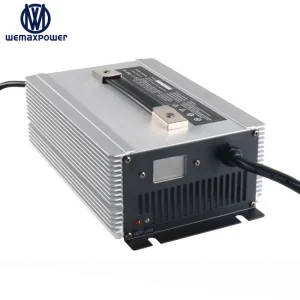
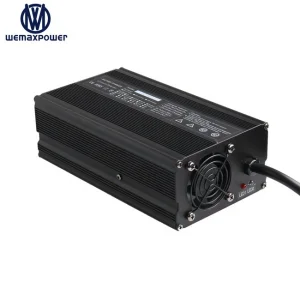
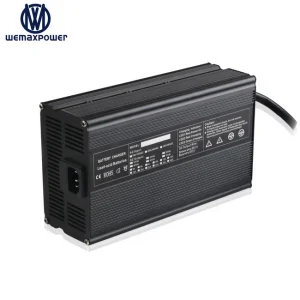
Complete industrial operations setup with our specialized, high-current wheelchair, sightseeing car, and e-rickshaw battery charger units.
 Wemax Power