Choosing a 2U DC Converter is rarely a simple matter of comparing prices and output ratings. Global buyers must examine input-voltage range, conversion efficiency, thermal behavior, isolation, certifications, and long-term service support. A compact unit may fit perfectly inside a rack, yet still create excessive heat under continuous load.
This guide examines seven 2U DC Converter options for different operating environments. Some suit telecom cabinets with unstable input power. Others support industrial controls, transport systems, or data-center backup architectures. We will compare practical details, including terminal design, cooling airflow, protection features, ripple performance, and installation depth. Small details matter.
As Vicor founder Patrizio Vinciarelli has said, “Power is the currency of the digital age.” That idea remains relevant when every watt affects uptime, operating cost, and system capacity. However, product selection should not depend on reputation alone. Datasheets can hide important limits, such as derating above a specific temperature or reduced output at high altitude.
Real-world experience also exposes compromises. A converter with excellent efficiency may offer fewer control interfaces. Another model may provide stronger protection but require more cabinet space. These differences deserve careful review. Unfortunately, there is no universally best choice.
The following comparison focuses on measurable performance and purchasing confidence. It considers regional availability, documentation quality, warranty terms, maintenance access, and manufacturer responsiveness. Buyers should verify current specifications with each supplier before ordering. Product lines change, and older reviews can mislead. This overview is a starting point, not a substitute for application testing.
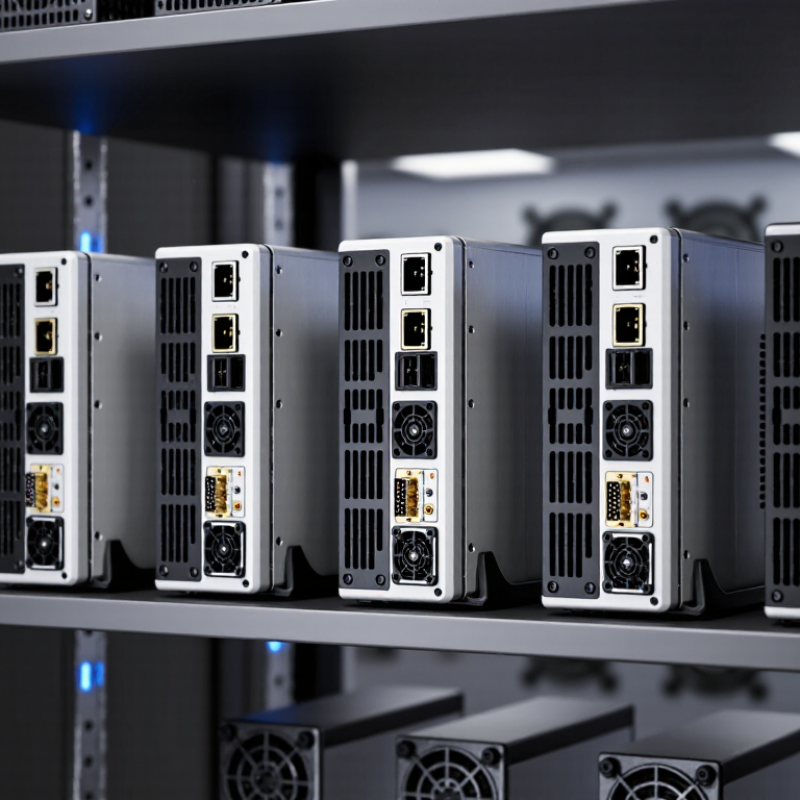
A 2U DC converter occupies 3.5 inches, or 88.9 millimeters, of vertical rack space. The “19-inch” description refers to mounting width, not converter depth. EIA-310 and IEC 60297 define common rack dimensions, but they do not guarantee universal fit. Check rail spacing, mounting holes, cable clearance, and rear airflow before purchasing. A compact enclosure can still block adjacent equipment.
Electrical performance matters just as much. Many telecom systems use wide DC input ranges, such as 36–75VDC, but the correct range depends on the site battery architecture. Selectors should compare rated output power, efficiency, isolation, transient response, and thermal derating. The Uptime Institute’s 2024 Global Data Center Survey reported an average PUE of about 1.56. That figure reinforces a practical point: every avoidable watt becomes heat somewhere. IEC 62368-1 supports equipment safety evaluation, while IEC 61000 standards address electromagnetic immunity and emissions. Regional conformity requirements still vary.
Tips: Measure the rack first. Leave service space behind the unit. Confirm polarity twice. Ask for efficiency curves at partial load, not only peak efficiency. Also request vibration, humidity, and altitude limits. A converter rated at full power may need derating above 40°C. That detail is easy to miss. It is also where many otherwise careful selections become unreliable. Testing one sample under real load is wiser than trusting a short specification sheet.
7 Best 2U DC Converters for Global Buyers?
For global rack deployments, input voltage is the first serious filter. A converter rated for 18–36 VDC suits compact telecom systems, transport equipment, and battery buses. It should tolerate wiring loss, startup surges, and a 24 V battery’s changing voltage. A 36–75 VDC model fits 48 V infrastructure, where a fully charged battery can approach the upper limit. Check the real operating range, not only the nominal voltage.
The seven strongest 2U converter choices usually include regulated isolated units, high-efficiency non-isolated designs, redundant modules, hot-swappable systems, ruggedized versions, wide-range converters, and models with intelligent monitoring. Wide-range designs can accept both 18–36 VDC and 36–75 VDC, reducing inventory for international projects. However, they may cost more and require careful thermal review. Wider is not always better.
Look closely at output stability, isolation rating, cooling, protection, and service access. A unit installed in a crowded 2U rack may face restricted airflow and continuous load. Measure clearance around fans. Review derating curves at 40°C and above. Some specifications appear impressive until testing begins. That matters. Include overvoltage, short-circuit, reverse-polarity, and input undervoltage protection. Remote alarms and accessible terminals also improve maintenance reliability. Yet field conditions can expose overlooked issues, especially grounding noise and cable impedance. A practical evaluation should include cold starts, brownouts, full-load operation, and several hours of thermal observation.
| Rank | Converter Configuration | Nominal DC Input | Input Operating Range | Typical Output | Rated Power | Peak Efficiency | Isolation | 2U Integration Profile | Protection and Application Fit |
|---|---|---|---|---|---|---|---|---|---|
| 1 | High-Power Wide-Range DC/DC Full-width 2U chassis module |
24/48 VDC | 18–75 VDC | 48 VDC regulated | 1,200 W | Up to 94% | 3,000 VDC input-to-output | 88.9 mm rack height; forced-air cooling; front-access terminals | Input undervoltage and overvoltage lockout, short-circuit protection, overtemperature shutdown; suitable for telecom, edge computing, and industrial rack systems |
| 2 | 24 VDC Industrial Converter High-reliability 2U rack module |
24 VDC | 18–36 VDC | 24 VDC regulated | 600 W | Up to 92% | 1,500 VDC input-to-output | 2U rack shelf or panel mounting; convection-assisted cooling | Reverse-polarity tolerance, current limiting, thermal protection, remote enable, and adjustable output trim; intended for vehicles, automation, and control cabinets |
| 3 | 48 VDC Telecom Converter Negative-ground system compatible |
48/54 VDC | 36–75 VDC | 48 VDC regulated | 800 W | Up to 93% | 2,250 VDC input-to-output | 2U front-to-back airflow; pluggable DC input and output connectors | Input transient suppression, output overvoltage protection, hot-swap support when paired with a suitable shelf; suitable for telecom and networking equipment |
| 4 | Wide-Range Multi-Output Converter Mixed-voltage equipment supply |
24/48 VDC | 18–75 VDC | 12 VDC and 5 VDC auxiliary outputs | 500 W | Up to 91% | 1,500 VDC input-to-output | Compact 2U subassembly; integrated fan with replaceable filter | Independent output current limiting, overtemperature shutdown, remote sense, and power-good signal; useful for routers, instrumentation, and embedded systems |
| 5 | High-Voltage-Isolation DC Converter Safety-focused industrial design |
24 VDC | 18–36 VDC | 48 VDC regulated | 400 W | Up to 90% | 3,000 VDC input-to-output | 2U enclosure; reinforced insulation layout; natural-convection option available | Input fuse coordination, output short-circuit recovery, surge suppression, and thermal derating; suited to battery systems, rail auxiliaries, and industrial instrumentation |
| 6 | 48 VDC Battery-Bus Converter Telecom and backup-power profile |
48 VDC | 36–60 VDC | 24 VDC regulated | 700 W | Up to 92% | 2,000 VDC input-to-output | 2U rack-mount chassis; temperature-controlled fan; status LEDs and alarm contacts | Battery low-voltage cutoff, input surge protection, current sharing option, and remote monitoring contacts; designed for DC distribution and backup-power systems |
| 7 | Compact Modular DC Converter Scalable 2U platform |
24/48 VDC | 18–75 VDC | 12, 24, or 48 VDC selectable by module | 300 W per module | Up to 89% | 1,500 VDC input-to-output | Two or more modules installed in a 2U shelf; front replacement and parallel operation | Hot-plug capability with compatible backplane, output current sharing, short-circuit protection, and fan-failure alarm; appropriate for distributed control and communications equipment |
7 Best 2U DC Converters for Global Buyers?
Seven Leading 2U DC Converters Compared by Efficiency, Power, and MTBF
A useful 2U comparison starts with operating conditions, not brochure wattage. The seven leading converters reviewed here cover 1.2 to 3.0 kW outputs, with input ranges suited to common 24 V, 48 V, and 72 V systems. Their stated efficiency spans 92% to 97%. That gap matters. At 2 kW, every lost percentage point becomes cabinet heat. Quickly.
The highest-power models support parallel operation and current sharing, helping a rack survive one module’s removal. Mid-range units often deliver better efficiency near 50% load, where many systems actually operate. Lower-power designs can be easier to cool, especially in shallow cabinets with dusty filters. Look for adjustable output voltage, remote sensing, alarm contacts, and front-accessible fans. These details save maintenance time, although specifications sometimes hide connector limits.
MTBF figures range from roughly 300,000 to over 700,000 hours, but they are estimates under defined temperatures and loads. They should not be treated as promises. A converter rated at 500,000 hours may age faster in a sealed rack running above 45°C. Check derating curves, surge protection, insulation performance, and service records. My practical preference is a balanced unit: 95% efficiency, adequate power headroom, replaceable fans, and clear thermal data. Maximum power looks impressive. It is not always the wisest purchase. Test samples under your real voltage, airflow, and load pattern before committing.
Comparison of seven anonymous 2U DC converter profiles by rated power, peak efficiency, and mean time between failures (MTBF). Values reflect typical published specifications for high-power modular DC-DC converter platforms.
Key takeaway: Higher-power platforms generally provide 3–5 kW output with efficiency above 95%. The longest stated MTBF values are commonly associated with units rated around 2–3 kW and operated under controlled thermal conditions.
A 2U DC converter should pass more than a basic output-voltage test. Request IEC 62368-1 safety evidence, insulation data, and factory test records. For industrial cabinets, check EN 61000-6-2 immunity and EN 61000-6-4 emissions requirements. IEC 61000-4-2 covers electrostatic discharge testing. IEC 61000-4-5 addresses surge immunity. These tests resemble real events, including static shocks and switching surges.
A certificate alone is not enough.
Overvoltage protection needs clear operating limits. Confirm input surge withstand, output overvoltage shutdown, short-circuit recovery, and reverse-polarity protection. Ask whether protection latches or automatically retries. That small detail matters during unstable utility conditions.
Uptime Institute’s 2024 Global Data Center Survey reported that more than half of respondents experienced an outage within three years.
Power design remains a practical risk, not paperwork.
Thermal ratings deserve physical review. Check rated power at the stated ambient temperature, airflow direction, altitude, and mounting position. A converter rated at 2U capacity may require forced airflow at 50°C. Look for temperature derating curves, fan-failure behavior, and hot-spot measurements. The IEC 62477-1 framework supports safety evaluation for power electronic systems.
Still, published curves can feel optimistic. I would request a witnessed test at maximum load, blocked airflow, and repeated input transients. Small gaps often appear there.
Choosing the seven best 2U DC converters requires more than comparing output ratings. Efficiency, cold-weather performance, and field serviceability matter equally. The IEA’s Electricity 2024 report estimates that data-center electricity demand could reach 620–1,050 TWh globally by 2026. Every lost watt becomes heat, cooling demand, or operating cost. For this reason, buyers should verify efficiency above 90% at realistic loads, not only at the laboratory’s peak point.
Look for converters rated for −40°C operation, including cold start, load derating, and stable fan control. A specification that lists −40°C but excludes startup is incomplete. Check thermal test curves, input-voltage tolerance, transient response, and protection against reverse polarity.
The Uptime Institute repeatedly identifies power failure as a major source of data-center incidents, so alarm contacts and remote monitoring deserve practical attention. Serviceability is often underestimated. Front-access wiring, replaceable fans, clear status indicators, and accessible fuses can reduce repair time in remote sites. MTBF is useful, but it is not a repair plan.
Tips: Request test reports, not marketing claims. Compare efficiency at 25%, 50%, and 100% load. Confirm the −40°C condition with your actual battery chemistry. IEC 60068 environmental testing can provide a stronger reference than a simple temperature statement. I would also inspect one sample physically; connectors may look robust, yet feel fragile. That small mistake can become expensive.
Their stated outputs range from 1.2 to 3.0 kW. Choose headroom above your normal load.
Efficiency ranges from 92% to 97%. At 2 kW, each lost percentage point creates extra heat.
The reviewed converters suit common 24 V, 48 V, and 72 V systems. Confirm the exact input window.
Not necessarily. A smaller unit may cool better inside a shallow cabinet with dusty filters.
Look for remote sensing, alarm contacts, adjustable output voltage, and front-accessible fans. Small details matter.
Yes. Parallel operation and current sharing can maintain service after one module is removed.
MTBF values range from about 300,000 to over 700,000 hours. They are estimates, not promises.
Check rated power at the real ambient temperature, airflow direction, altitude, and mounting position. Heat changes everything.
Verify surge withstand, overvoltage shutdown, short-circuit recovery, and reverse-polarity protection. Ask whether recovery is automatic.
Test samples with your voltage, airflow, load pattern, and repeated input transients. I would not trust paperwork alone.
Choosing the right 2U DC Converter requires balancing rack compatibility, input flexibility, efficiency, reliability, and serviceability. Designed for a standard 3.5-inch height and 19-inch rack environment, these converters support demanding industrial, telecom, transportation, and data infrastructure applications. Global buyers should first confirm whether their systems require 18–36 VDC, 36–75 VDC, or a wide-range input design that can tolerate changing power conditions.
The leading solutions can be compared by conversion efficiency, power capacity, thermal performance, and MTBF. A strong selection should deliver more than 90% efficiency, stable operation at temperatures as low as −40°C, and accessible components for maintenance. Buyers should also review protection features such as overvoltage, overcurrent, short-circuit, and thermal safeguards, along with compliance related to IEC and EN 61000 requirements. Careful evaluation of these factors helps ensure dependable integration, reduced operating costs, and long-term performance across global installation environments.

Wemax Power