Why Choose a Compact Inverter for Your Business? The question matters as businesses add solar generation, battery storage, and power-controlled equipment in increasingly crowded spaces. The International Energy Agency’s Renewables 2023 report projects nearly 3,700 gigawatts of renewable capacity growth worldwide between 2023 and 2028, with solar accounting for roughly three-quarters of that expansion. More installations mean more decisions about how power is converted, managed, and monitored.
A Compact Inverter can help make better use of limited wall, cabinet, or plant-room space. Depending on its design, it may convert solar-panel output into usable AC power or regulate a motor’s speed. Smaller dimensions alone, however, do not guarantee lower energy costs or easier installation. Businesses should compare rated output, peak-load capacity, conversion efficiency, cooling requirements, protection features, and compatibility with existing equipment. Check the manufacturer’s datasheet, not just the product label.
Fit matters. So does heat. A compact unit installed beside a warm machine may need more ventilation than its size suggests. The right choice depends on the site’s load profile, ambient temperature, expansion plans, and maintenance access. A qualified electrical professional can verify those conditions before purchase.
The case for compact equipment is practical, but not automatic. A cheaper or smaller model may be the wrong one. That is easy to overlook. This article explores where compact inverters can benefit business operations, what specifications deserve close attention, and which trade-offs decision-makers should examine before investing.
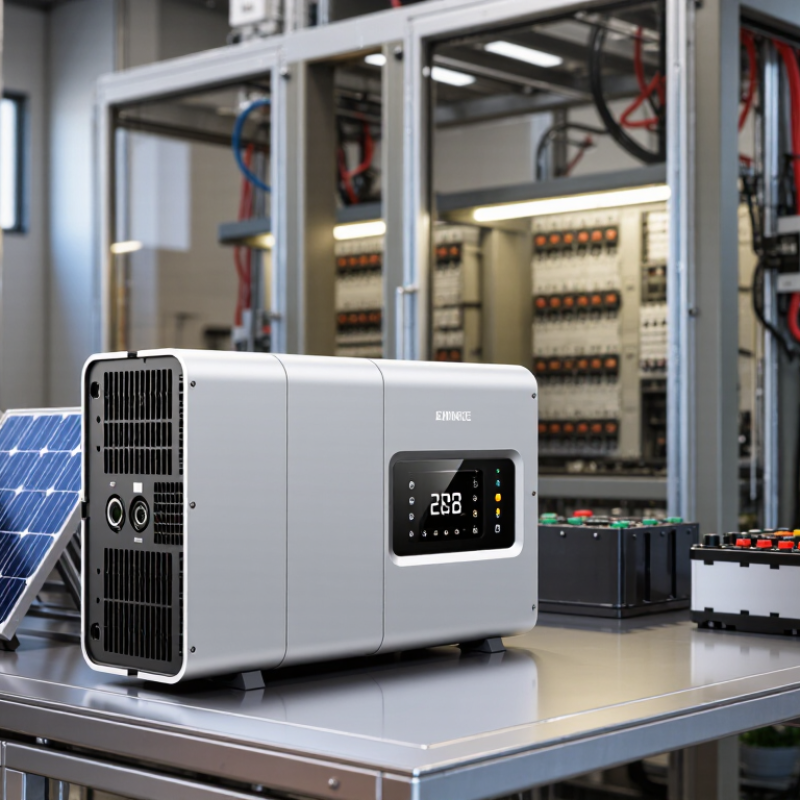
A compact inverter is a space-saving power-conversion unit. In a solar system, it changes direct current (DC) from panels into alternating current (AC) used by common business equipment. Inside, electronic switches rapidly reshape the DC supply, while filters smooth the output. Control circuits monitor voltage and frequency. Grid-connected models also synchronize their output with the electrical supply.
Many units use maximum power point tracking to adjust panel operation as sunlight and temperature change. On a practical level, that means output can shift when clouds cross a roof. Compact does not mean effortless. Clear airflow, suitable electrical protection, and access for maintenance still matter. A tight utility closet can become a poor location if heat builds up.
The market context is significant: IEA PVPS’s Trends 2024 report estimated that global solar capacity exceeded 1.6 terawatts in 2023, after roughly 447 gigawatts of additions that year. That growth makes inverter sizing and installation quality important business decisions.
A smaller enclosure may free wall or floor space, but check its continuous power rating, operating temperature range, and monitoring features against actual site loads. One detail is easy to miss: a compact design can leave less room around terminals, so installation and servicing need careful planning.
A compact inverter can keep essential business equipment running without dedicating a floor to backup power. In a small clinic, shop, or site office, that might mean a router, point-of-sale terminal, security camera, and a few LED lights. The U.S. Energy Information Administration’s 2018 Commercial Buildings Energy Consumption Survey counted about 5.9 million commercial buildings nationwide. Their needs vary widely, so a smaller unit can suit a focused set of critical loads better than an oversized system.
During an outage, those few devices can protect daily operations. EIA reliability data for 2022 recorded roughly 5.5 hours of electricity interruptions per U.S. customer, including major events. An inverter connected to a suitable battery can supply AC power to selected equipment. That helps. But runtime depends on battery capacity and actual load, not the inverter’s headline rating alone.
For practical sizing, add the running watts of each device, then allow for brief startup surges from equipment such as printers or pumps. Check the inverter’s continuous output, surge rating, and output waveform against the equipment manuals. A compact model is easier to place near a desk or network cabinet, but heat and ventilation still matter. I would not assume “compact” means plug-and-forget; estimating runtime from ideal figures is an easy mistake.
A compact inverter can free valuable room in a workshop, shop, or mobile service area. Its smaller footprint may fit neatly beside a control panel instead of occupying a full shelf. That matters when staff need clear access to tools, stock, or walkways. A few centimeters count.
Energy use depends on more than size. Check the inverter’s continuous output against the equipment that will run at the same time, and allow for brief startup surges from motors or pumps. Efficiency also varies with load, so a unit that is oversized may not perform as expected during light use. Review the manufacturer’s efficiency data and your actual operating pattern. Small loads matter.
Day-to-day operations can benefit from a tidy installation: shorter cable runs may simplify routing, while accessible terminals can make inspection easier. Still, a compact casing is not automatically easier to maintain. It needs the required ventilation clearance, and cramped placement can trap heat or block service access. I would measure the space, note nearby heat sources, and confirm the unit’s ratings before choosing. The neatest fit is not always the best fit.
| Business Dimension | Potential Benefit | Illustrative Data or Example | Operational Relevance |
|---|---|---|---|
| Installation footprint | Uses less panel or wall space when the selected unit is physically smaller. | Example comparison: a 0.30 m × 0.20 m unit occupies 0.06 m², versus 0.45 m × 0.30 m at 0.135 m²—a 56% smaller face area. | Can help where control cabinets or equipment rooms have limited space. Confirm clearances, ventilation, and access requirements before installation. |
| Energy use | Variable-speed control can reduce motor energy use when the process does not need full speed continuously. | Illustrative calculation: a 7.5 kW motor operating 4,000 hours per year would use 30,000 kWh at its rated input. A modeled 15% reduction in average input power would save 4,500 kWh per year. | Actual savings depend on the load, control strategy, operating hours, and system efficiency; they should be estimated from site data. |
| Starting and stopping | Adjustable acceleration and deceleration can provide smoother motor starts and stops than direct-on-line starting. | Ramp times are configured for the application; for example, a motor may be set to reach operating speed over several seconds rather than starting immediately. | May reduce mechanical shock and help manage process changes. The appropriate ramp depends on the motor, driven equipment, and process. |
| Process control | Motor speed can be adjusted to match changing demand. | A fan or pump can run below full speed when less airflow or flow is required, provided the equipment and process allow it. | Can support more consistent process control and avoid unnecessary full-speed operation. |
| Equipment protection | Many inverters provide configurable monitoring and fault responses. | Common functions may include overload, overtemperature, or overvoltage protection; available functions vary by model. | Correct setup can help identify operating issues. An inverter does not replace required external protection or a suitable maintenance plan. |
| Integration and maintenance | Compact units can simplify installation in suitable applications, while controls can provide operating and fault information. | Check supply voltage, motor rating, enclosure rating, communications, heat dissipation, and required service clearances before selection. | Matching the inverter to the motor and site conditions helps support reliable operation and easier troubleshooting. |
Note: Dimensions and energy figures above are illustrative examples, not product specifications or guaranteed savings. Actual performance depends on the selected equipment, installation, motor load, and operating conditions.
Choosing a compact inverter starts with understanding your actual electrical load. List the equipment it will power, including items that run at the same time. Motors and pumps can draw extra power when starting, so check their surge requirements. A unit that looks adequate on paper may trip during a busy shift. Measure carefully.
Compare continuous output, surge capacity, and conversion efficiency. Higher efficiency can reduce wasted energy, but performance varies with load and operating conditions. Check the installation space, ventilation needs, and ambient temperature range. A compact casing still needs room for airflow. One detail is easy to overlook: dust near workshops or storage areas can affect cooling. Consider access for routine inspection, too.
Tips: Match inverter capacity to measured loads, not guesswork. Ask a qualified installer to review wiring and ventilation. Test the setup under normal operating conditions before relying on it. Keep the specifications and maintenance notes nearby. Small checks matter.
A compact inverter can fit neatly into a service room, workshop, or small office, but installation still needs careful planning. Measure the mounting area and leave clear space around the unit for airflow and access. Check the expected electrical load, cable routes, and manufacturer’s ventilation requirements before choosing a location. A qualified electrician should complete connections and confirm that protective devices suit the installation. Keep the inverter away from heat, moisture, dust, and areas where staff might knock it. A tidy installation can still be a poor one if routine access is blocked.
Maintenance is easier when the inverter remains visible and reachable. Keep vents clear, and remove surface dust with the unit safely isolated, following its instructions. Do not open the casing or guess at electrical faults. Check status indicators and alarms regularly, and record unusual changes in output, noise, or temperature. These notes can help a technician identify developing issues. Set inspection intervals according to operating conditions and guidance from the manufacturer or installer. Busy sites can miss small warning signs; honestly, a maintenance log only helps when someone updates it.
Tips: Label the isolator, keep the manual nearby, and assign one staff member to report alarms. Never ignore repeated warnings.
Compact inverters can make efficient use of limited installation space. Plan inspections around site conditions and the manufacturer’s guidance; a smaller unit does not automatically require less maintenance.
The chart shows calendar-based inspection frequencies: 12 monthly, 4 quarterly, 2 semiannual, and 1 annual check per year. These are schedule calculations, not a universal maintenance recommendation.
Its smaller footprint may fit beside a control panel, leaving shelves and walkways clear. A few centimeters can matter.
List the equipment that may run together. Compare its continuous power needs with the inverter’s continuous output.
They can draw more power when starting. Check their surge requirements, or the inverter may trip during a busy shift.
No. Efficiency depends on the load and operating conditions. Check efficiency data against your actual usage.
Measure the area and allow room for airflow and service access. Keep it away from nearby heat sources.
Dust can interfere with cooling in workshops or storage areas. Include the location in routine inspections.
They may simplify routing, but installation still needs suitable wiring and ventilation. Ask a qualified installer to review the setup.
Test it with equipment running under normal conditions. Keep specifications and maintenance notes nearby. I might still overlook a detail.
A Compact Inverter converts direct-current power into the alternating-current electricity many business devices require, while fitting into a smaller footprint than larger systems. It can support suitable loads such as office equipment, lighting, communications devices, or selected tools, depending on its capacity and the business’s power requirements. By matching inverter output to actual demand, businesses can make better use of available space and energy, keep essential operations running during planned or unexpected power interruptions, and simplify equipment layouts.
Before choosing a Compact Inverter, consider the total and peak power needs of connected equipment, the required runtime, battery compatibility, installation location, ventilation, and options for monitoring or expansion. A qualified installer can help ensure safe connections and appropriate protection. Regular checks of connections, ventilation, operating conditions, and any associated batteries help maintain reliable performance. Choosing a system suited to the workplace and maintaining it consistently can support practical, efficient business operations.

Wemax Power