Global buyers are reassessing Switching Supply manufacturers as electronics demand becomes more distributed and power requirements grow more demanding. IEA’s Electricity 2024 analysis projects data-centre electricity consumption could exceed 1,000 TWh by 2026. That growth places greater pressure on efficiency, thermal control, uptime, and serviceability. A supply may look like a small metal enclosure. Inside, however, every capacitor, transformer, controller, and cooling path affects system risk.
Market estimates differ. Grand View Research reports continued expansion in the global power supply market through 2030, while Mordor Intelligence identifies efficiency upgrades, industrial automation, and data-centre investment as important growth factors. The figures are not perfectly aligned. Definitions vary between AC-DC supplies, DC-DC converters, adapters, and complete power systems. Buyers should examine the methodology before trusting a headline number.
Robert W. Erickson, a leading power-electronics scholar, defines the field clearly: “Power electronics is the application of solid-state electronics for the control and conversion of electrical energy.” His principle remains practical for supply selection. The best manufacturer is not always the largest. It may be the company that provides stable output under heat, credible test records, traceable components, and responsive technical support.
This guide evaluates ten Switching Supply manufacturers for global buyers. It considers efficiency, certifications, product range, customization, production capacity, warranty terms, and regional support. Supplier rankings can never replace engineering validation. That is the uncomfortable part. A polished datasheet may still hide weak thermal margins or long replacement times. Careful buyers must test the unit in real conditions, not only in a laboratory.
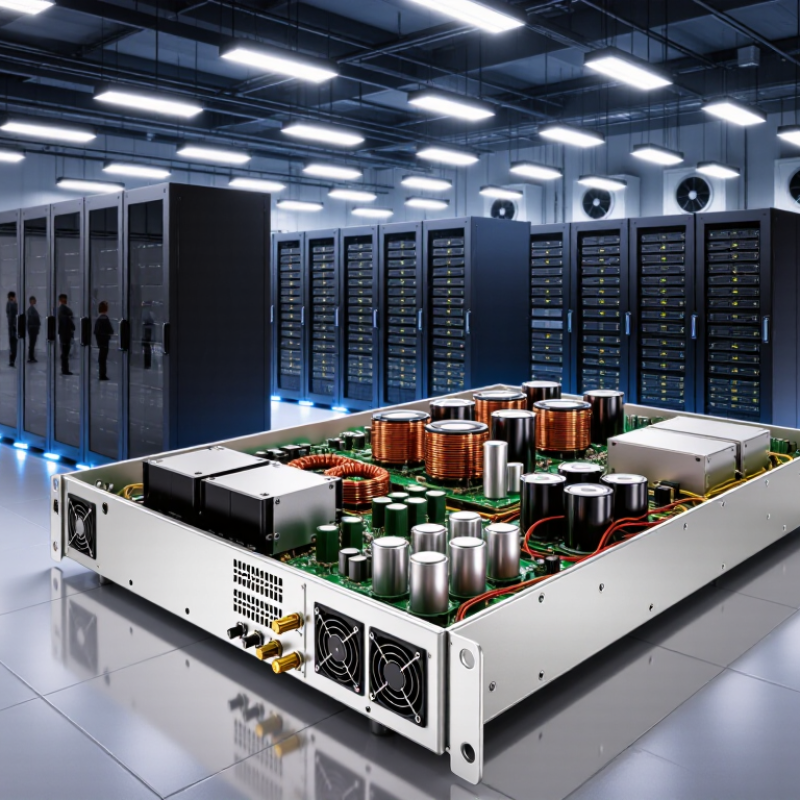
A switching power supply converts electrical energy into a controlled voltage for equipment. Unlike a linear supply, it regulates power by switching transistors rapidly. This approach usually reduces heat, weight, and physical size. In a typical unit, incoming AC passes through a rectifier and becomes DC. A switching circuit then turns that DC on and off at high frequency. The pulses move through a transformer or inductor, depending on the design.
A feedback circuit measures the output voltage continuously. It adjusts the switching duty cycle when the load changes. Rectifiers and capacitors smooth the high-frequency energy into usable DC. For example, a 24-volt supply may feed sensors, control boards, or small motors on an industrial panel. During factory inspections, technicians often check ripple, terminal temperature, fan noise, and output stability under changing loads. Small details matter.
Efficiency is important, but it is not the only buying factor. A supply with excellent efficiency may still fail in a hot, dusty cabinet. Buyers should review input range, overload protection, short-circuit response, insulation ratings, cooling method, and required certifications. Electromagnetic interference also deserves attention. Poor filtering can disturb nearby instruments. I have seen specifications look impressive while installation results were disappointing. Sometimes the problem was not the supply itself, but undersized wiring, blocked airflow, or an unrealistic load estimate. A practical test under real operating conditions remains more reliable than a catalog number.
Top 10 Switching Supply Manufacturers for Global Buyers
When evaluating switching supply manufacturers worldwide, buyers should measure more than price and rated wattage. The International Energy Agency’s Electricity 2024 report projects that data-center electricity demand could exceed 1,000 TWh by 2026, nearly doubling from 2022. Efficiency now affects both operating cost and thermal design.
Request independent test records for efficiency, ripple, transient response, and standby power. Check performance at 25°C and under heat. Real installations are rarely so comfortable. Review compliance with IEC 62368-1, IEC 61000-3-2, and destination-market requirements. A certificate helps, but it does not replace sample testing. Compare five units from different production batches, then inspect voltage stability during sudden load changes.
Supplier reliability needs evidence. Ask for component traceability, factory audit results, corrective-action records, and documented production controls. ISO 9001 certification is useful, yet it cannot prove every shipment is consistent. The 2024 World Quality Report from Capgemini and Sogeti highlights growing pressure for stronger quality governance and measurable process control across global supply chains. Buyers should also examine warranty terms, repair capacity, minimum order quantities, and end-of-life notices. A low initial quotation may hide expensive redesign work.
Keep records. Recheck assumptions.
Top 10 Switching Supply Manufacturers for Global Buyers
For global sourcing, certification should be checked before price or delivery time. IEC 62368-1 covers electrical safety for many modern power supplies. IEC 61558-1 and IEC 61558-2-16 may apply to transformer-based designs. EMC evidence should include CISPR 32 and IEC 61000 test results. These documents reveal immunity, emissions, insulation, and abnormal-operation performance. The International Energy Agency’s Electricity 2024 report estimates data centers used about 460 TWh globally in 2022. Demand may exceed 1,000 TWh by 2026. Efficient supplies now affect operating cost, not only compliance.
A credible manufacturer should provide traceable test reports, declarations, and factory quality records. Check RoHS Directive 2011/65/EU and REACH obligations for restricted substances. For Europe, verify the correct CE assessment route. Other markets may require different national approvals. A familiar certificate can still be unsuitable. Its voltage range, enclosure type, installation environment, and product category must match the actual model. This is where sourcing teams sometimes move too quickly. I have seen impressive documents with unclear model numbers. That is a warning.
Tips: Request reports for the exact part number. Confirm laboratory accreditation and report dates. Compare no-load power, efficiency curves, ripple, and thermal derating. The U.S. Department of Energy’s external power supply rules also show why efficiency claims need test conditions. Ask suppliers to explain every missing symbol. Silence is not evidence.
| Supplier Profile | Primary Product Category | Typical Output Range | Common Input Configuration | Key Safety Standards | EMC Standards | Environmental Compliance | Quality Management | Typical Global Sourcing Applications | Verification Priorities |
|---|---|---|---|---|---|---|---|---|---|
| Manufacturer 01 | AC-DC enclosed switching power supplies | 50 W–1,000 W | 90–264 VAC, 47–63 Hz; selectable 115/230 VAC on selected models | IEC 62368-1UL/CSA 62368-1CE | EN 55032EN 55035FCC Part 15 | RoHSREACH | ISO 9001 commonly requested for factory qualification | Industrial controls, networking equipment, security systems, LED equipment | Confirm output derating, surge protection, leakage current, and enclosure temperature limits |
| Manufacturer 02 | Open-frame AC-DC power supplies | 25 W–500 W | 85–264 VAC, 47–63 Hz | IEC 62368-1IEC 61558-1CE | EN 55032 Class BIEC 61000-4 series | RoHSREACH | ISO 9001; production traceability should be confirmed | Office equipment, displays, automation panels, measurement instruments | Check creepage and clearance, insulation system, no-load power, and cooling requirements |
| Manufacturer 03 | DIN-rail industrial power supplies | 60 W–960 W | 85–264 VAC; some models support 120–370 VDC | IEC 62368-1IEC 61010-1CE | EN 61000-6-2EN 61000-6-4 | RoHSREACH | ISO 9001 and documented change-control procedures | Factory automation, PLC systems, transportation controls, process equipment | Verify vibration resistance, hold-up time, DC-OK signaling, and parallel operation |
| Manufacturer 04 | External desktop and wall-plug adapters | 5 W–300 W | 100–240 VAC, 50/60 Hz | IEC 62368-1UL/CSA 62368-1CEUKCA | EN 55032FCC Part 15IEC 61000-4-2 | RoHSREACHErP | ISO 9001; safety-critical production testing should be documented | Consumer electronics, telecom terminals, POS systems, smart-home products | Check plug configuration, energy-efficiency level, cordage approvals, and country markings |
| Manufacturer 05 | Medical-grade AC-DC power supplies | 30 W–1,200 W | 85–264 VAC, 47–63 Hz | IEC 60601-12× MOPP optionsCE | IEC 60601-1-2EN 55011 | RoHSREACH | ISO 13485 preferred for medical-device supply chains; ISO 9001 also common | Patient monitors, laboratory equipment, diagnostic systems, treatment devices | Confirm MOOP/MOPP insulation, patient leakage current, risk documentation, and edition of standards |
| Manufacturer 06 | High-power modular and rack-mount supplies | 1 kW–10 kW per system | 90–264 VAC, single-phase or three-phase options | IEC 62368-1IEC 62477-1CE | EN 55032EN 61000-6-2EN 61000-6-4 | RoHSREACH | ISO 9001; supplier audits and component traceability are important | Data centers, telecom infrastructure, battery systems, industrial production lines | Evaluate hot-swap design, current sharing, redundancy, airflow, and communication protocols |
| Manufacturer 07 | LED and constant-current switching drivers | 20 W–600 W | 100–277 VAC or 90–305 VAC, depending on model | IEC 61347-1IEC 61347-2-13CE | EN 55015IEC 61547IEC 61000-3-2 | RoHSREACHErP where applicable | ISO 9001; photometric and reliability testing should be available | Commercial lighting, outdoor luminaires, signage, horticultural lighting | Check power factor, total harmonic distortion, dimming method, surge rating, and lifetime data |
| Manufacturer 08 | Programmable and laboratory DC power supplies | 100 W–5 kW | 100–240 VAC; some systems support three-phase input | IEC 62368-1IEC 61010-1CE | EN 61326-1IEC 61000-4 series | RoHSREACH | ISO 9001; calibration-system controls should be reviewed | R&D laboratories, production test systems, battery testing, education | Verify regulation accuracy, ripple, remote sensing, calibration interval, and software compatibility |
| Manufacturer 09 | Telecom and networking DC power systems | 300 W–3,000 W | 90–264 VAC input; -48 VDC distribution options | IEC 62368-1ETSI EN 300 132CE | EN 55032EN 55035GR-1089-related testing where specified | RoHSREACH | ISO 9001; telecom customer-specific quality requirements may apply | Base stations, network switches, fiber equipment, edge computing cabinets | Check redundancy, battery backup interface, transient immunity, remote monitoring, and NEBS-related requirements |
| Manufacturer 10 | Renewable-energy and battery-storage power converters | 500 W–20 kW | 90–305 VAC, 120–1,000 VDC, or application-specific DC input | IEC 62477-1IEC 62109-1/-2CE | IEC 61000-6-2IEC 61000-6-4IEC 61000-3-12 | RoHSREACH | ISO 9001; environmental and functional safety risk controls should be verified | Solar systems, energy storage, EV infrastructure, microgrids, industrial DC systems | Confirm isolation voltage, anti-islanding interface, thermal management, grid-code support, and firmware controls |
Top 10 Switching Supply Manufacturers for Global Buyers
Comparing Product Range, Customization, and Production Capacity
For global buyers, the top ten switching supply manufacturers deserve comparison beyond price and website claims. Product range is a practical starting point. Check whether a supplier offers AC-DC, DC-DC, open-frame, enclosed, and DIN-rail models. Voltage ranges, power ratings, cooling methods, and protection functions should match your application. A larger catalog is not automatically better. That assumption needs testing.
Customization shows deeper engineering capability. Ask whether the manufacturer can adjust connectors, cable lengths, casing dimensions, output tolerances, or firmware settings. Request drawings, thermal data, and sample test reports before approving a design. Experienced teams also review compliance documentation for the target market. Some suppliers promise custom work but outsource critical design stages. That can slow revisions and weaken accountability.
Production capacity requires more than an impressive annual number. Buyers should examine factory equipment, component traceability, inspection points, and backup production plans. A site audit, video inspection, or pilot order can reveal details hidden in a presentation. Ask how the factory handles peak demand, component shortages, and warranty analysis. A supplier may produce millions of units, yet struggle with a small customized batch. This is an easy risk to miss. Pricing comparisons should include tooling, testing, packaging, and delivery buffers. Real procurement is rarely as clean as the spreadsheet.
Anonymous comparison of product range, customization capability, and production capacity based on publicly available product catalogs, engineering services, and manufacturing footprint disclosures. Scores use a normalized 1–5 index.
Higher scores indicate broader product coverage, stronger customization support, or greater disclosed production capacity. Manufacturer names are intentionally omitted.
Selecting a switching supply manufacturer begins with the application, not a catalog price. Define input voltage, output power, ripple limits, enclosure space, and operating temperature. A supply for factory automation may face dust, vibration, and continuous loads. Medical, transportation, and communication equipment require different risk controls.
Ask manufacturers for measured efficiency curves, thermal test conditions, protection behavior, and component traceability. Do not accept “high efficiency” without load percentages and ambient temperatures. Request samples, then test startup response, voltage stability, acoustic noise, and heat near the terminals. A competent supplier should explain failures clearly, not hide behind general specifications.
Certification documents matter, but they are only one part of reliability. Check whether production testing matches the approved design. Review change-control procedures, warranty terms, repair options, and delivery capacity across regions. Small details can expose weak systems. For example, unclear labeling may create installation errors during field service.
A low quotation can mislead.
I have seen technically suitable units fail because connectors loosened under vibration. That experience makes mechanical design as important as electrical performance. Still, laboratory tests cannot reproduce every site condition. Share real duty cycles, cable lengths, and installation photographs with shortlisted manufacturers. Their questions will reveal practical expertise. A reliable partner may challenge your assumptions, suggest derating, or admit where its design needs improvement. That honesty is worth more than polished sales language.
It converts incoming electrical energy into a controlled voltage. Equipment then receives usable and stable power.
Incoming AC first passes through a rectifier and becomes DC. Transistors switch the DC rapidly. A feedback circuit adjusts the switching duty cycle as the load changes.
High-frequency switching allows smaller transformers and inductors. The design also wastes less energy as heat than many linear supplies.
A transformer or inductor transfers the high-frequency pulses. Rectifiers and capacitors smooth those pulses into usable DC.
They should check ripple, terminal temperature, fan noise, and output stability. Testing should include changing loads. Small details matter.
No. Input range, overload protection, short-circuit response, insulation, cooling, and certifications also matter. An efficient unit can still fail in a hot, dusty cabinet.
Blocked airflow can raise internal temperature. Undersized wiring can create voltage drops. An unrealistic load estimate may cause unstable operation. Test it live.
Request reports for the exact part number. Check report dates, laboratory accreditation, voltage range, and enclosure details. A familiar certificate may still be unsuitable.
Poor filtering can disturb nearby instruments and control signals. Review emissions and immunity test results before installation. Silence is not evidence.
Compare no-load power, efficiency curves, ripple, and thermal derating. Test the supply under real operating conditions. Catalog numbers can mislead.
This guide explains what a Switching Supply is and how it converts electrical power efficiently by rapidly switching, transforming, and regulating energy. It introduces the main factors global buyers should consider when evaluating manufacturers, including engineering expertise, quality control, production consistency, delivery capability, technical support, and communication. Readers will also learn why certifications and recognized safety, efficiency, and electromagnetic compatibility standards are important when sourcing products for different markets.
The article compares manufacturers by product range, customization options, output specifications, enclosure designs, testing procedures, and production capacity. It also highlights how to assess a supplier’s ability to develop application-specific solutions, manage stable supply, and maintain reliable quality at scale. By matching technical requirements, certification needs, budget, lead time, and after-sales expectations, buyers can select the most suitable manufacturer for industrial, commercial, consumer, or specialized power applications.

Wemax Power