Choosing an LED Driver supplier is not simply a price comparison. It is a decision about reliability, thermal control, compatibility, and long-term service.
For global buyers, the right manufacturer must perform beyond a polished catalogue. Its products should show stable output, low flicker, strong surge protection, and documented efficiency. Testing matters. So does the factory behind it.
A poorly matched LED Driver may overheat inside a narrow streetlight housing. It may also shorten LED life, create visible flicker, or fail during voltage fluctuations. These details often appear only after installation. That is why this guide examines China’s leading manufacturers through practical buying criteria, including product range, certifications, customization ability, production capacity, quality control, and export experience.
Dr. Jianzhong Jiao, a recognized LED lighting specialist, has described the driver as “the heart of an LED lighting system.” The comparison is accurate. A powerful LED chip cannot compensate for an unstable driver.
This list is designed for importers, lighting brands, contractors, and project developers. It focuses on evidence rather than attractive claims. Factory audits, sample testing, warranty terms, and technical communication deserve careful attention.
No ranking is perfect.
Supplier performance can vary by model, batch, and application. Buyers should still verify current certificates, test reports, and regional compliance requirements before placing an order. That caution is not excessive. It is practical procurement.
The following overview introduces ten notable Chinese LED Driver manufacturers. Each company is considered from a global buyer’s perspective, with attention to engineering depth, manufacturing consistency, and real-world support.
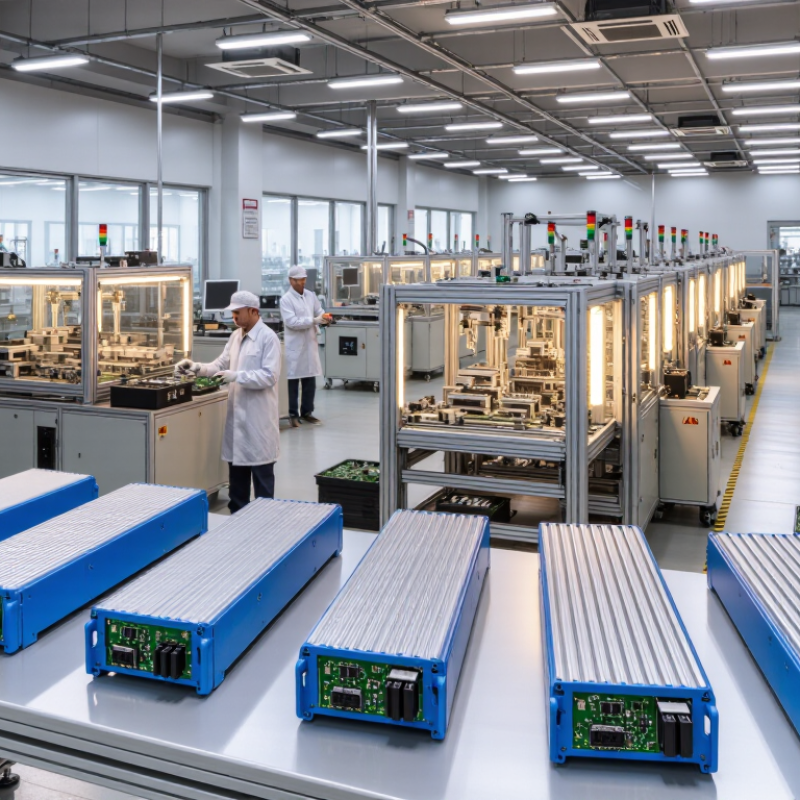
China’s LED driver manufacturing market covers residential lighting, commercial projects, industrial fixtures, streetlights, and specialized applications. Production ranges from compact constant-voltage units to programmable constant-current systems for demanding installations. Buyers should examine technical depth, not only catalog size or price.
A practical evaluation starts with input range, output accuracy, dimming compatibility, power factor, and flicker performance. Thermal design matters when drivers operate inside narrow metal housings. Check efficiency at several load levels, not just the best published figure. Request sample units, test reports, wiring diagrams, and aging results. Independent verification remains valuable because factory documents may not show field conditions.
Look beyond the product.
Review factory capacity, component traceability, quality-control records, and export experience. A reliable supplier should explain its inspection stages, failure-handling process, and warranty boundaries in clear language. Ask whether the proposed driver matches local voltage, environmental conditions, and installation practices. Certifications can support confidence, but they should be verified against the exact model and production site. Minimum order quantities, tooling fees, replacement procedures, and lead times also affect the real purchase cost. A cheaper driver may create higher service costs later. This is easy to underestimate. Published market rankings can also change quickly, so buyers should compare current evidence, conduct pilot orders, and document unresolved risks before scaling.
Reference procurement benchmarks commonly used by global buyers when evaluating LED driver suppliers in China. These thresholds reflect practical commercial, technical and compliance requirements rather than individual company performance.
Typical commercial LED projects often specify efficiency of at least 90%, power factor of at least 0.90, total harmonic distortion below 20%, an IP65 minimum for outdoor applications, and a warranty period of five years or more. Final requirements should be confirmed against the project location, lighting application and applicable standards.
For global buyers comparing China’s top 10 LED driver manufacturers, efficiency and power factor deserve close attention. A credible driver should exceed 90% efficiency under stated test conditions. Its power factor should remain above 0.90 at typical operating loads. These figures reduce energy loss and support more stable lighting installations.
Do not judge one impressive data sheet alone. Ask for results at 220–240 V input, full load, half load, and low-load operation. A driver may reach 93% efficiency at full load, yet fall below 88% at 20% output. That difference matters in dimmed offices and smart street lighting.
PF is not efficiency. PF measures how effectively input power is used, while efficiency tracks electrical output against input power.
During supplier evaluation, request test reports with ambient temperature, output current, and measuring equipment listed. A practical check includes a 25°C room, several input voltages, and at least one extended thermal test.
Inspect ripple, standby power, surge protection, and thermal behavior too. Hot enclosures tell a story. Small details matter.
A neat spreadsheet can still mislead. I have seen strong headline figures disappear under high temperature or partial load. Buyers should repeat key tests with independent equipment before approving volume orders.
This extra step costs time, but it exposes unstable components, unclear tolerances, and optimistic claims. Reliable manufacturers explain weak points openly and provide performance data that engineers can reproduce.
China’s top ten LED driver manufacturers serve distinct lighting needs, from compact bulbs to industrial high-bay systems. Their portfolios commonly cover 3–12W, 20–60W, 100–200W, and 300–600W platforms. Products include constant-current drivers, dimmable indoor units, waterproof outdoor models, and programmable controls. The Global LED Lighting Market report by Grand View Research identifies energy efficiency and smart control as major market drivers through 2030. That trend is visible in these product lines.
Several manufacturers focus on residential and commercial lighting, supplying drivers for downlights, panels, track lights, and office fixtures. Others concentrate on street lighting, sports venues, tunnel systems, and greenhouse applications. Export experience often includes Europe, North America, Southeast Asia, the Middle East, and Latin America. Compliance documentation typically covers electrical safety, electromagnetic compatibility, and regional efficiency requirements. Buyers should verify each certificate by model, not by factory brochure.
The ten profiles also reveal meaningful differences in engineering depth. Some offer surge protection above 4kV, thermal foldback, and 0–10V or DALI control. Others remain competitive through simple, low-cost designs. According to the U.S. Department of Energy’s LED technology reports, thermal management strongly affects lifetime and performance. This point is sometimes underestimated. A driver rated for 50,000 hours may perform differently in a sealed fixture at 45°C. Laboratory figures are useful, but field testing still matters. Power ranges can overlap, while actual reliability does not.
When global buyers compare China’s top ten LED driver manufacturers, compliance should guide the shortlist. IEC 61347 addresses safety requirements for lamp controlgear, including insulation, protection, and abnormal operation. EN 62384 focuses on performance for electronic controlgear used with LED modules. These standards answer different questions.
A reliable supplier should provide current test reports, model numbers, factory addresses, and traceable component records. UL evidence matters for North American projects, while CE supports market access within applicable European requirements. RoHS documentation should identify restricted substances across the product and supply chain. Ask for reports from recognized laboratories, not screenshots with missing pages. Small details matter.
Factory audits can reveal practical risks. Check creepage distances, thermal testing, labeling, and production consistency. A driver may pass a laboratory test yet change after a component substitution. This is an uncomfortable point. My own review process has sometimes trusted certificates too quickly. Buyers should verify revision dates, rated loads, dimming conditions, and samples from current production. Requesting a second sample is sensible. So is testing it at low voltage, full load, and elevated temperature. Compliance is not only paperwork. It is evidence that the delivered driver matches the tested design.
When comparing Chinese LED driver manufacturers, check protection ratings under real installation conditions. IP65 resists dust and water jets, while IP67 supports temporary immersion. Neither rating guarantees long-term outdoor reliability without proper cable glands and sealing. Ask for test reports, operating temperature data, and surge protection details. A neat datasheet can still hide weak thermal design.
Control compatibility often decides project success. DALI-2 suits addressable lighting systems, scene control, and two-way communication. Verify certification, device interoperability, and commissioning support. A 0–10 V driver is simpler and often fits existing dimming infrastructure. However, dimming range, minimum load, flicker performance, and standby power need written confirmation. I have seen installations where “dimmable” still produced visible low-level flicker.
MOQ can affect cash flow more than unit price. Request sample quantities before accepting a large production order. Compare lead times, customization charges, packaging standards, and replacement procedures. Warranty terms commonly vary by operating hours, ambient temperature, and installation method. Read the exclusions carefully. Does coverage include labor, shipping, and batch failures? Ask for a failure-analysis process and response deadline. Three years on paper means little without traceable serial numbers and accessible technical support. One practical weakness remains: factory claims are not field evidence, so independent testing and a controlled pilot installation are worth the extra time.
Check input range, output accuracy, dimming compatibility, power factor, and flicker performance. Compare efficiency at several load levels. Not only the highest published figure. Thermal design matters inside narrow metal housings.
Samples reveal behavior that catalog pages may miss. Test wiring, dimming, heat, flicker, and output stability. A small pilot can expose expensive problems early. It is slower, but safer.
IP65 resists dust and water jets. IP67 supports temporary immersion. Neither rating guarantees outdoor reliability without proper cable glands and sealing. Request test reports, temperature data, and surge protection details.
DALI-2 supports addressable control, scenes, and two-way communication. Verify certification and device interoperability. 0–10 V is simpler for existing dimming systems. Confirm minimum load, dimming range, flicker, and standby power.
Review production capacity, component traceability, inspection stages, and quality records. Ask how failures are analyzed and handled. Export experience also matters. A polished factory document is not field evidence.
Minimum order quantities can strain cash flow more than unit price. Request sample quantities first. Compare customization fees, packaging, lead times, and replacement procedures. Cheap units may create higher service costs later.
Check coverage limits for operating hours, ambient temperature, and installation methods. Ask whether labor, shipping, and batch failures are included. Require traceable serial numbers and a response deadline. Three years on paper may be weak.
Match certifications to the exact model and production site. Confirm local voltage, environmental conditions, and installation practices. Request aging results, wiring diagrams, and independent test reports. Some risks may remain unresolved. Document them before scaling.
This guide provides global buyers with a practical overview of China’s LED Driver manufacturing sector, covering market scope, product categories, and key purchasing criteria. It explains how to evaluate performance through efficiency above 90%, power factor above 0.90, thermal stability, output consistency, and reliable protection functions. The guide also compares manufacturers by product range, power capacity, customization ability, export experience, and target markets, helping buyers identify suitable supply partners for commercial, industrial, architectural, and outdoor lighting projects.
Compliance and application requirements are also central to the comparison. Buyers should verify conformity with IEC 61347, EN 62384, UL, CE, and RoHS requirements, while assessing IP65 or IP67 protection, DALI-2 and 0–10 V dimming compatibility, minimum order quantities, lead times, testing procedures, and warranty terms. By reviewing these factors together, purchasers can make more informed decisions about quality, safety, long-term reliability, and total procurement value.

Wemax Power