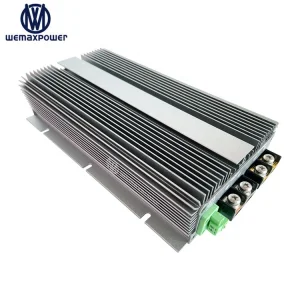
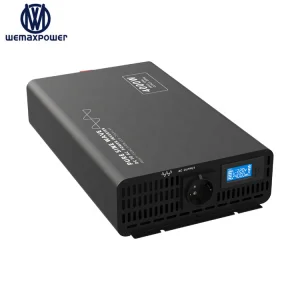
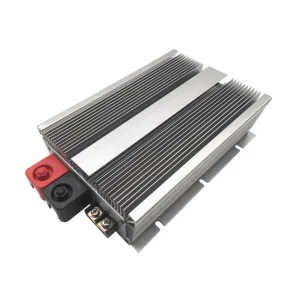
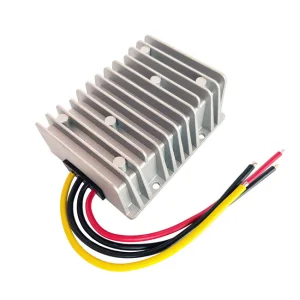
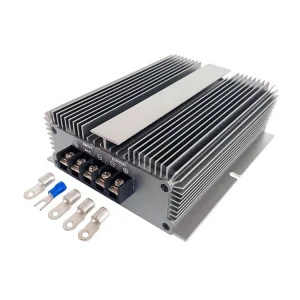
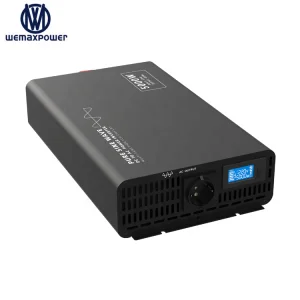
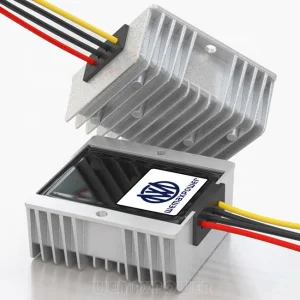
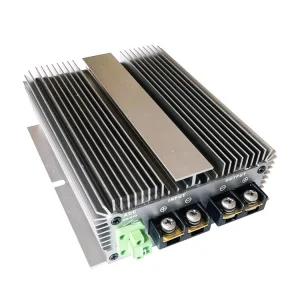
Explore our flagship high-power switching regulators, programmable converters, and pure sine wave inverters engineered to withstand harsh grid fluctuations.
Shenzhen Wemaxpower Technology Co., Ltd. is a premier manufacturing enterprise with 7 years of deep industry specialization. We focus on the R&D, engineering, and global export of programmable DC power supplies, highly stable DC-DC converters, heavy-duty power modules, and custom programmable inverters. Our solutions serve as the electrical backbones of industrial robotics, smart grids, marine engineering, and sustainable energy projects globally.
By marrying industrial-grade power topologies with modern digital control loops, we supply international systems integrators with power infrastructure that prioritizes high thermal performance, electromagnetic compliance, and unparalleled efficiency. Our global footprints span critical markets across the Americas, European Union, and Asia-Pacific regions, backed by proactive customer-centric engineering support.
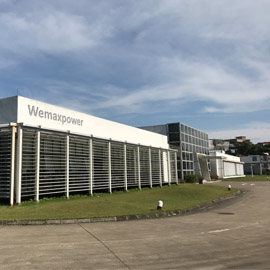
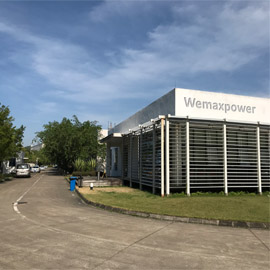
We secure zero-defect performance rates through our mandatory 4-stage quality evaluation, validating component integrity from supply intake to full-load operation.
Thorough verification of semiconductors, magnetic cores, capacitors, and PCB substrates prior to production.
In-circuit testing (ICT) and automated optical inspection (AOI) checking trace integrity and circuit logic.
Full functional profiling, checking output voltage regulation, harmonic distortions, and protection safety limits.
Continuous thermal and electrical stress testing under full-load environments to capture and isolate infant mortality issues.

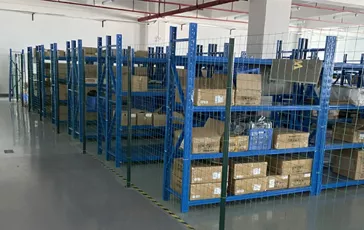
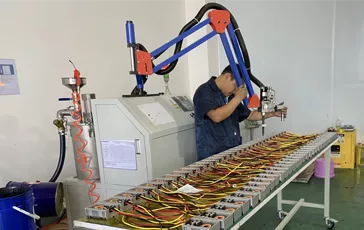
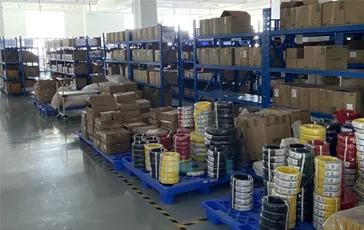
Leveraging geographical supply density, high-speed engineering pipelines, and rigorous certification frameworks to deliver economic and technical dividends.
Situated in the heart of Shenzhen's industrial cluster, we source certified power electronics, high-grade silicon, and custom copper transformers within a 20-mile radius, translating to shorter lead times and premium raw material control.
Our in-house design capabilities support dynamic engineering modifications. Whether adapting step-up ratios for electric golf carts or expanding power limits to 10kW with dynamic LCD configurations, we prototype with rapid turn-arounds.
Our manufacturing practices comply with ISO 9001:2015 frameworks. Our products undergo third-party auditing to achieve CE, RoHS, and FCC compliance, meeting the high electrical safety benchmarks of North America and Europe.
Navigating the shift toward software-defined power systems, silicon carbide topologies, and high-frequency power densification.
Traditional fixed analog control loops are being phased out by high-speed digital signal processors (DSPs). Microcontrollers now run real-time PID loops inside programmable inverters, allowing field-upgradable firmware to dynamically configure protection parameters, response speeds, and voltage slopes.
The industry is transitioning toward wide-bandgap semiconductors (SiC and GaN). These switches minimize switching losses, allowing high-frequency operations that reduce the physical footprint of magnetic transformers, leading to high-density 1U/2U rack-mounted power supplies with efficiencies above 96%.
With solar grid integration and electric vehicle vehicle-to-grid (V2G) applications growing, high-power DC-DC converters are shifting toward bidirectional architectures, permitting seamless energy exchange between battery arrays and high-voltage distribution lines.
How our programmable inverters and high-power step-down regulators adapt to localized operating standards around the globe.
Reliable operation in telecommunication towers demands stable high-capacity DC converters. Our step-up modules convert fluctuate battery bank currents (12V/24V) to regulated 56V outputs, powering remote radio heads and high-frequency active antennas without signal interference.
For maritime and recreational vehicles, high moisture levels demand dustproof and waterproof electrical systems. Our line of IP67 waterproof DC-DC converters and battery chargers can withstand engine compartment moisture while offering safe, high-output DC charging profiles.
Electroplating labs require highly accurate, constant-current and constant-voltage regulation to control metal deposition thicknesses. Our adjustable high-power switching power supplies allow laboratory systems to tune current profiles from 0V to 80V with low ripple noise.
Procuring industrial-grade power electronics goes beyond simple cost calculations. Global enterprises seek supply chain resilience, technical customization capability, and regulatory compliance. Our factory addresses these operational requirements directly.
We tailor voltage limits, cooling profiles, enclosure ratings, and communication options (such as RS485 or CAN bus interfaces) to match your custom configurations.
Our systems feature shockproof housings, conformal coatings on PCB substrates, and IP67 weather-proofing to perform reliably under temperature fluctuations from -40°C to +85°C.
Our filtering designs and PCB layouts reduce electromagnetic emission profiles, helping your final systems pass FCC and CE Class A certifications smoothly.
Are you designing a custom power architecture, battery management system, or high-power step-down topology? Partner with our engineering department to optimize your design's thermal and electrical efficiency.
Custom DC-DC Conversions | Bidirectional Charging | Real-time CAN Bus Integrations | High-frequency Pure Sine Waves
*All design iterations undergo circuit modeling and physical simulation before production runs.
Crucial industry insights, mechanical solutions, and operational guidelines for engineers and procurement specialists.
Digital programmable inverters use embedded DSPs to sample output voltages and currents in real time, executing high-speed control loops. This lets you calibrate output behaviors, configure voltage ramps, and set customized protection profiles (OVP, OCP, OTP) via digital communications or built-in LCD interfaces. Analog systems lack this field adjustability, requiring physical hardware alterations to modify their specifications.
Marine and automotive environments expose electronics to vibration, dust, and moisture. An IP67 enclosure rating ensures complete protection against dust ingress and stands up to temporary water immersion. By using thermal conductive potting materials inside the aluminum housing, we seal out moisture while directing heat away from critical internal components.
Our quality assurance process is designed to capture potential failures at every phase. Step 1 (Raw Material Test) screens out substandard silicon and inductors. Step 2 (Semi-Finished Test) verifies trace connections on the PCB. Step 3 (Finished Product Test) confirms full operation against specifications. Finally, Step 4 (Aging Test) runs the unit at full thermal load for extended periods, weeding out early-stage failures before the product leaves our warehouse.
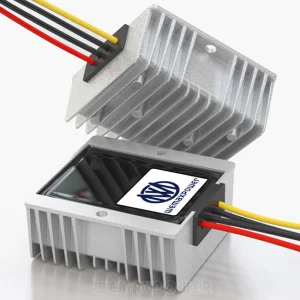
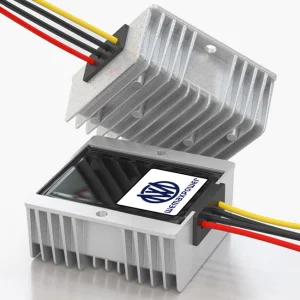
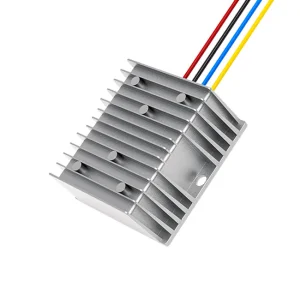
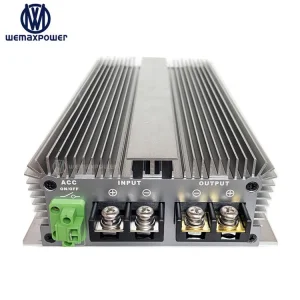
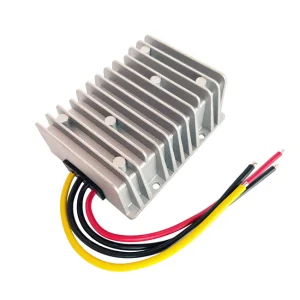
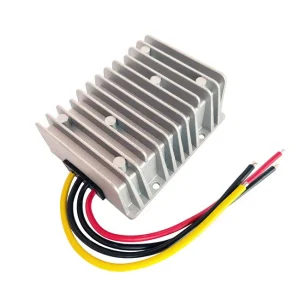
Our high-power converters use dual thermal management pathways. For low to medium-power models, we use high-grade thermal pads inside fanless, ribbed aluminum chassis for passive heat dissipation. For high-output systems like our 2kW-5kW units, we incorporate temperature-controlled fans that scale cooling dynamically based on internal temperatures, keeping noise levels low and extending component lifespan.
High-efficiency buck-boost regulators, laboratory switching power supplies, and multi-stage battery chargers designed for demanding commercial duty cycles.
 Wemax Power