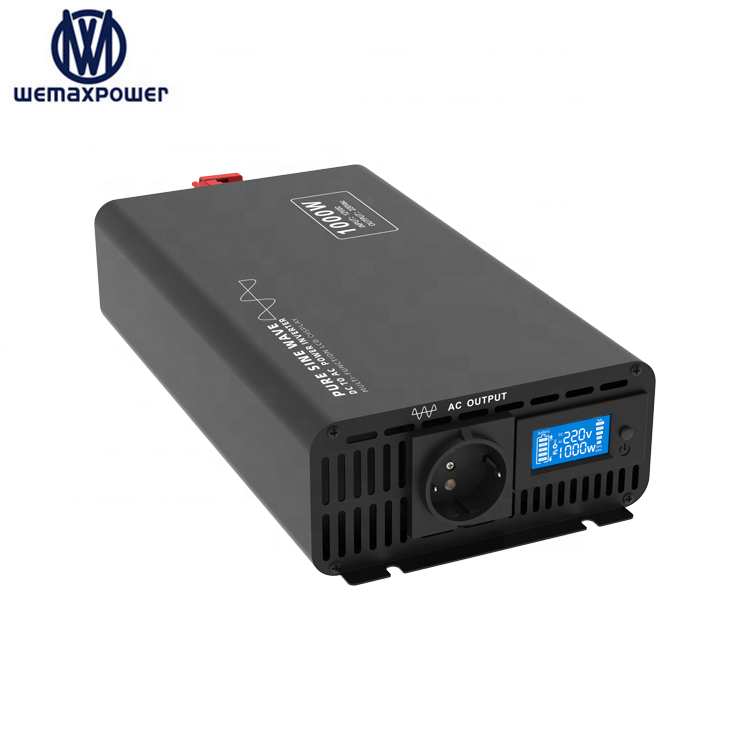
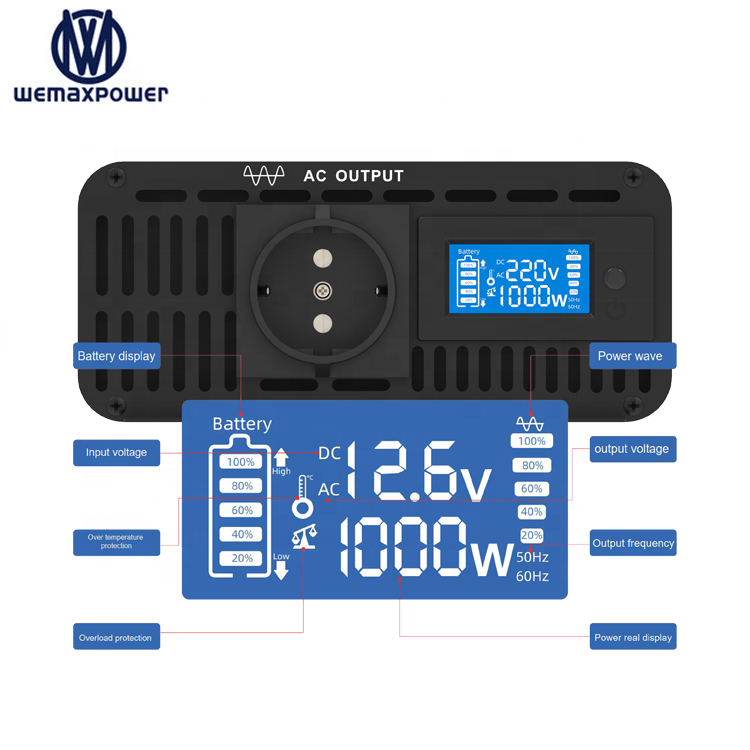
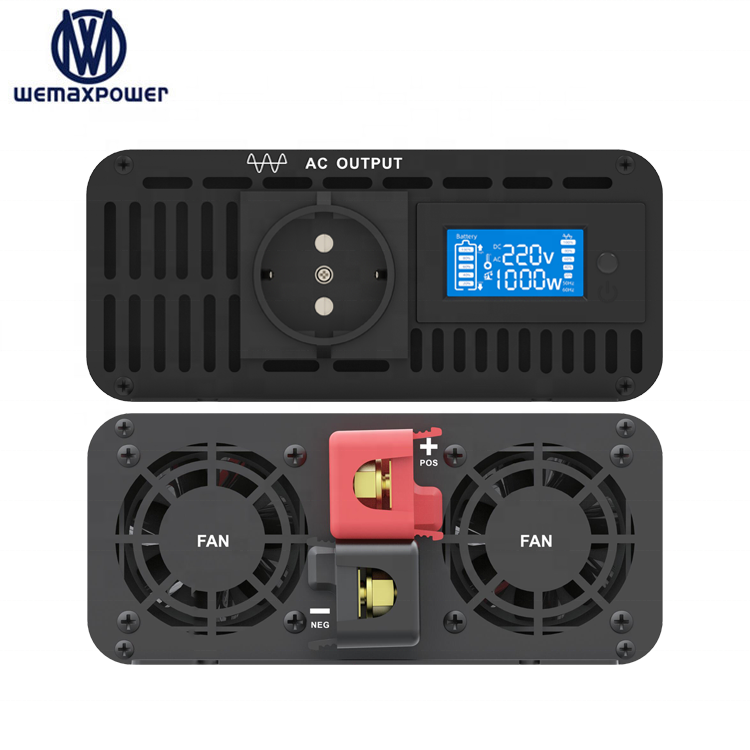
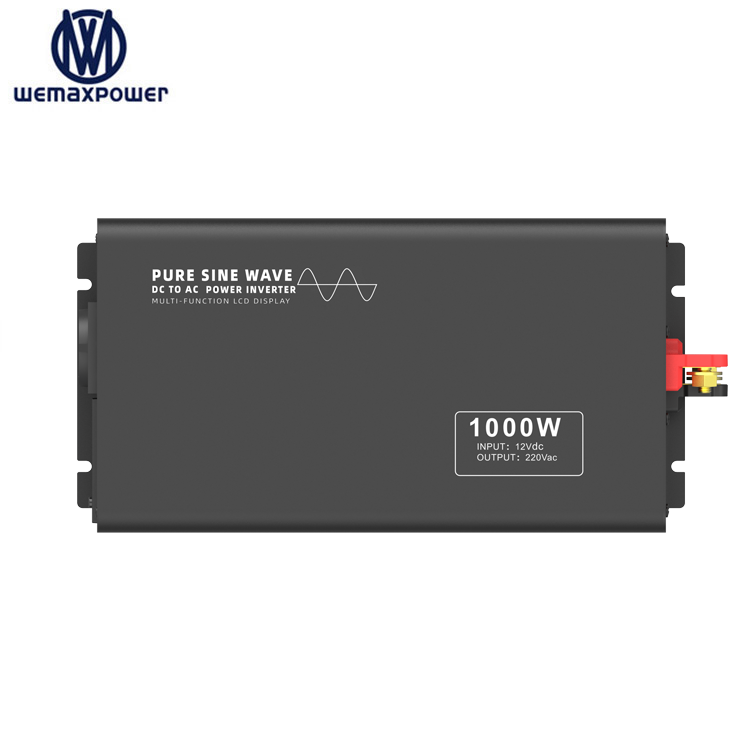
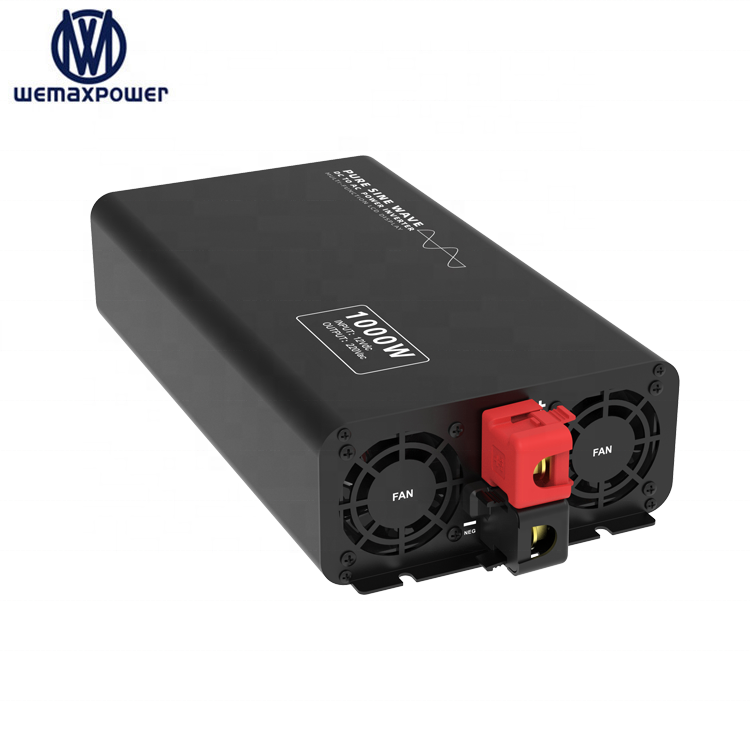
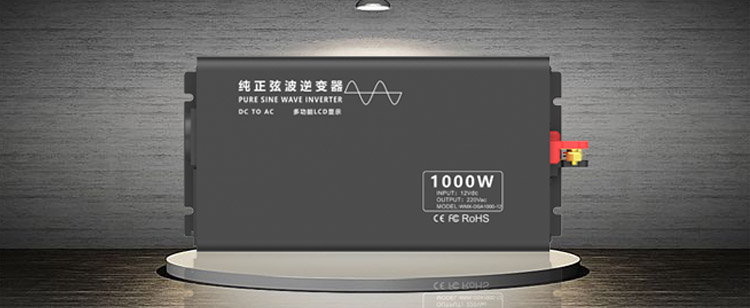
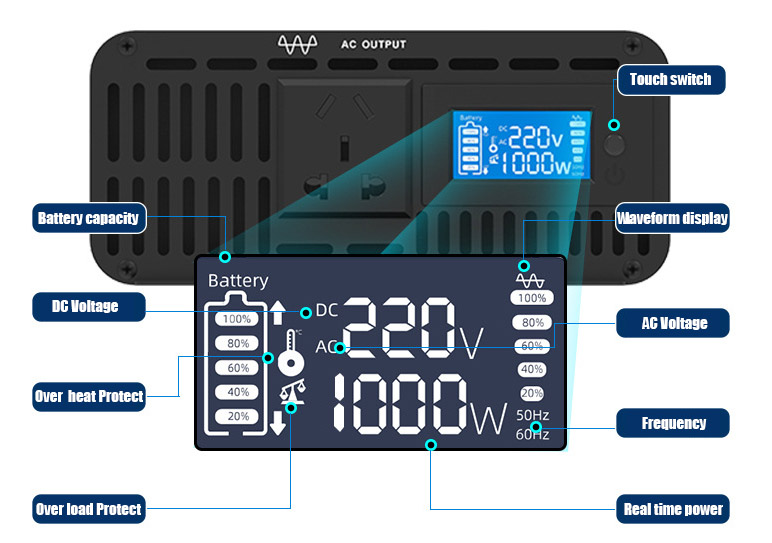
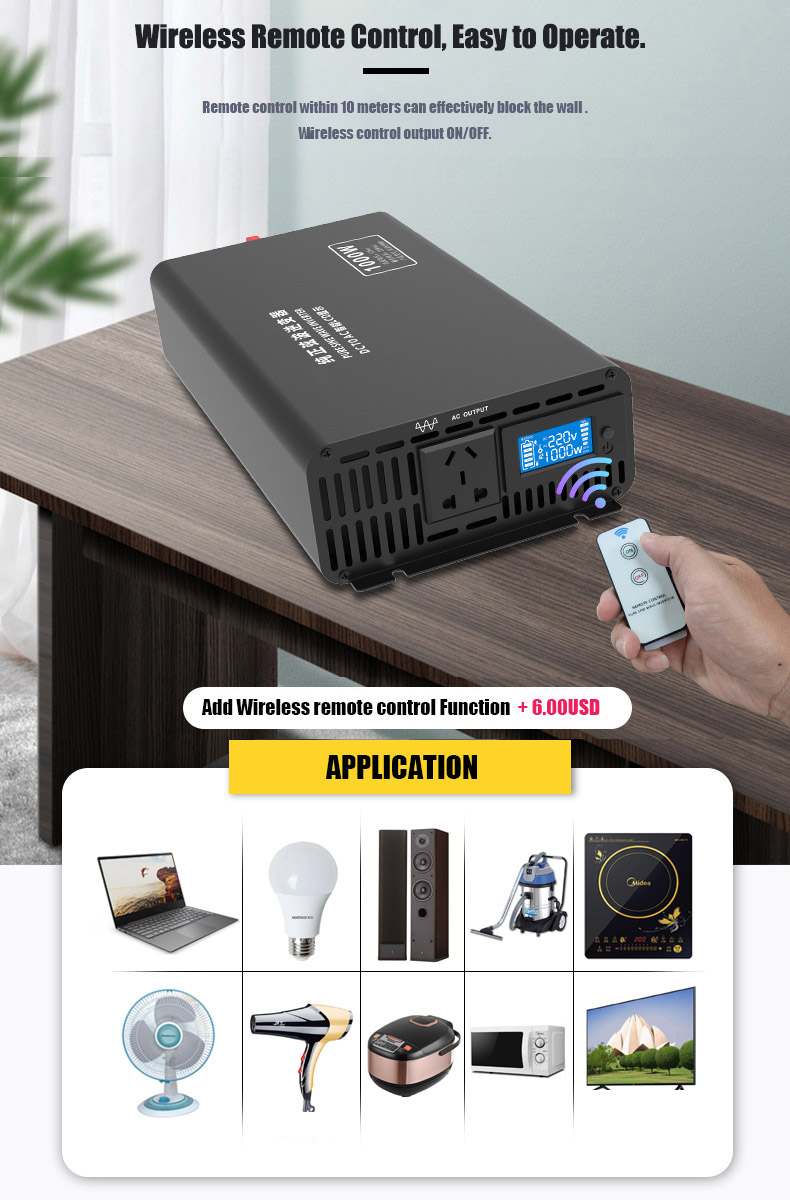
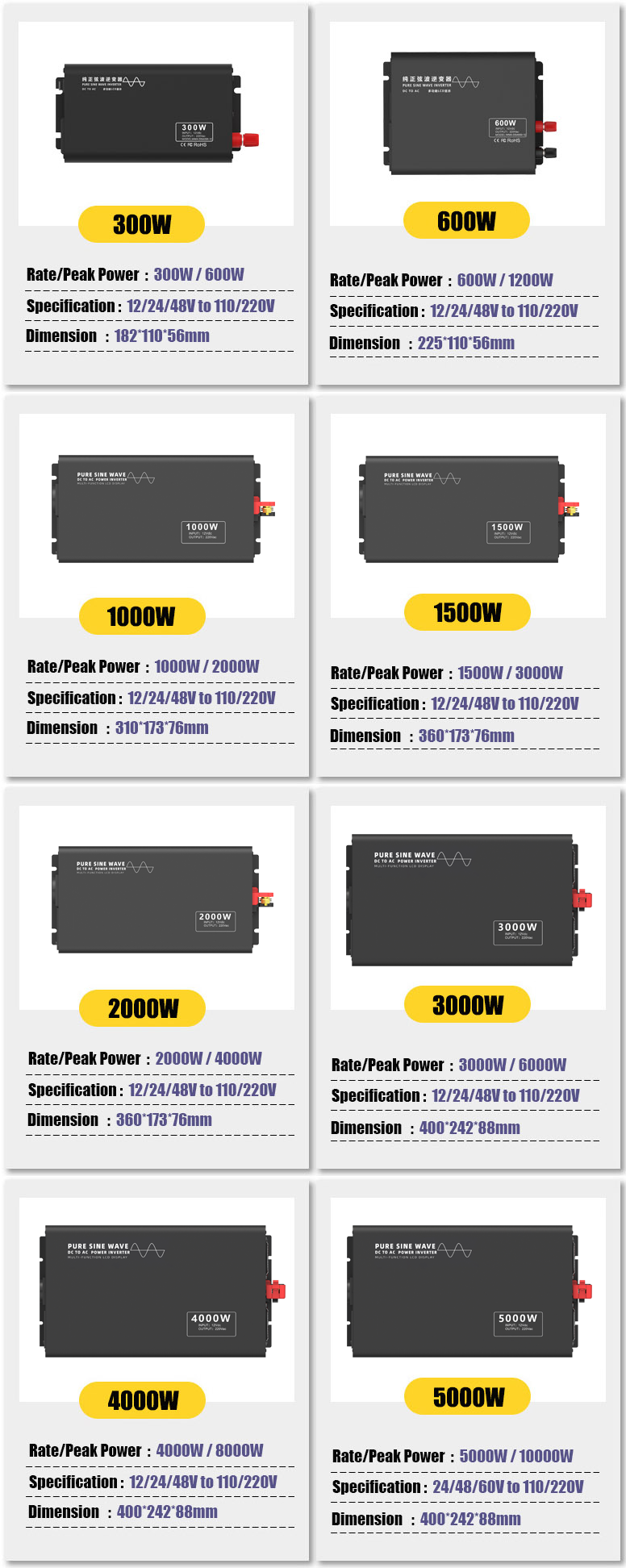
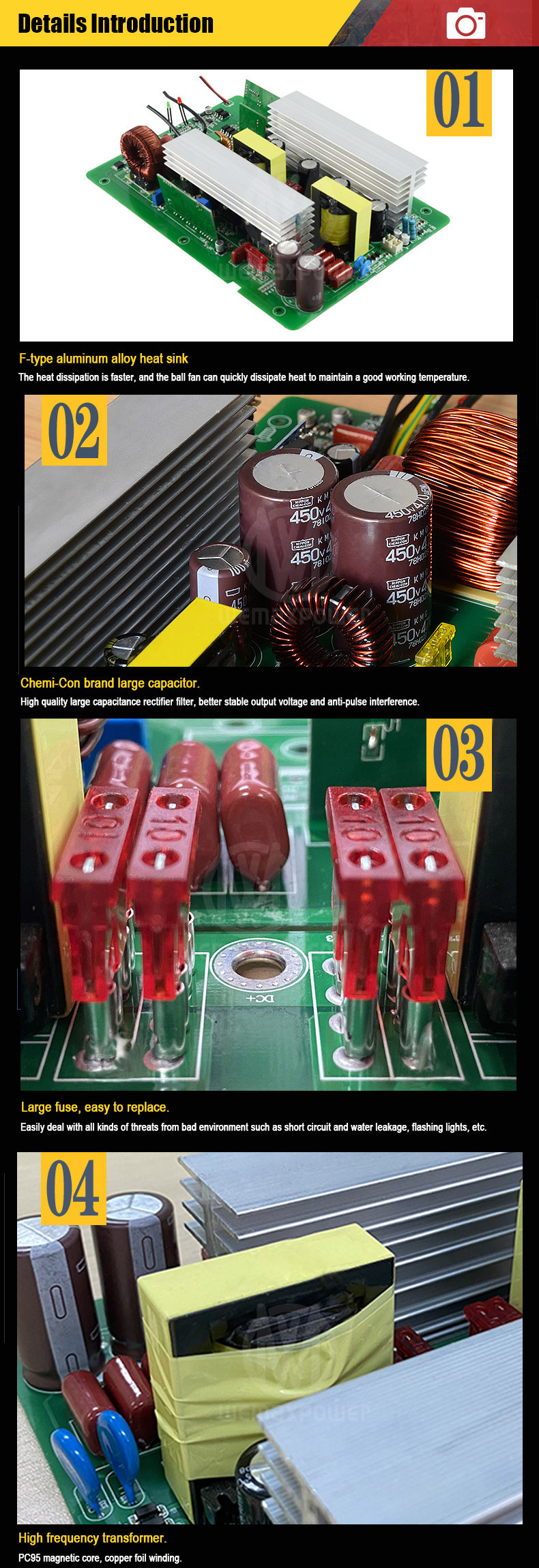
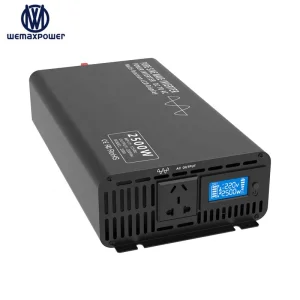
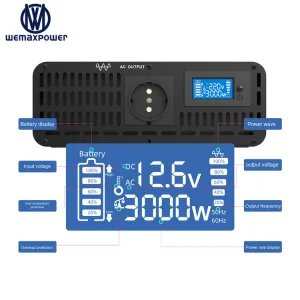
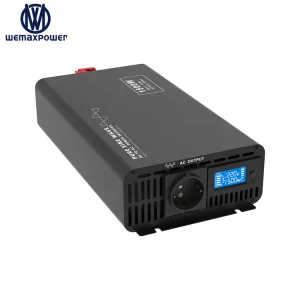
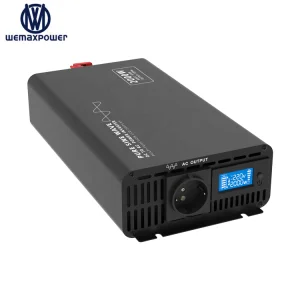
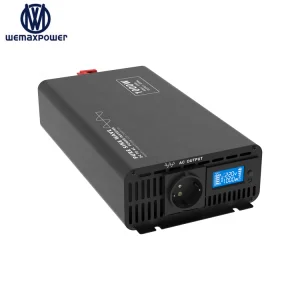
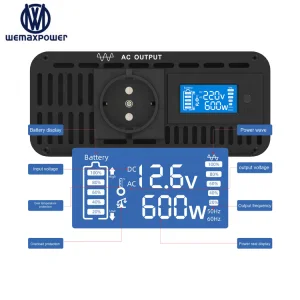
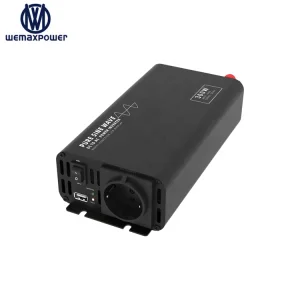
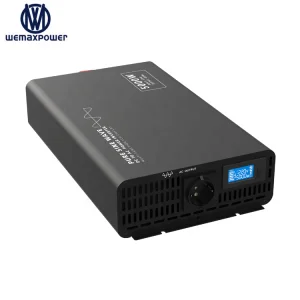
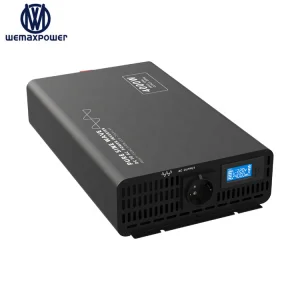
Factory Price 1000W Inverter DC 12V 24V 48V to AC 120V 60Hz 1000 Watts DC to AC Pure Sine Wave Power Inverter
Frequently Asked Questions (FAQ)
Q1Why is your quotation higher than other suppliers?
In the domestic market, high and low-quality inverter brands are mixed together. There are many low-cost inverters produced by small unlicensed workshops. They crudely reduce costs by using substandard components for assembly, presenting a very big security risk! In order to protect personal safety and property, please do not covet low prices and ensure you choose a reliable inverter.
Q2How many categories does it have according to the output waveform?
Type one: Modified Sine Wave Inverter, which uses PWM pulse width modulation to generate a modified sine wave. Due to the usage of intelligent dedicated circuits and high-power field effect tubes, it greatly reduces power loss and adds a soft-start function, effectively ensuring reliability. If the power quality is not highly demanded, it can meet the needs of most electrical equipment. However, it still exhibits 20% harmonic distortion issues when running sophisticated equipment and can cause high-frequency interference to radio communication devices. This kind of inverter meets basic daily power needs with high efficiency, low noise, and moderate price, making it a mainstream product.
Type two: Pure Sine Wave Inverter, which adopts an isolated coupling circuit design, providing high efficiency, high stability of the output waveform, and high-frequency technology. Small in size, it is suitable for all kinds of loads and can connect to common electrical devices and inductive load devices (such as refrigerators, electric drills, etc.) without interference (like buzz and TV noise). The output of a pure sine wave inverter is the same as, or even better than, the grid tie power we daily use, without grid tie electromagnetic pollution.
Q3Is the output voltage of our inverter stable?
Absolutely. Our inverter is designed with a high-quality regulator circuit. You can verify this by measuring the true value with a multimeter; the output voltage is highly stable. Note: many customers find the reading unstable when using conventional multimeters because ordinary multimeters can only correctly test pure sine waveforms to calculate data.
Q4What are resistive load appliances?
Generally speaking, appliances like mobile phones, computers, LCD TVs, incandescent lights, electric fans, video broadcasts, small printers, electric mahjong machines, and rice cookers belong to resistive loads. Our modified sine wave inverters can drive them successfully.
Q5What are inductive load appliances?
These are appliances that operate on the principle of electromagnetic induction, produced by high-power electrical products such as motors, compressors, relays, fluorescent lamps, electric stoves, refrigerators, air conditioners, energy-saving lamps, and pumps. The startup power of these products is far higher than their rated power (about 3-7 times). Therefore, only pure sine wave inverters are suitable for these appliances.
Q6What should be noticed when installing the inverter?
Place the product in a location that is well-ventilated, cool, dry, and waterproof. Do not place stress or put foreign objects on the inverter. Remember to turn on the inverter before turning on any connected appliances.
 Wemax Power