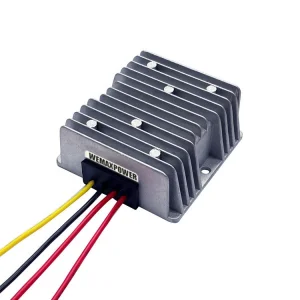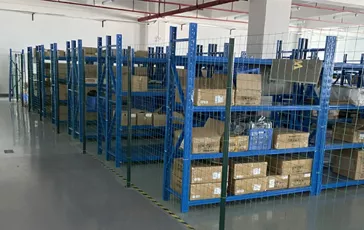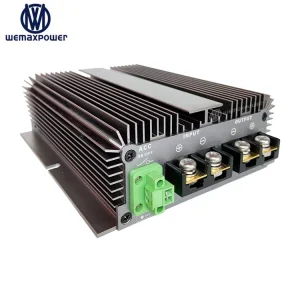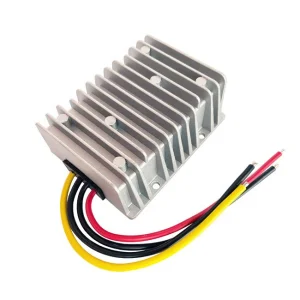
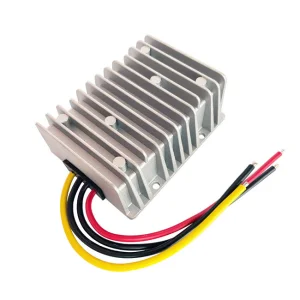
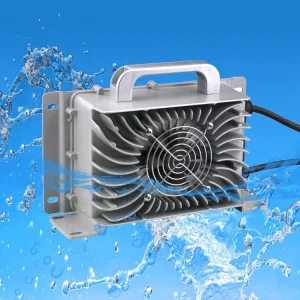
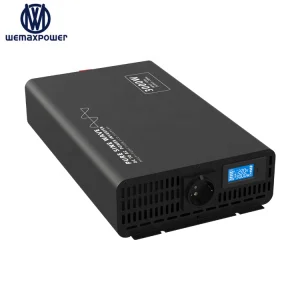
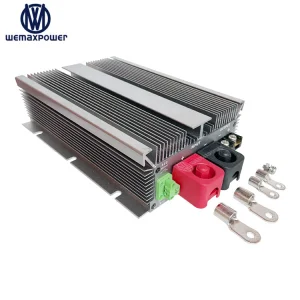
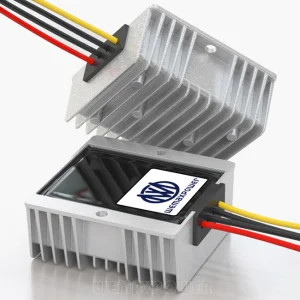
In modern industrial manufacturing and clean-energy infrastructure, the demand for highly reliable, highly efficient power conversion systems has never been more urgent. Modern electronics, automotive systems, marine applications, and specialized energy grids rely heavily on stable direct current (DC) inputs and outputs. As a leading voice in power manufacturing, Shenzhen Wemaxpower Technology Co., Ltd. leverages over seven years of specialized engineering experience to develop, certify, and supply programmable DC power supplies, robust DC-DC converters, and advanced smart charging modules to global markets.
CE certification acts as the primary baseline for entry into the European Economic Area (EEA), verifying that a product satisfies stringent safety, health, and environmental protection requirements. However, true engineering excellence goes beyond simple compliance. High-tier industrial operations demand converters and chargers capable of operating under extreme environmental stress—exhibiting vibration resistance, wide input voltage windows, high thermal dissipation margins, and intelligent battery profile compatibility (e.g., LiFePO4, Lithium-ion, and Lead-Acid charging algorithms).
"Real structural safety in industrial charging is not merely a label; it is the science of thermal dynamics, electromagnetic compatibility (EMC) isolation, and high-frequency synchronous rectification operating in absolute harmony."
To design chargers that operate at >94% efficiency, engineers must implement advanced topology models. Traditional linear regulators dump excess voltage as heat, making them completely non-viable for heavy commercial operations. Wemaxpower systems utilize high-frequency switching topologies featuring synchronous rectification to minimize conduction losses.
Operating with dual galvanic isolation barriers, these topologies safeguard sensitive control logic circuits (such as automotive radios or telecommunication systems) from input-side voltage spikes. By using high-frequency planar transformers instead of bulky wire-wound inductors, we achieve immense power density within a compact, IP67-rated footprint.
For AC-to-DC high-power applications (up to 2000W and beyond), input harmonic currents pose a major hazard to local grids. Our systems incorporate active PFC circuits that force the input current wave to track the line voltage wave, pushing the power factor (PF) value to >0.98, drastically reducing overall energy overhead.
Modern batteries are chemically sensitive. Wemaxpower programmable chargers feature microcontroller-driven multi-stage charging algorithms (Bulk, Absorption, Float). Through dynamic sensing of internal resistance, voltage thresholds, and temperature coefficients, our chargers prevent over-charging while maximizing the operational lifespan of LiFePO4, AGM, and gel batteries.
Securing CE compliance for advanced chargers requires strict conformance to several directives, most notably the Low Voltage Directive (LVD) 2014/35/EU and the Electromagnetic Compatibility (EMC) Directive 2014/30/EU. In marine, automotive, and industrial applications, chargers are exposed to high electromagnetic interference (EMI) fields. Standard commercial power supplies will fail when subjected to localized EMI, or worse, they will pollute the local grid with electromagnetic noise.
Our engineering protocols mandate compliance with the following standard parameters:
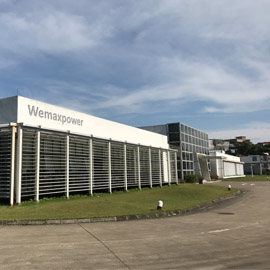
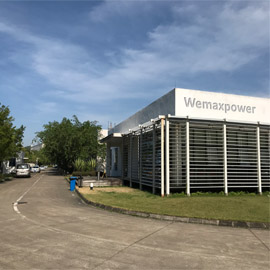
Located in the heart of China’s high-tech manufacturing sector, Shenzhen Wemaxpower Technology Co., Ltd. benefits from a localized, resilient supply chain that integrates component sourcing, design engineering, prototype assembly, and mass-scale automated production. We manage sourcing down to the component level, selecting premium capacitors, MOSFETs, and core magnetic parts that ensure structural reliability and longevity.
Every batch of incoming silicon, magnetic cores, FR4 PCB boards, and aluminum chassis undergoes rigorous screening for electrical integrity, dimensional tolerance, and RoHS compliance.
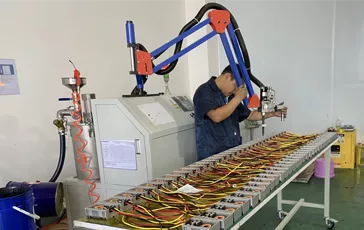
During the SMD assembly and wave soldering stages, automatic optical inspection (AOI) machines and manual technicians verify solder joint integrity and component placements before enclosure potting.
Once assembled, every unit undergoes testing for voltage accuracy, ripple suppression, load regulation, over-current thresholds, and dielectric breakdown resistance.
Before packing, 100% of our products undergo high-temperature, full-load burn-in aging tests. This thermal cycle stress triggers any latent component infant mortality, ensuring zero-defect arrivals for our partners.
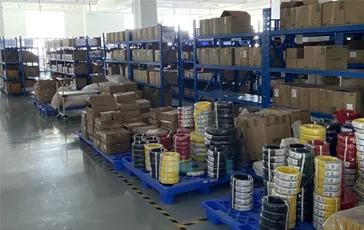
Industrial converters and chargers do not operate in a vacuum. They are critical elements of larger electro-mechanical ecosystems:
The future of industrial power conversion is defined by three vectors: density, smart telemetry, and wide bandgap semiconductors. As Silicon reaches its theoretical physical limits, Wemaxpower's engineering roadmap focuses on integrating Gallium Nitride (GaN) and Silicon Carbide (SiC) semiconductors into our product line.
These materials allow for significantly higher switching frequencies, reducing the required footprint of magnetic components by up to 40%. The result is lighter, more efficient converters that produce less waste heat. Additionally, our R&D team is working on implementing CAN bus and Modbus communications protocols across our programmable DC power supplies, enabling remote configuration and real-time monitoring via centralized industrial IoT systems.
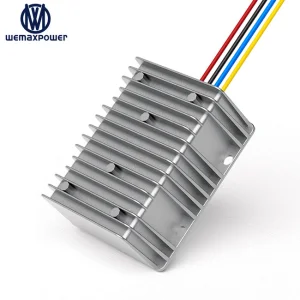
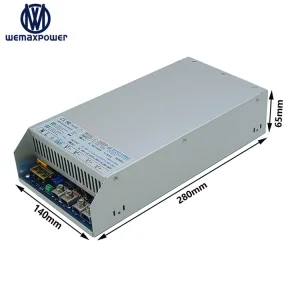
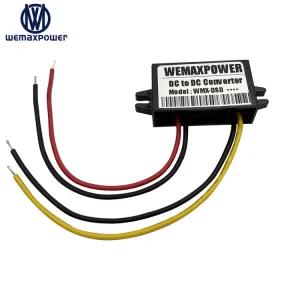
 Wemax Power