Engineered for precision, transient response, and rugged operational lifetimes across global environments.
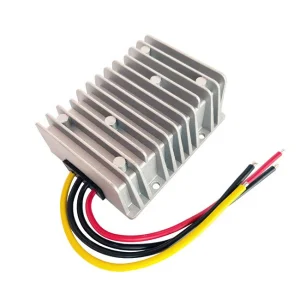
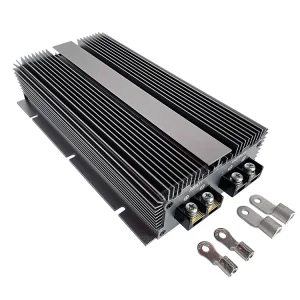
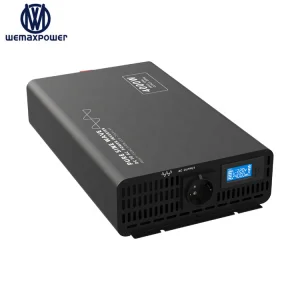
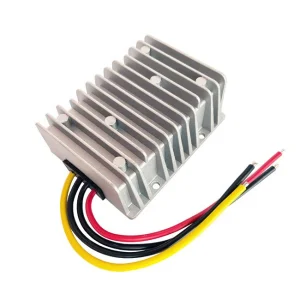
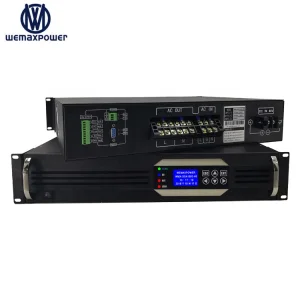
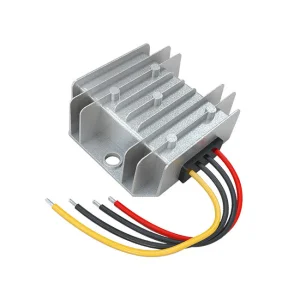
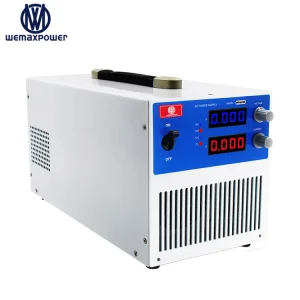
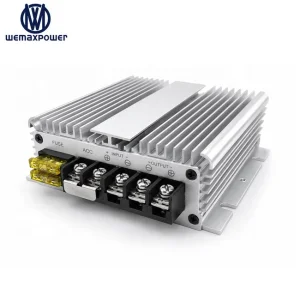
The global transition to electrification has changed the baseline for power systems. Sourcing departments, network designers, and grid infrastructure groups no longer view DC chargers and DC-DC converters as simple standalone boxes. Today, they are critical points of grid integration, requiring high power density, sophisticated system telemetry, and robust thermal performance.
Whether deploying public EV highway corridors, marine electrification systems, heavy-duty industrial fleets, or telecom backhaul infrastructure, the underlying demand is the same: maximum conversion efficiency, minimized heat rejection, and absolute reliability.
As solid-state electronics transition rapidly from Silicon IGBTs to Wide Bandgap (WBG) semiconductors such as Silicon Carbide (SiC) and Gallium Nitride (GaN), efficiency curves are exceeding 98%. This reduces auxiliary cooling budgets and shrinking footprint requirements, allowing system integrators to extract more kilowatts per cubic meter.
An authoritative analysis of industry leaders shaping the future of rapid charging infrastructure and specialized industrial converters.
Headquartered in Switzerland, ABB is a global pioneer in utility-scale DC fast-charging solutions. Their Terra series offers modular, scalable power architectures up to 360 kW, featuring liquid-cooled dispensing and robust dynamic power-sharing protocols. Best for highway corridors and major municipal networks.
Germany's Siemens delivers industrial-grade grid-to-vehicle infrastructure. The Sicharge D series is highly regarded for its dynamic parallel charging capacity and high conversion efficiency. Siemens integrates deeply with grid management software platforms, providing smart energy balancing for depots and industrial complexes.
A powerhouse in switching power supplies, Delta offers highly integrated DC charger modules and cabinet systems. With options ranging from 25 kW wallboxes to 350 kW ultra-fast chargers, Delta is prized for its high-efficiency internal power modules and extensive manufacturing capability across Asia and Europe.
While historically operating a vertically integrated proprietary network, Tesla's Supercharger technology serves as a global benchmark for network reliability and user experience. With the opening of the NACS (North American Charging Standard), their hardware engineering influence now spans third-party operators globally.
Finland-based Kempower specializes in modular, dynamic satellite charging systems. Utilizing a centralized power unit connected to multiple sleek charging satellites, Kempower uses intelligent allocation algorithms that route power precisely to vehicles depending on their real-time state of charge (SoC).
Focusing purely on liquid-cooled DC fast chargers, Tritium (originating in Australia) is known for sleek, footprint-efficient hardware. Their sealed enclosure technology reduces internal component degradation from dust, salt air, and pollutants, reducing maintenance overhead in extreme environments.
Italy’s Alpitronic has captured a massive share of the European fast-charging market with their Hypercharger series. Known for reliability, compact footprints, and high efficiency, Alpitronic systems scale dynamically from 75 kW up to 400 kW, integrating modular SiC inverter segments.
Based in the Netherlands, EVBox offers integrated charging networks including the Troniq Modular series. Highly scalable and adaptable for commercial properties, EVBox systems focus on user-centric interaction, dynamic load balancing, and open standards compatibility (OCPP 2.0.1).
A veteran power supply developer in Taiwan, Phihong delivers robust, high-power DC charging cabinets and auxiliary power systems. Phihong is a key OEM/ODM manufacturing partner for many western brands, providing robust build quality and extensive global certification compliance.
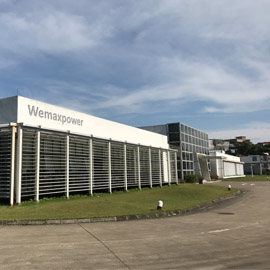
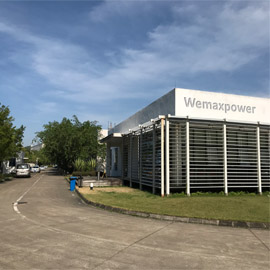
An agile, high-precision industrial manufacturer with 7 years of specialized expertise in the power systems space. Wemaxpower excels in the production of programmable DC power supplies, DC-DC converters, and specialized power modules. Unlike commodity consumer brands, Wemaxpower addresses custom industrial requirements, rugged vehicular voltage regulators, and high-frequency telecom power conversion.
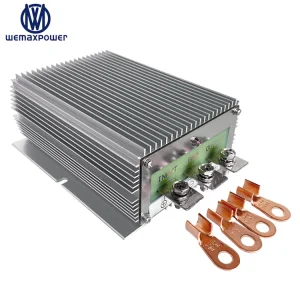
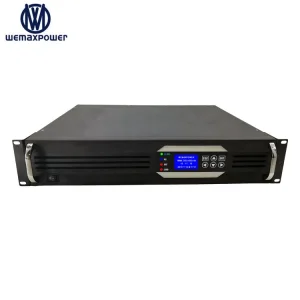
Established as an R&D and manufacturing powerhouse, Shenzhen Wemaxpower Technology Co., Ltd. specializes in solving complex power conversion challenges. Their product line spans programmable DC power supplies, DC-DC buck-boost converters, and Telecom DC-AC pure sine wave inverters.
By leveraging an engineering-first culture, Wemaxpower provides customized solutions for telecommunications, automotive testing, laboratories, and specialized electric vehicles (such as weeding machines, wheelchairs, and patrol vehicles).
The Factory Team Delivers Quality-Guaranteed Orders: Their engineering group ensures that custom voltage sweeps, unique physical footprints, and high IP-rated enclosures are built to order, meeting the strict requirements of global procurement teams.

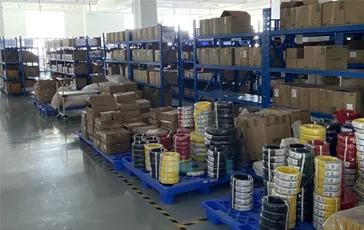
Failure is not an option in critical power pathways. Here is how we guarantee reliability.
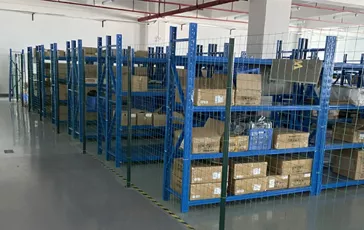
All semiconductor batches, capacitors, magnetic cores, and aluminum enclosures undergo parametric verification upon arrival.
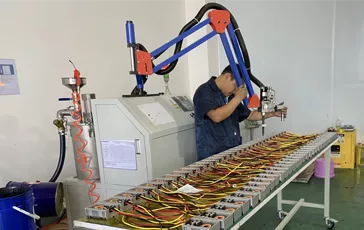
In-circuit testing (ICT) verifies PCB traces, solder joint integrity, and thermal component alignment before final potting.
System-level operation checks calibrate transient load behavior, efficiency profiles, and noise margins.
Units undergo continuous full-load, high-temperature thermal cycling tests to weed out early infant mortality issues.
Selecting the optimal conversion topology based on system requirements and environment.
| Converter Topology | Ideal Application | Efficiency Range | Key Sourcing Concerns |
|---|---|---|---|
| Buck-Boost (Bi-directional) | Battery voltage equalization, hybrid solar charging, automotive auxiliary supply. | 94% - 97.5% | Active cooling design, electromagnetic compatibility (EMC) suppression. |
| Pure Sine Wave Inversion | Telecom backup, critical lab equipment, heavy industrial motors, RVs. | 90% - 95% | Total Harmonic Distortion (THD < 3%), peak load capacity factors. |
| High-Frequency DC-DC | Bus/Golf cart auxiliary lines, e-mobility accessory conversion. | 92% - 96% | Enclosure sealing (IP67/IP68 rating), over-current and thermal protection. |
| Programmable DC Sources | Laboratory product verification, battery simulation, industrial aging lines. | 93% - 98% | Ripple/noise ratios, digital interface control (RS485, CAN bus), response speed. |
The next phase of DC power conversion centers on increasing power density. By integrating Silicon Carbide (SiC) MOSFETs into our switching topologies, we can run at higher switching frequencies (typically exceeding 100 kHz). This allows for smaller copper windings and inductors, resulting in lighter products, lower thermal losses, and improved overall system efficiency.
In addition, bi-directional energy transfer (Vehicle-to-Grid or V2G) is rapidly changing grid integration requirements. Future DC fast-charging networks must be capable of feeding power back from the vehicle pack to support grid stability when needed. This requires robust bi-directional buck-boost systems that can manage wide voltage spreads under varying charge currents.
Technical answers to critical questions asked by procurement teams and electrical engineers.
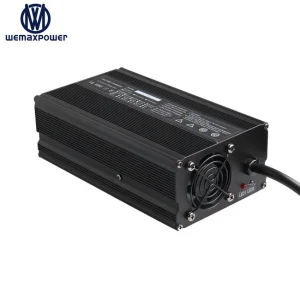
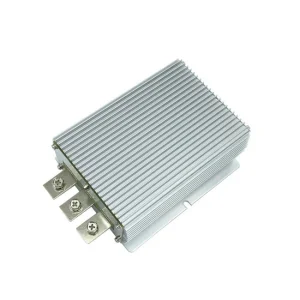
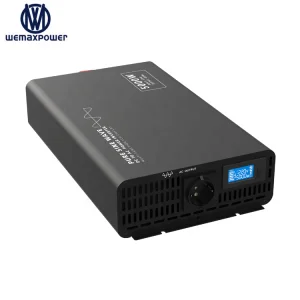
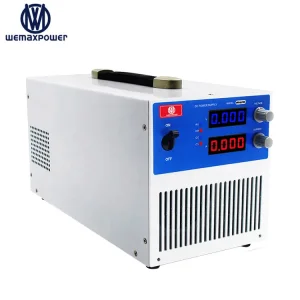
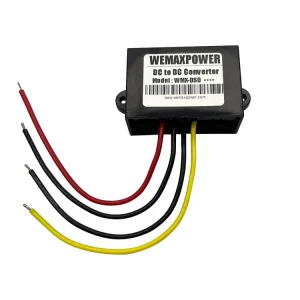
High-efficiency converters designed for vehicles, industrial machinery, and telecom facilities.
 Wemax Power