Explore our top industrial power modules, precision-engineered for vehicle, telecom, and renewable applications.
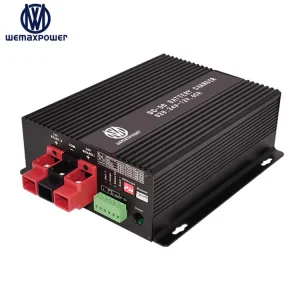
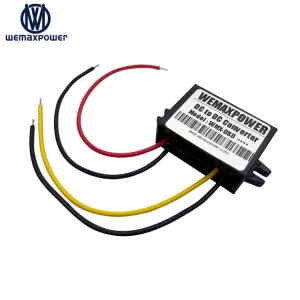
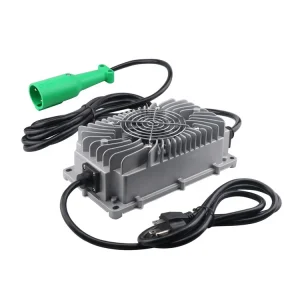
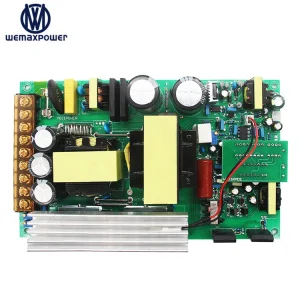
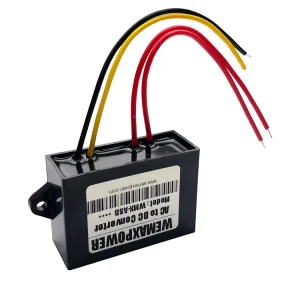
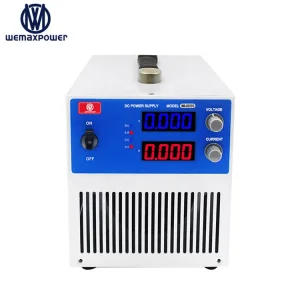
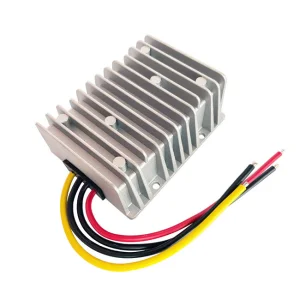
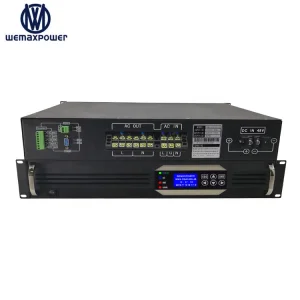
In today's global industrial and commercial landscapes, efficiency and reliability in electrical architecture are paramount. Input voltage converters play a foundational role in adapting supply lines—whether from variable DC grids, high-voltage AC mains, battery banks, or fluctuating clean-energy generators—into stable, localized DC supply loops. As applications ranging from Automated Guided Vehicles (AGVs) to critical telecommunication links grow more sophisticated, standard off-the-shelf conversion nodes often present integration challenges. Custom OEM input voltage converter factories offer the specialized R&D engineering and scaled production models required to resolve these layout, isolation, efficiency, and thermal management complexities.
By replacing traditional Schottky diodes with low-R_ds(on) MOSFETs governed by precise control ICs, modern buck and boost converters achieve conversion efficiencies exceeding 96%. This minimises operational losses and reduces heat dissipation demands, critical for sealed IP67/IP68 enclosures.
The global push towards electrification, localized smart microgrids, and highly automated industrial factories has shifted the requirements for power converter designs. General-use specifications struggle to perform reliably under the extreme operating parameters seen in these fields. Systems demand tailored input voltage ranges (such as bucking ultra-wide 18-40V, 36-72V, or high-input 60V grids to steady levels), isolated loops to prevent system-wide feedback loops, and highly durable mechanical profiles capable of surviving intense vibration and extreme thermal ranges. Partnering with a dedicated OEM converter factory guarantees that electrical form factors match targeted parameters, eliminating the need for expensive secondary power stages.
Delivering world-class power conversion modules for over 7 years with a focus on durability, safety, and performance.
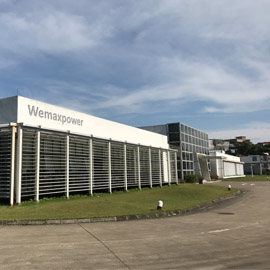
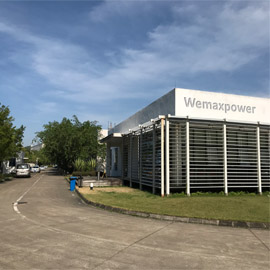
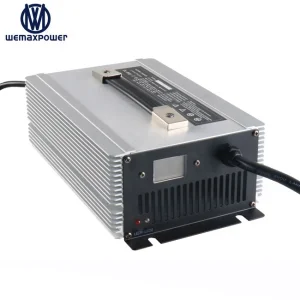
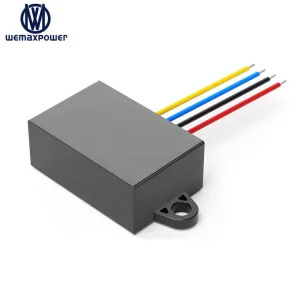
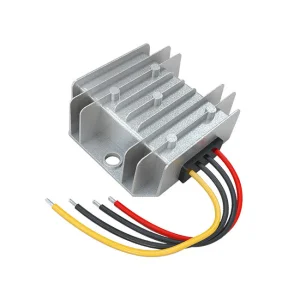
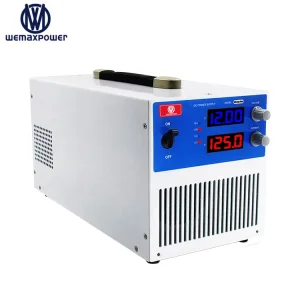
Shenzhen Wemaxpower Technology Co., Ltd. is a specialized manufacturer with 7 years of deep domain experience in power electronics engineering. Our versatile product catalog features programmable DC power supplies, step-up/step-down DC-DC converters, isolated buck regulators, battery chargers, and specialized power modules. Serving a diverse global customer base, we stand out by pairing customer-centric engineering support with rigorous manufacturing processes.
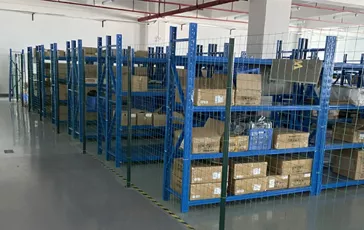
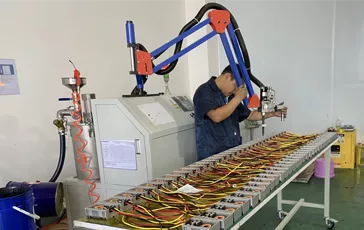
Every converter module undergoes a series of mandatory screening gates before dispatch, ensuring absolute system reliability in the field.
Stringent verification of semiconductor components, magnetic cores, PCB substrates, and enclosure housings for thermal and voltage tolerance parameters.
In-line functional assessment of sub-circuits, solder reliability, component values, and control logic loops during the SMT assembly flow.
Complete parametric performance sweeps measuring line regulation, load transients, Ripple & Noise, and total conversion efficiency.
Extended duration active testing under maximum load and elevated temperature environments to eliminate early-life failure vectors before shipment.

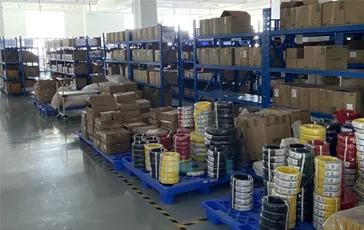
From standard step-down requirements to harsh vehicle environments, explore how our designs deploy in active systems globally.
We support solar and wind array deployments, regulating unstable DC voltage lines down to consistent charges for lithium (LiFePO4) storage banks or auxiliary equipment arrays.
Providing robust buck conversion from high voltage batteries (60V, 48V, 36V) down to 24V or 12V grids for forklift systems, bus telematics, golf carts, and heavy construction equipment.
High reliability step-down systems designed to manage standard negative polarity telecom DC feeds (-48VDC) to feed digital computing stacks and transceivers without line noise injection.
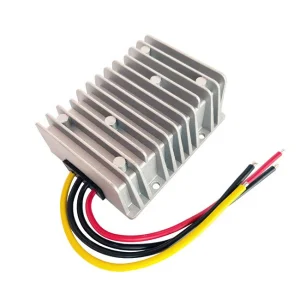
In electric warehouse machinery, traction batteries operate at variable terminal voltages between 48V and 96V depending on states of charge and motor loads. Precision digital controller stacks, GPS telemetry, safety lights, and localized vehicle computing modules operate on a standard 24V or 12V bus. Directly connecting these low-power devices to traction systems is not possible due to back-EMF spikes, system noise, and high voltage offsets. Our specialized 60V-to-24V buck converters use high-frequency inductors and isolated designs to prevent spikes from damaging downstream electronics, offering safe, reliable operations in demanding warehouse settings.
A look at the underlying topologies, mechanical designs, and thermal choices that sustain peak runtime metrics.
As a leading OEM supplier, we focus on balancing electrical safety, performance, and compact footprints. Selecting the correct conversion topology is the first step in ensuring long-term field stability:
| Converter Type | Common Range Inputs | Output Ranges | Efficiency Rating | Primary Industrial Use Case |
|---|---|---|---|---|
| Buck (Step-Down) | 12V, 24V, 36V, 48V, 60V DC | 5V, 12V, 13.8V, 24V DC | Up to 96% | Mobile radios, vehicle logic controls, sensors |
| Boost (Step-Up) | 12V, 24V DC | 19V, 24V, 36V, 48V DC | Up to 95% | Laptop power supplies, EV boosting, battery charge matching |
| Buck-Boost | Wide Range 18V - 40V DC | Regulated 24V DC | Up to 93% | Unstable engine alternators, wind/solar fluctuations |
| Isolated Converter | 12V, 24V, 48V DC | 5V, 12V, 24V DC | Up to 91% | Marine control panels, safety systems, isolated digital loops |
Thermal management is a critical factor in power converter reliability. Heat within high-power systems is caused by switching and conduction losses. Our designs utilize aluminum enclosures filled with high-thermal-conductivity epoxy potting compound. This setup offers dual benefits:
Our engineering roadmap highlights next-generation power electronics that address emerging requirements in density and communication.
Integrating Gallium Nitride and Silicon Carbide switches allows for higher switching frequencies, reducing the size of passive components while maintaining high operational efficiency.
We are developing smart converter modules equipped with digital control buses (CAN, Modbus, PMBus) to monitor voltage levels, system temperatures, and currents in real time.
Shrinking footprints while maintaining high current densities, allowing system designers to integrate converters directly into compact housing designs.
Quick reference answers addressing design, customization parameters, quality, and configuration options.
Isolated converters provide galvanic isolation between the input and output stages, preventing ground loops, reducing electrical noise, and protecting low-voltage circuits from high-voltage input transients. Non-isolated converters share a common ground, offering higher efficiency and a smaller, more cost-effective package, but without electrical isolation between stages.
By testing components at every stage—from incoming raw materials to semi-finished boards, completed units, and through a final burn-in run under full load—we identify and filter out components showing early-life failures. This thorough testing significantly reduces defect rates upon delivery and maintains high reliability over the lifecycle of the product.
Yes. As an OEM manufacturer, we design bespoke circuits to meet specific voltage ranges (e.g., custom buck outputs, dedicated booster modules) and current requirements. We can also adapt enclosure footprints, connection leads, mounting points, and waterproofing to match your system constraints.
IP67 designs can withstand brief immersion in water up to 1 meter deep for 30 minutes, protecting against heavy rains and washes. IP68 ratings offer a higher level of protection, permitting continuous immersion under pressure, making them suitable for marine hulls, deep industrial wash zones, or underground equipment bays.
Our converter designs feature built-in protection against overcurrent, short circuits, output overvoltage, thermal overload, and reverse polarity. These fail-safes help prevent damage to both the converter and the connected load during system faults.
Conversion efficiency varies with the difference between input and output voltages. When the input voltage is close to the output target, efficiency is typically higher. Wide-input designs maintain a stable efficiency curve (often within 2-3% variance) across their entire operating range by using advanced pulse-width modulation (PWM) controllers.
Review our extensive range of high-efficiency regulators, variable power sources, and dedicated charging equipment.
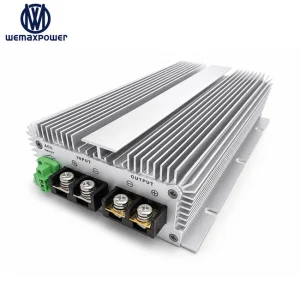
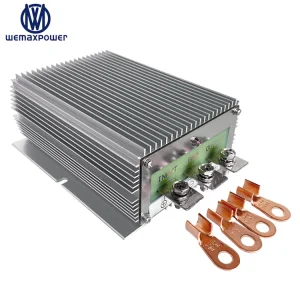
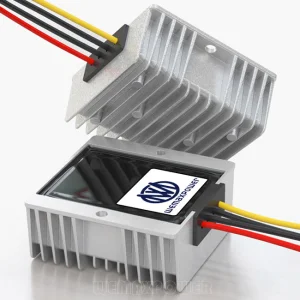
 Wemax Power