Explore our premium lineup of high-efficiency buck, boost, isolated, and programmable power components engineered for critical industrial applications.
An in-depth analysis of modern multi-stage topologies, efficiency dynamics, and industrial integration standards.
Modern industrial frameworks demand unprecedented power density, reliable galvanic isolation, and strict compliance with thermal design envelopes. The traditional landscape of linear regulators and basic pulse-width modulation (PWM) switchers has evolved significantly. Today, high-performance DC-DC chargers and industrial converters leverage resonant architectures (such as LLC or phase-shifted full-bridge topologies) to minimize switching losses and achieve conversion efficiencies exceeding 95%.
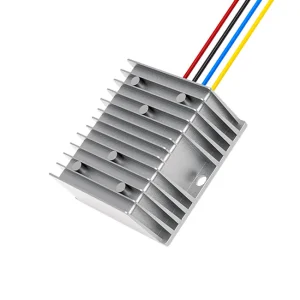
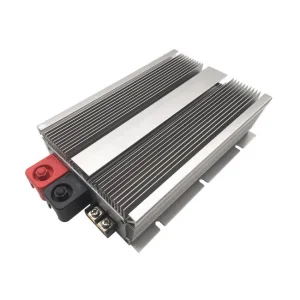
This technological leap is heavily driven by the deployment of Wide Bandgap (WBG) semiconductors, specifically Gallium Nitride (GaN) and Silicon Carbide (SiC). These materials possess higher breakdown voltages, faster switching speeds, and superior thermal conductivities compared to silicon. In practical terms, this allows engineers to specify smaller inductive elements, resulting in compact form factors like our high-efficiency step-up and step-down modules. Reduced size does not compromise capacity; on the contrary, it enables steady power delivery in environments where spatial boundaries are critical constraints.
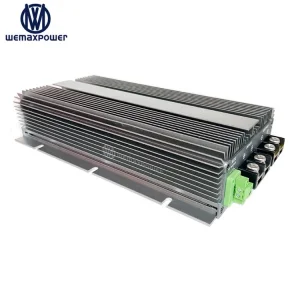
For engineers and systems integration specialists, choosing between isolated and non-isolated topologies represents a primary structural decision. Galvanic isolation provides an absolute physical separation between the input circuit and output loads, preventing high-voltage spikes, ground loops, and potential noise feedback from propagating down the supply line. Our step-down isolated regulators ensure that sensitive low-voltage digital networks remain isolated from noisy automotive alternator outputs or large high-voltage battery arrays.
Non-isolated systems, such as direct buck or boost topologies, are preferred where weight, cost, and extreme efficiency are dominant. However, they lack the protection barrier. To address safety and compliance requirements, our line of industrial solutions incorporates advanced circuit protections. These include transient voltage suppressors (TVS), input under-voltage lockouts, and robust output short-circuit protectors. This guarantees stable system operation under real-world, dynamic industrial loads.
How we ensure zero-defect delivery across our global logistics network through rigorous manufacturing testing phases.
Quality and reliable performance are critical in industrial power electronics, where system failures can lead to costly operational downtime. At Shenzhen Wemaxpower Technology Co., Ltd., our engineering culture is built around a rigorous 4-step quality control (QC) protocol. This systematic testing lifecycle ensures that every programmable DC power supply, DC-DC converter, and intelligent charger meets standard industrial expectations before leaving our facility.
Strict incoming quality control (IQC) evaluating switching MOSFETs, high-frequency transformer windings, and capacitors.
In-process testing of populated PCBAs using automatic optical inspection (AOI) to identify circuit trace anomalies.
Functional checks on load regulations, output ripples, current-limiters, and variable control features.
100% full-load dynamic burn-in testing inside temperature-controlled chambers to isolate and eliminate premature failures.
This methodology ensures that critical parameters like load regulation accuracy, low thermal derating curves, and transient recovery times match design specifications. By filtering out component variations during the initial testing stages, we provide industrial clients with power solutions ready to deploy in demanding applications like mining operations, municipal fleets, and telecom networks.
Understanding procurement requirements, localized regulations, and strategic integration parameters across international markets.
Adhering to CE, FCC, RoHS, and specialized international safety standards. Designing with active PFC to satisfy global grid requirements.
Aluminum enclosures with integrated cooling fins or forced-air systems. Structural integrity rated for heavy vibration and extreme shocks.
Integrating programmable systems supporting 0-5V remote analog control, RS485 communication, Modbus, and multi-stage charging algorithms.
From a macro-industry perspective, procurement leads must source components that balance cost, reliability, and technological adaptability. The modern power supply is no longer just a passive transformer; it is an active node in a connected system. Whether integrated into a smart city grid, a specialized electric vehicle conversion, or an offshore solar station, components must offer telemetric transparency and smart protection mechanisms.
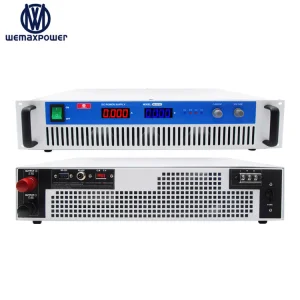
Wemaxpower address these challenges by providing highly configurable architectures. Our adjustable switching power supplies, ranging from 20V-125V outputs at up to 200A capacities, allow systems designers to customize voltage limits and charging current limits. This eliminates the need for expensive custom designs, reducing development cycles and expediting product launches.
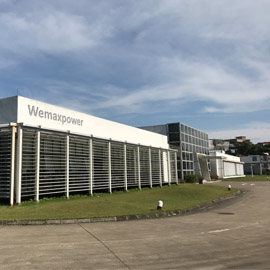
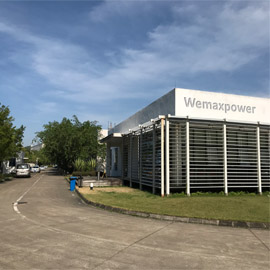
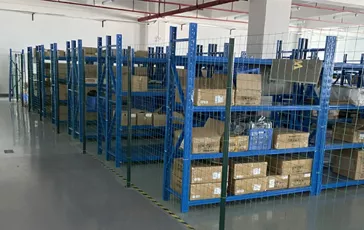
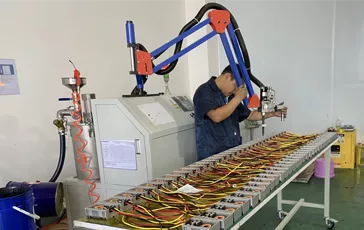
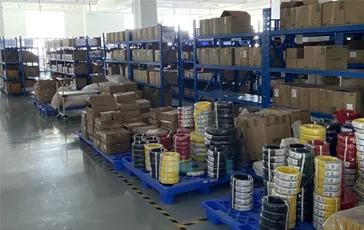
Inside our Shenzhen facility: engineering robust, high-performance power solutions for global distribution.
Shenzhen Wemaxpower Technology Co., Ltd. is a dedicated manufacturer with 7 years of specialized experience. Our comprehensive product portfolio includes programmable DC power supplies, high-efficiency DC-DC converters, and specialized power modules designed for industrial deployment. We export to multiple global markets, prioritizing product quality, functional design, and direct engineering support.
All products undergo our standard 4-step quality control process: raw material verification, semi-finished board testing, finished product parameter calibration, and a full-load dynamic thermal aging test. This strict control loop is the foundation of our engineering integrity and the reliability we deliver to our partners worldwide.

Where modern power systems are heading: bi-directional topologies, edge intelligence, and advanced thermal systems.
As industry frameworks transition towards electrification and decentralized energy storage, DC-DC converter requirements are shifting. The next generation of industrial power architectures will rely on two primary technological advancements:
1. Bi-Directional Power Interfaces: Future networks require converters that can manage power flow in both directions—allowing vehicle-to-grid (V2G) integrations and energy recovery in industrial cranes and heavy machinery. Wemaxpower is currently developing isolated bi-directional topologies that maintain high conversion efficiency in both forward and reverse operational modes.
2. Smart Telemetry Integration: Static power conversion is transitioning to intelligent energy management. Integrating CAN bus, Modbus, and Bluetooth telemetry enables real-time diagnostic reporting on parameters like unit temperature, load levels, voltage dips, and aging indicators. This allows system managers to transition from reactive repairs to predictive maintenance schedules.
3. Advanced Thermal Design: Heat dissipation remains a major challenge in miniaturizing high-power converters. We are working on phase-change cooling interfaces and advanced direct-bonded copper (DBC) substrate layouts to enhance heat transfer away from hot components. This will allow for higher power densities without compromising reliability under high ambient operating temperatures.
Direct technical answers addressing the key specifications, configurations, and applications of our products.
Isolated DC-DC converters feature an electrical barrier (via a high-frequency transformer) between the input and output circuits, preventing direct current flow between them. This prevents ground loop currents, isolates noise, and protects downstream equipment from input voltage spikes. Non-isolated converters share a common ground line and are typically more compact and efficient, making them suitable for applications where ground isolation is not a design requirement.
A typical 3-stage charging profile consists of Constant Current (CC/Bulk), Constant Voltage (CV/Absorption), and Float/Trickle stages. In LiFePO4 systems, this algorithm delivers the bulk charge efficiently, tapers the current as the battery approaches full capacity, and terminates or reduces current output to prevent cell degradation from overcharging. This process protects the chemistry, optimizes charge times, and extends overall battery cycle life.
During the aging phase, each converter is run at full load inside a heated chamber. We continuously monitor output voltage stability, thermal dissipation curves, current limits, and electrical noise. This test simulates extended field usage to identify and eliminate early-stage component failures, ensuring high reliability prior to shipping.
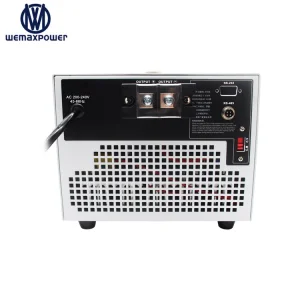
Yes. Our programmable power supplies support remote voltage and current configuration via 0-5V or 0-10V analog control signals. This design allows for direct integration with external PLC systems, automated test equipment, or supervisory SCADA control loops.
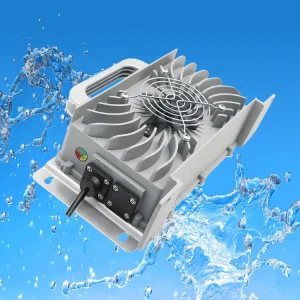
Our catalog includes several IP67-rated waterproof models. These units are encapsulated in a robust thermally conductive epoxy potting within an aluminum enclosure, preventing dust, humidity, and water ingress in challenging conditions like mining, marine, and construction environments.
Active PFC dynamically aligns the input current waveform with the input voltage waveform, keeping the power factor close to 0.99. This minimizes reactive power losses and total harmonic distortion (THD), allowing industrial plants to maximize electrical capacity and meet global utility compliance standards.
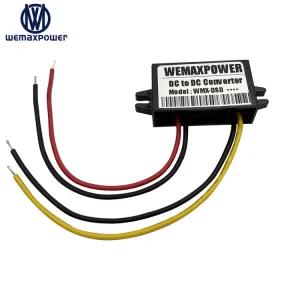
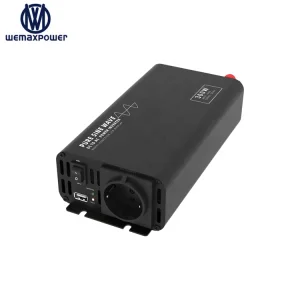
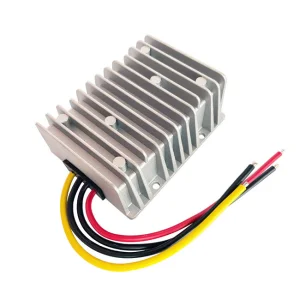
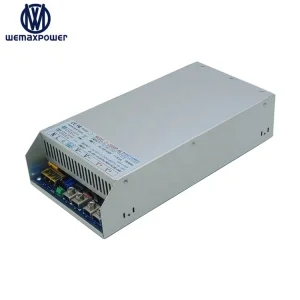
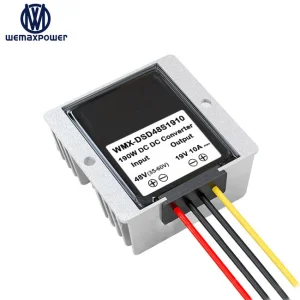
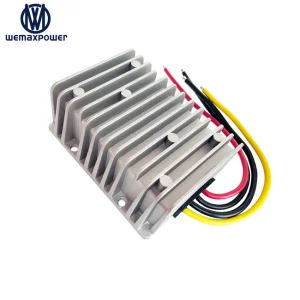
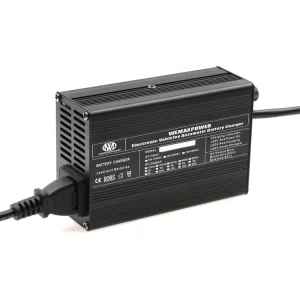
Select specialized equipment from our range of automotive regulators, pure sine inverters, and high-current industrial converters.
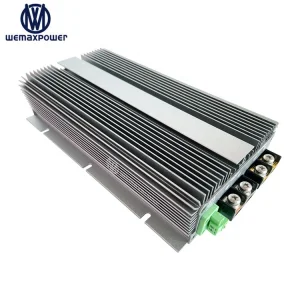
 Wemax Power