Explore our top-performing DC-DC buck/boost converters and professional pure sine wave power inverters engineered for industrial durability.
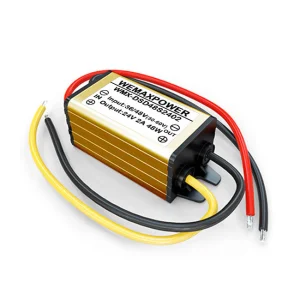
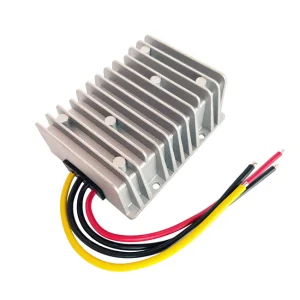
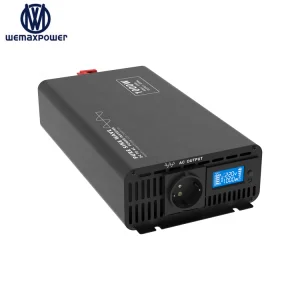
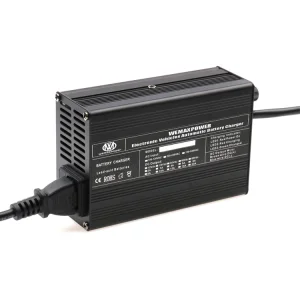
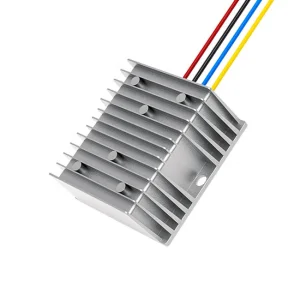
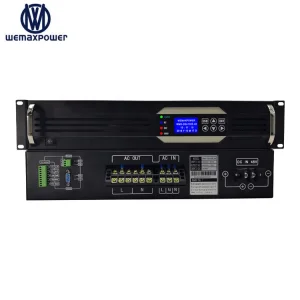
An in-depth analysis of the shift towards high-frequency topology, wide-bandgap semiconductors, and digital signal control.
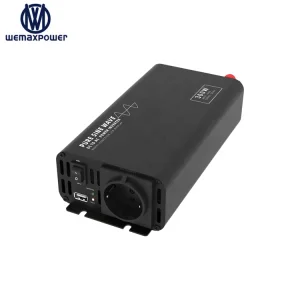
The global transition toward clean, resilient energy infrastructures has put power electronics at the forefront of engineering innovation. Among these, the Pure Sine Wave Inverter has evolved from a niche backup tool into a vital system node. Unlike modified sine wave alternatives, which output blocky, stepped wave shapes that degrade delicate induction motors and cause acoustic noise, pure sine wave systems replicate the seamless electrical signature of utility grids (typically achieving a Total Harmonic Distortion [THD] of < 3%). This performance level is essential for running modern workloads without risk of electromagnetic interference or device breakdown.
A primary catalyst for this shift is the deployment of Wide-Bandgap (WBG) semiconductors, particularly Silicon Carbide (SiC) and Gallium Nitride (GaN). Compared to traditional Silicon IGBTs, GaN and SiC MOSFETs allow significantly faster switching frequencies, reduced thermal dissipation, and smaller magnetic filter components. These characteristics enable manufacturers to design exceptionally compact units with peak efficiency ratings exceeding 95%. Furthermore, integrating microcontrollers (MCUs) and Digital Signal Processors (DSPs) allows real-time monitoring, auto-tuning loops, and complex protection systems to adapt dynamically to variable loads, resulting in longer device lifespans and lower overall operating costs.
Enables ultra-fast switching frequencies, dramatically reducing the physical volume of magnetic cores and enhancing heat dissipation profiles.
Delivers clean, utility-grade AC power, protecting sensitive loads such as medical diagnostics, servers, and heavy industrial inductive loads.
Real-time parameter tuning, active soft-start routines, and diagnostic feedback minimize transient voltage dips during motor startup.
Navigating complex international certifications, quality benchmarks, and the operational value of CE conformity.
For corporate purchasing agents, engineering leads, and distribution networks, procuring power converters requires navigating complex international safety and performance criteria. The primary benchmark for European Union and associated market entries is the CE Certification. This mark shows that inverters meet strict European standards for electromagnetic compatibility (EMC Directive 2014/30/EU) and low-voltage safety (LVD Directive 2014/35/EU). Working with an exporter whose products carry validated CE certification helps purchasing teams speed up customs clearance, minimize product liability risks, and ensure safe installation and operation.
Beyond safety marks, professional buyers evaluate the efficiency curve across load ranges (from 10% to 100%), power factor capacity, and the effectiveness of protective features. A reliable industrial power inverter must include a complete set of safety guards: input over-voltage and under-voltage protection, output short-circuit protection, over-temperature shutdown, and isolation barriers between DC and AC circuits. Using optocouplers and isolated feedback circuits keeps downstream systems safe from high-voltage DC faults, satisfying internal risk assessment goals for critical operations worldwide.
| Inverter Waveform Type | THD Performance | Device Compatibility | System Efficiency | Recommended Application |
|---|---|---|---|---|
| Pure Sine Wave (Wemaxpower) | < 3% (Utility Grade) | 100% (Including sensitive medical, telecom & motors) | Up to 95%+ (Low heat, minimal losses) | Telecom systems, RV lifepo4 systems, industrial motors |
| Modified Sine Wave | 20% – 40% (High distortion) | Limited (Can damage inductive/sensitive loads) | 70% – 85% (High heat generation, energy loss) | Simple resistive loads (heaters, basic lighting) |
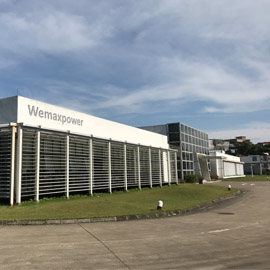
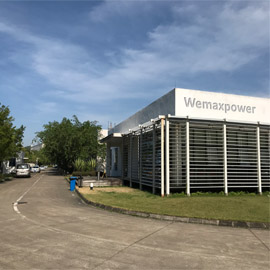
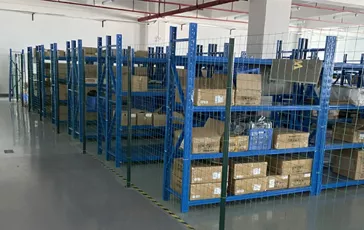
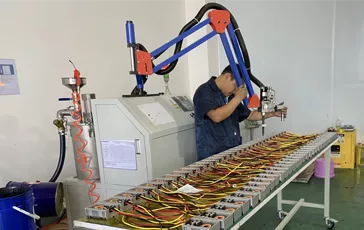
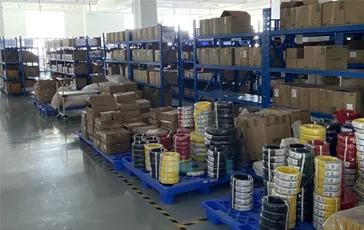
Inside Shenzhen Wemaxpower Technology: Automated production lines and comprehensive quality assurance testing.
Located in the heart of China's advanced electronics hub, Shenzhen Wemaxpower Technology Co., Ltd. represents the modern Factory 4.0 manufacturing standard. By combining automated SMT lines, precise wave soldering machines, and computerized testing bays, Wemaxpower consistently produces high-quality power solutions. This organized supply chain allows us to source raw components efficiently, quickly adapt our assembly configurations, and offer flexible customization for OEM and ODM projects worldwide.
Quality control is built directly into our manufacturing steps. Wemaxpower implements a 4-step QC process to check every product before dispatch:

From remote off-grid solar sites to specialty vehicles, our systems deliver consistent power conversion where it matters most.
Pure sine wave inverters are critical components across diverse, demanding industrial sectors. For instance, in Telecommunications infrastructure, remote towers are frequently powered by high-voltage DC battery banks (typically 110Vdc or 220Vdc). Standard commercial-grade inverters cannot handle these inputs or deliver the electrical isolation required. An isolated telecom inverter (such as our 220Vdc to 220Vac/230Vac systems) converts this input safely, ensuring critical transmitters, signal routers, and microwave equipment stay online without signal degradation.
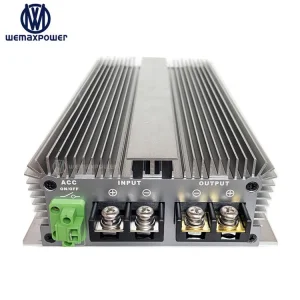
In Specialty Fleet Vehicles & Recreational Transportation, keeping auxiliary batteries charged and powering onboard electronics requires tough, vibration-resistant equipment. Our DC-to-DC chargers with ignition-sensing (ACC) functions ensure vehicle alternators charge LiFePO4 battery banks safely, avoiding damage to high-output alternators. Additionally, waterproof IP67-rated converters handle the extreme vibrations, dust exposure, and moisture typical of automotive and marine engine bays, providing reliable performance in harsh field environments.
In Industrial Process Control & Automation, momentary voltage drops can stop production lines and corrupt PLC memory. High-capacity pure sine wave inverters with fast bypass switches act as line conditioning systems. During grid power changes, these units switch smoothly to battery backup, keeping precision electric motors, automated actuators, and quality control systems running without interruption.
Answers to common technical questions from system integrators, design engineers, and procurement leads.
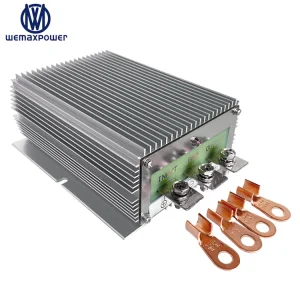
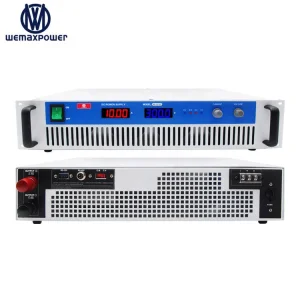
Discover our range of programmable power supplies, automotive auxiliary battery chargers, and high-current step-down regulators.
 Wemax Power