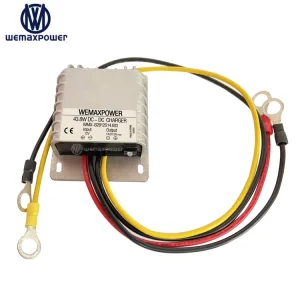
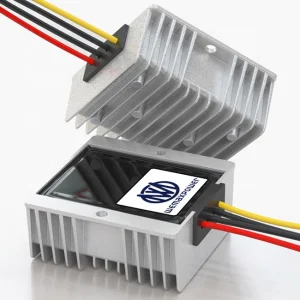
Engineered for high performance, maximum thermal efficiency, and broad battery chemistry compatibility (LiFePO4, Lithium-ion, Lead-Acid).
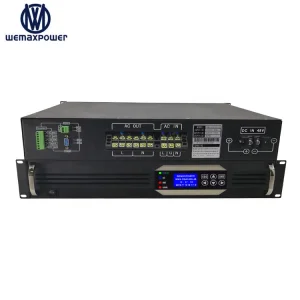
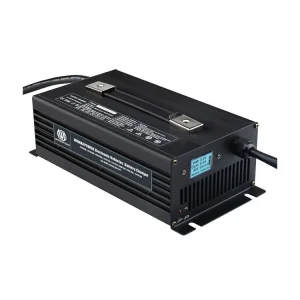
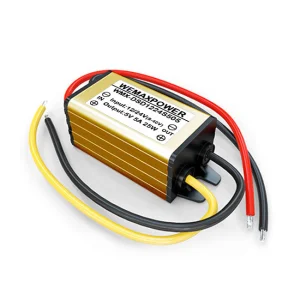
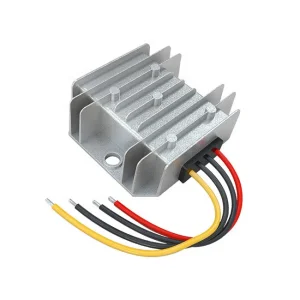
In-depth white paper analysis on the evolving landscape of power conversion systems, battery backup chargers, and off-grid telecommunication networks.
Modern commercial infrastructure demands lightweight, small-footprint solutions without compromising power capacity. Innovations in Wide Bandgap (WBG) semiconductors, particularly Gallium Nitride (GaN) and Silicon Carbide (SiC), are enabling manufacturers to design highly compact DC-DC converters and battery backup chargers. These materials allow higher switching frequencies, drastically reducing the sizes of magnetic components like transformers and inductors, while pushing conversion efficiencies beyond 96%.
Industrial applications no longer rely solely on legacy lead-acid batteries. The rapid adoption of Lithium Iron Phosphate (LiFePO4) and Lithium-Ion batteries requires dynamic charging profiles. Standard chargers fail to address the specific voltage limits and balancing demands of modern chemistry. Advanced backup systems feature adaptive 3-stage or 4-stage charging algorithms (Constant Current, Constant Voltage, Float, and Equalization) that communicate via CAN bus or Modbus protocol to prevent thermal runaway and maximize battery lifespan.
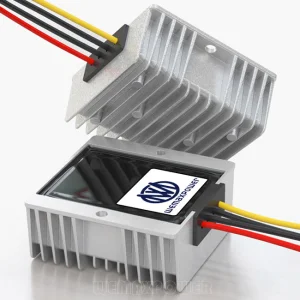
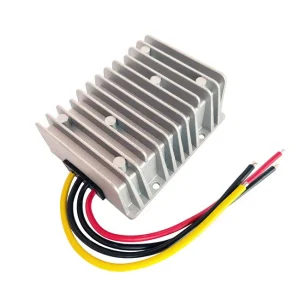
Harsh environments—such as marine vessels, automotive systems, mining machinery, and outdoor telecom enclosures—subject power converters to dust, humidity, salt spray, and extreme temperatures. Today's industry standard is moving towards IP67/IP68 dustproof and waterproof ratings. This is achieved through complete epoxy potting or advanced heat-dissipation chassis, eliminating the need for cooling fans which represent a common point of mechanical failure in dusty industrial settings.
For international supply chain managers and project engineers, sourcing the ideal battery backup charger manufacturer is a multi-dimensional task. High-quality power modules must align with specific operational metrics to achieve low Total Cost of Ownership (TCO) and seamless systems integration.
Modern plants require wide-range AC inputs (from single-phase 100VAC-240VAC up to three-phase 380VAC) and highly regulated, adjustable DC outputs to interface with diverse industrial machinery and battery banks without requiring complex voltage adapters.
Compliance with strict global standards such as FCC Part 15 Class A, CE, RoHS, and CISPR 22 is non-negotiable. Proper filtering circuits prevent radio frequency interference (RFI) from disrupting nearby communications or precision telemetry gear.
Reliable systems must integrate active safety barriers including Over-Voltage Protection (OVP), Over-Current Protection (OCP), Short-Circuit Protection (SCP), Reverse Polarity Protection, and thermal-overload automatic shutdown with auto-recovery.
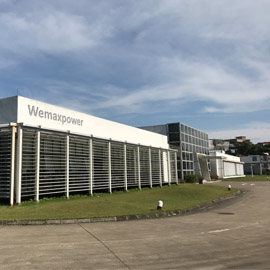
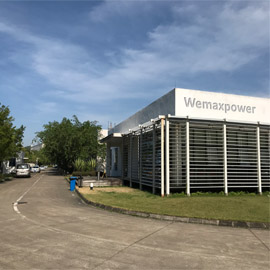
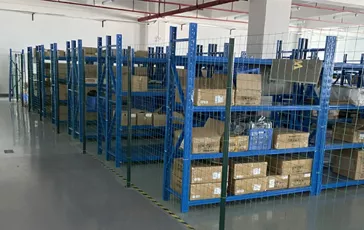
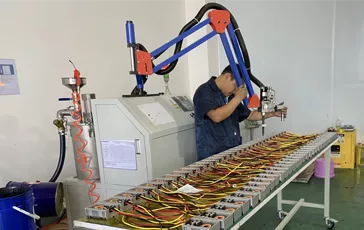
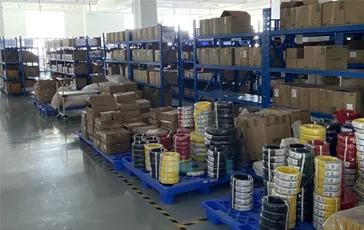
Shenzhen Wemaxpower Technology Co., Ltd. is a high-tech manufacturer with 7 years of specialized expertise in the power supply industry. Our product line includes programmable DC power supplies, DC-DC converters, and specialized power modules designed for global exports to multiple industrial markets.
By implementing advanced automation, computerized SMT lines, and dynamic quality control tracking, we provide our global customers with cost-optimized, highly reliable solutions. Our factory team is dedicated to delivering quality-guaranteed orders on time, backed by comprehensive engineering support.
Our Rigorous 4-Step Quality Control (QC) Process ensures zero defects:
Inbound components, semiconductors, capacitors, and magnetic cores are verified through strict inspection protocols before production starts.
Automated optical inspection (AOI) and multi-point voltage checks occur after the SMD reflow phase to detect manufacturing errors early.
Comprehensive verification of output parameters, efficiency curves, load regulation, and ripple levels under varying load settings.
All units are subjected to full-load burn-in testing inside our high-temperature chambers for up to 48 hours to eliminate infant mortality failures.

Explore how our customizable power supplies and battery chargers support critical infrastructures worldwide.
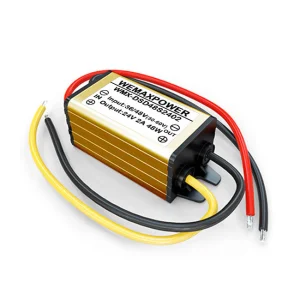
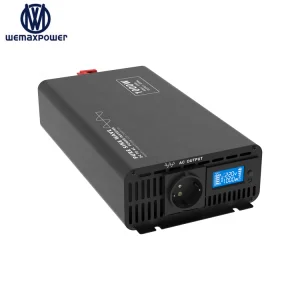
Off-grid telecom stations rely on clean power to maintain connectivity. In areas where utility grids are unreliable or non-existent, our 48Vdc to 220Vac Pure Sine Wave Inverters convert battery energy to run communication equipment, while our rugged DC-DC buck converters provide stable power to telemetry systems.
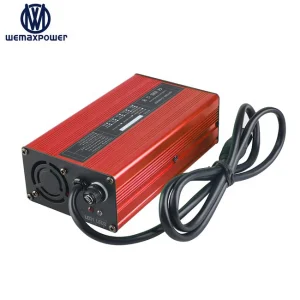
Forklifts, golf carts, automated floor scrubbers, and industrial cleaning machines depend on rapid, safe charging profiles. Our Automatic Battery Chargers (100-240VAC to 12V 50A) are designed to withstand rugged warehouse environments, delivering optimal charge rates that extend battery life cycle and reduce equipment downtime.
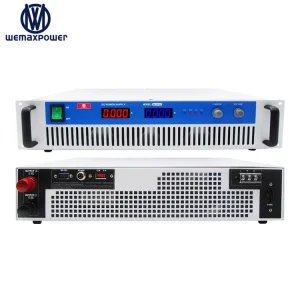
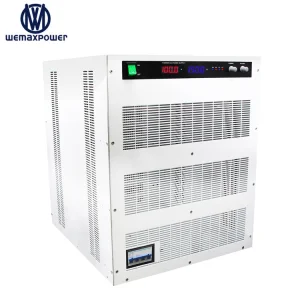
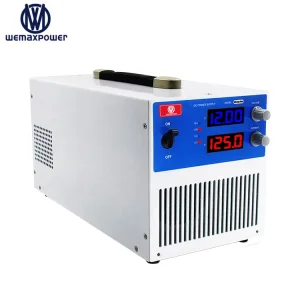
For research institutes and electronic manufacturing sites, the 15000W Constant Current Constant Voltage (CCCV) Switching DC Power Supplies provide adjustable outputs. Engineers can easily regulate voltage and current values to test electronic components, perform battery cycling tests, or calibrate electric motors.
Comprehensive insights from our engineering desk regarding battery chemistry, voltage conversion topologies, and environmental protection.
Connecting a battery bank directly to an alternator can result in undercharging or overcharging, particularly when dealing with different battery chemistries like LiFePO4. A dedicated DC-to-DC charger controls the charging profile by stepping up or stepping down the alternator's voltage to match the target battery's charging parameters. This safeguards your auxiliary battery system and guarantees a full charge every cycle.
An IP67 rating ensures complete protection against dust ingress and protects the internal electronics from water immersion down to 1 meter depth for 30 minutes. This is critical for automotive, yachting, and industrial setups where dust, salt spray, and water splashes could cause short circuits and premature failures.
A buck converter can only step down an input voltage to a lower output voltage (e.g., 36V to 24V). A buck-boost converter can step the voltage both up and down depending on fluctuations in the input line. This is crucial in automotive systems where battery voltage can dip to 10V during engine cranking or rise to 15V during charging, keeping a stable 12V output for critical loads.
Pure sine wave inverters mimic the smooth electrical waveform supplied by utility grids, featuring very low Total Harmonic Distortion (typically <3%). Modified sine wave inverters produce choppy square-wave transitions that generate excess heat, noise, and potential failure in inductive loads like motors, refrigerators, precision medical devices, and telecom gear.
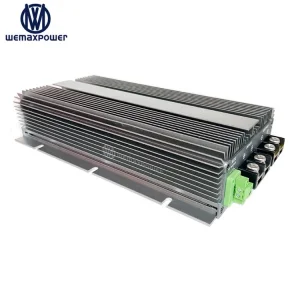
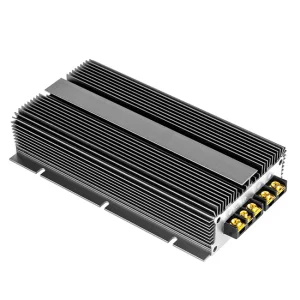
Custom industrial voltage regulators, forklift buck transformers, and heavy-duty variable laboratory power units.
 Wemax Power