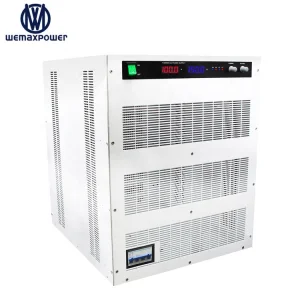
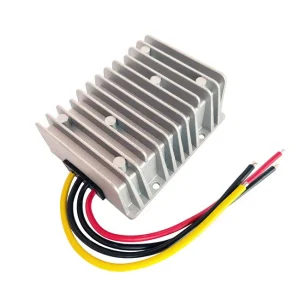
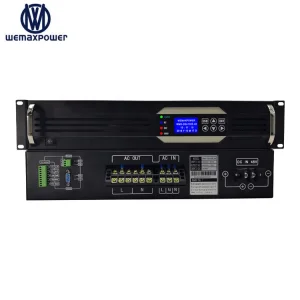
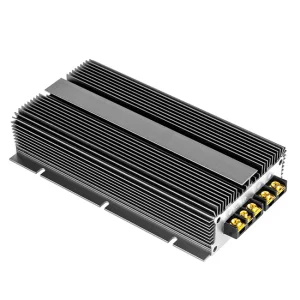
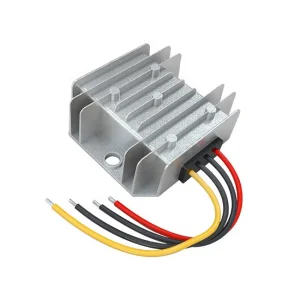
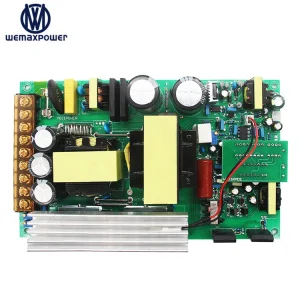
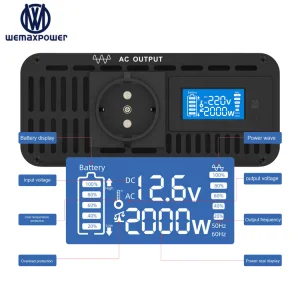
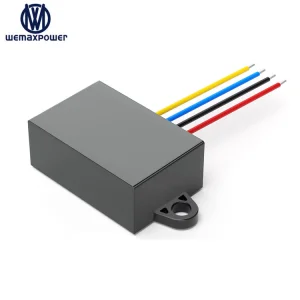
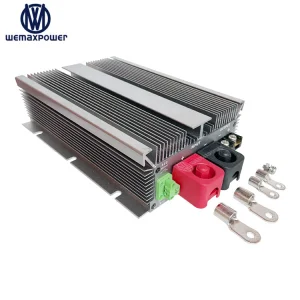
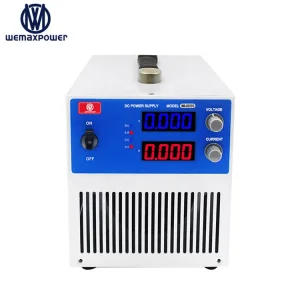
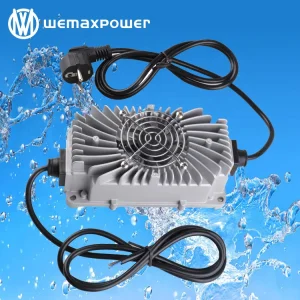
Explore our high-demand industrial electrical solutions, from waterproof battery chargers to specialized voltage converters, designed to optimize power flow in harsh environments.
Understanding the critical role of programmable power simulation in modern technology, R&D labs, and large-scale industrial compliance testing.
The transition toward electrification, coupled with the rapid integration of renewable energy grids and advanced electric vehicle (EV) ecosystems, has catapulted power test equipment to the forefront of global industrial infrastructure. At the core of this electronic evolution lies the AC power source—an indispensable testing utility designed to simulate diverse grid conditions, voltage fluctuations, harmonic distortions, and trans-continental frequency profiles (e.g., 50Hz, 60Hz, 400Hz).
Globally, manufacturers, compliance certification centers, and R&D facilities encounter varying mains parameters depending on local grid stability. An AC power source functions not merely as a power provider, but as a diagnostic simulation instrument. It isolates the unit under test (UUT) from native electrical grid anomalies and systematically feeds it precise, controlled sinusoidal waveforms. This ensures that consumer appliances, aerospace components, and industrial machinery perform reliably across all geographical destinations, regardless of grid degradation.
Information Gain Indicator: Modern programmable AC sources are shifting from traditional linear topologies to switching-mode PWM designs utilizing Wide-Bandgap (WBG) semiconductors like Gallium Nitride (GaN) and Silicon Carbide (SiC). This evolution realizes unprecedented power density, exceeding 95% operating efficiency, and reduces cabinet footprint by up to 40% in large-scale test bays.
In China's manufacturing landscape, the ecosystem of AC and DC power source suppliers has progressed from standard transformers to highly sophisticated, digital-signal-processor (DSP) controlled, bidirectional programmable units. This technological maturity enables suppliers like Shenzhen Wemaxpower Technology Co., Ltd. to provide highly competitive, robust, and cost-effective modular units that match the rigorous requirements of global distribution and international compliance guidelines.
How our programmable AC & DC power supplies drive efficiency and precision across core technological sectors globally.
Simulating grid anomalies, voltage sags (LVRT), and frequency shifts for testing solar inverters, wind turbine control panels, and grid-connected storage devices.
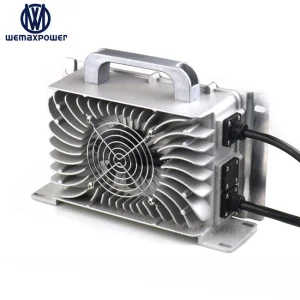
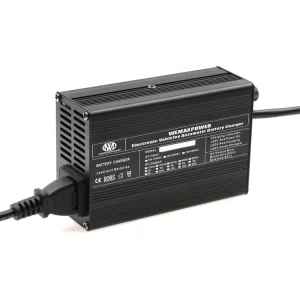
High-efficiency DC/DC converters, battery pack simulators, and waterproof battery chargers (12V-72V) specifically engineered for rugged forklift, golf cart, and e-mobility systems.
Providing clean, stable 400Hz frequency converter simulation to test modern aircraft components, defense communication systems, and marine electronics.
Programmable power racks operating 24/7 for production aging setups, burn-in validation, and consumer electronics testing under localized load dynamics.
Years Production Experience
Quality Control Process
Burn-In Aging Verified
Global Export Markets
As a leading Chinese supplier with 7 years of industrial manufacturing experience, we specialize in high-capacity programmable DC power supplies, step-down/step-up converters, battery chargers, and power conversion modules. We export globally, building trust through engineering transparency and robust support.
Our commitment to Reliability and Authority is built into our rigorous 4-step quality assurance program. Every device leaving our assembly line is built to withstand hostile industrial power environments.
Strict component-level screening, checking tolerances of capacitors, MOSFETs, and transformers before release to production.
In-circuit testing (ICT) to identify soldering anomalies, component placement errors, and internal loop responses.
Static load, dynamic response, and functional calibration against set metrics to ensure absolute compliance.
Continuous operation at elevated temperatures to proactively eliminate early mortality failure rates.
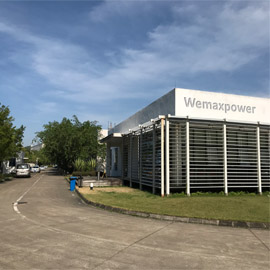

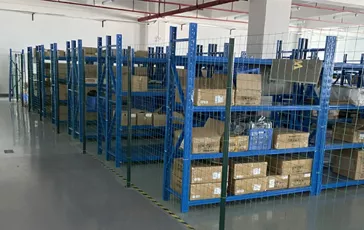
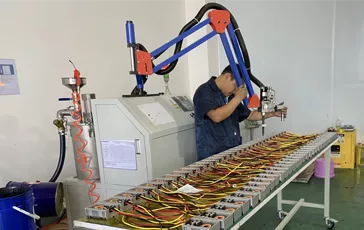
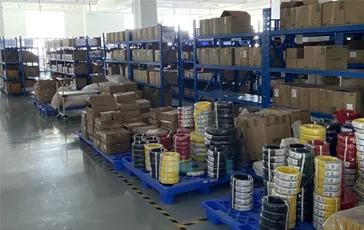
The evolutionary trajectory of industrial power source designs, driving towards digitalization and green efficiency.
Traditional silicon-based IGBTs and MOSFETs are encountering physical operating limits regarding switching speed and thermal dissipation. Over the next five years, the integration of Silicon Carbide (SiC) and Gallium Nitride (GaN) devices into variable AC and DC power supplies will become standard. This reduces system volume, decreases cooling requirements, and enhances transient response speeds to microsecond levels.
When testing devices that feedback power (such as motor drives and solar inverters), traditional load banks dissipate this energy as heat. Modern regenerative AC/DC power sources recycle up to 90%+ of the absorbed load energy back to the local utility grid. This reduces operational overhead, minimizes thermal management costs, and supports sustainable corporate practices.
In aerospace and automotive systems engineering, power sources are increasingly interfaced with real-time simulator platforms (such as RTDS or dSPACE). This allows physical test equipment to respond in real-time to simulated environments, recreating extreme fault conditions without exposing personnel or hardware to destructive laboratory tests.
Detailed technical responses to the most common queries from procurement officers and systems engineers.
Linear AC power sources provide extremely low total harmonic distortion (THD) and very low noise, making them ideal for sensitive audio and communication tests. However, they are heavy and inefficient. Switching-mode AC power sources (PWM technology) are highly efficient, compact, and offer high power density, making them suitable for industrial burn-in, motor testing, and grid simulation.
Through digital signal synthesis, users can program parameters like sweep, ramp, step, and custom waveforms. This allows the system to output voltage drops (sags), spikes (surges), harmonic distortions, and momentary dropouts to evaluate the resilience of the connected equipment under real-world grid conditions.
Industrial power environments are hostile, subject to thermal shock and load fluctuations. By implementing component testing, semi-finished ICT, finished load calibration, and thermal burn-in, we eliminate early-life component failures. This ensures our converters and power supplies operate reliably in demanding environments.
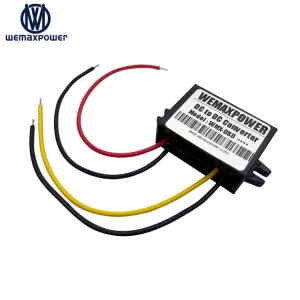
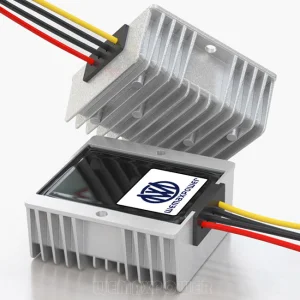
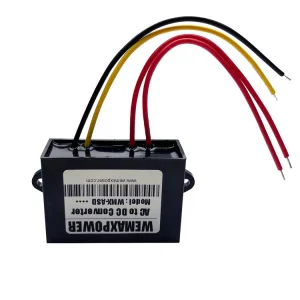
Yes. We offer fully encapsulated IP67-rated waterproof chargers and converters (such as our 12V/24V to 5V 30W buck converter and 12V-72V lithium smart chargers). These models feature potting compounds to protect internal components from moisture, salt spray, vibration, and dust.
Industrial-grade voltage regulators, variable power supplies, and pure sine wave telecom inverters engineered for high reliability.
 Wemax Power