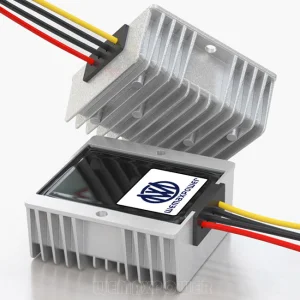
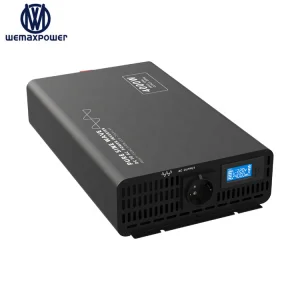
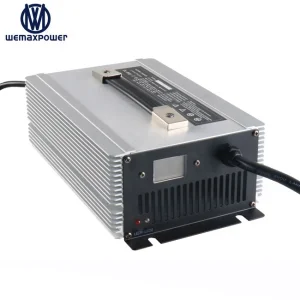
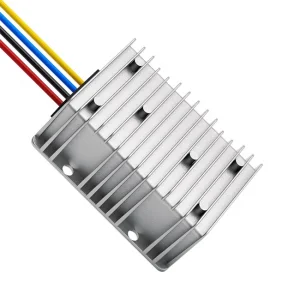
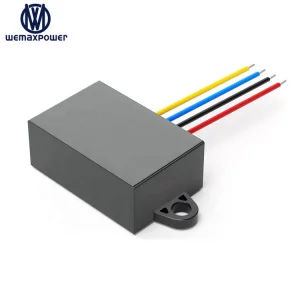
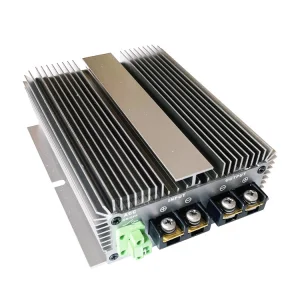
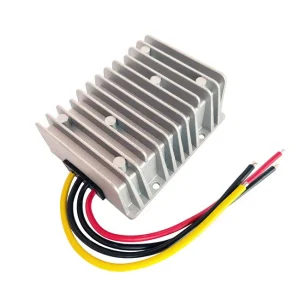
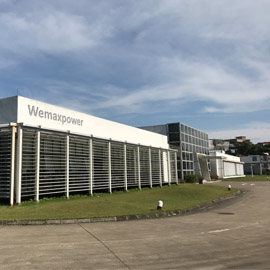
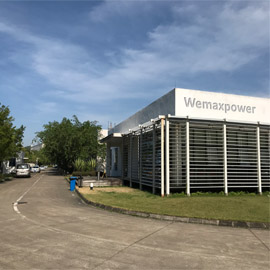
In the rapidly evolving landscape of automotive and industrial electrification, power conversion stability is the cornerstone of operational efficiency. Shenzhen Wemaxpower Technology Co., Ltd. has positioned itself at the vanguard of this sector, operating as a top trusted automotive power supply manufacturer and global exporter for over 7 years. Our R&D and engineering pipelines translate complex electrical requirements into highly resilient, commercial-grade hardware systems.
Our comprehensive portfolio integrates programmable DC power supplies, high-efficiency DC-DC converters, isolated buck-boost regulators, and intelligent battery chargers. Designed for dual-voltage automotive networks, marine craft, utility vehicles, and high-capacity industrial machines, our systems deliver flat conversion curves, minimizing thermal footprints while maintaining peak power densities under harsh environmental stresses.
As the global transport infrastructure transitions toward low-emission profiles and fully electric systems, the technical specifications of onboard power conversion units have evolved dramatically.
Traditional 12V vehicle buses are reaching their physical load capacity. Modern mild hybrids (MHEVs) and electric vehicles utilize 48V architecture to drive heavier loads such as active suspensions, electric turbochargers, and auxiliary heating. This shift necessitates highly reliable step-down buck transformers (such as our 48V to 24V and 48V to 19V modules) to bridge legacy 12V/24V systems without incurring I²R transmission losses over long wire harnesses.
Transitioning from standard silicon to Silicon Carbide (SiC) and Gallium Nitride (GaN) semiconductor devices allows for faster switching frequencies and lower thermal dissipation. This design innovation reduces the physical size of inductors and capacitors, enabling ultra-compact profiles for DC-DC converters and AC-DC switching power systems while pushing efficiency limits beyond 96%.
Automotive grade safety requires power systems to adhere to strict ISO 26262 frameworks. Power supplies must feature integrated short-circuit, over-current, over-voltage, and thermal shutdown algorithms. Hardware design must build in galvanic isolation to decouple high-voltage traction battery packs from sensitive low-voltage microcontrollers, protecting critical telematics systems.
Industrial and automotive OEM procurement officers prioritize specific performance metrics to reduce the Total Cost of Ownership (TCO) and avoid warranty failures.
We engineer bespoke conversion frameworks for key transport, logistics, and heavy-industry segments.
Marine environments expose power electronics to high humidity and corrosive salt spray. Our marine chargers, such as the IP68-rated 12V to 12V 30A DC-to-DC Smart Battery Charger, feature corrosion-resistant housings and complete potting. This design ensures safe charging profiles for onboard LiFePO4 batteries while floating on the high seas.
Electric golf carts, delivery scooters, and low-speed electric vehicles require fast, safe charging cycles. Wemaxpower's smart lithium chargers (ranging from 48V to 58.8V, 30A outputs) utilize complex constant-current/constant-voltage (CC/CV) profiles, thermal balancing, and overcharge protection to prolong battery life.
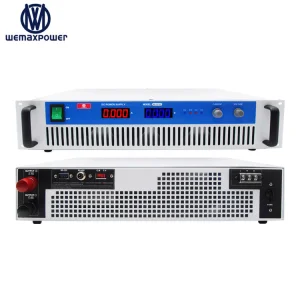
Beyond mobile power, our high-power variable industrial systems, like the Adjustable 3000W AC/DC switching power supply (supporting inputs like 380VAC or 220VAC converting down to 0-100V, 30A), find critical application in electrolysis, electroplating, and chemical wastewater treatment operations worldwide.
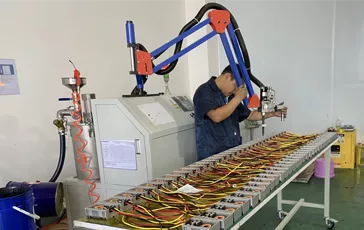
Quality control is not an afterthought; it is integrated directly into our production line. Every batch of converters, inverters, and modules undergoes a rigorous four-stage validation process.
Before assembly, all active and passive components—such as MOSFETs, capacitors, microcontrollers, and transformers—undergo incoming quality control (IQC) to verify component tolerances.
Printed Circuit Board Assemblies (PCBAs) undergo in-circuit diagnostics and optical inspections (AOI) to verify soldering trace integrity and detect open or short circuit conditions.
Once fully assembled, units undergo physical testing to verify nominal voltage tolerances, dynamic load transients, ripple parameters, and structural sealing reliability.
To eliminate infant mortality failures, 100% of finished units undergo a rigorous full-load dynamic burn-in and aging test in high-temperature environments before packaging.

The power supply of tomorrow is not static; it is digital and connected. Wemaxpower's upcoming technology roadmap integrates digital signal processors (DSPs) to enable real-time control loops. This software integration allows users to configure voltage points, monitor temperature thresholds, and update battery charge profiles via software over CAN bus, RS485, or Modbus.
This technological leap enables predictive maintenance: the power supply can monitor its own internal operating temperature and component aging indicators. It can alert vehicle central control computers of potential issues before they cause system failures, ensuring uninterrupted operations for emergency response units, delivery fleets, and public transport systems.
To satisfy the spatial limits of modern vehicle engine bays and battery compartments, our R&D focus is shifting toward planar transformer technology. By replacing standard wire-wound copper inductors with multi-layered PCB traces, we can reduce the volume of magnetic components by up to 40%.
This advancement allows us to offer higher current carrying capacities (e.g., boosting a 15A output buck converter to 30A within the same form factor) without compromising thermal management.
 Wemax Power