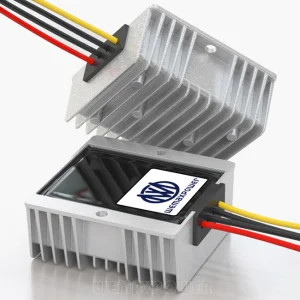
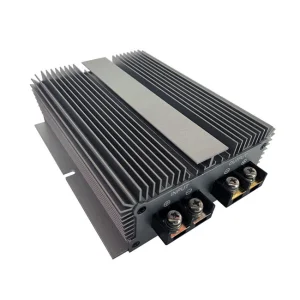
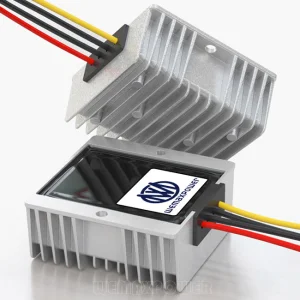
Engineered to withstand wide input voltage fluctuations, severe thermal challenges, and high humidity environments.
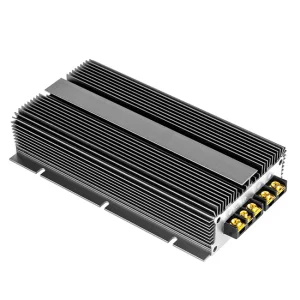
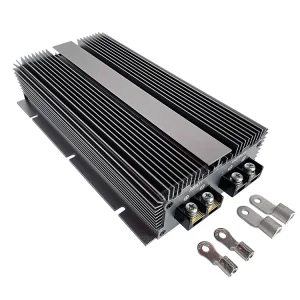
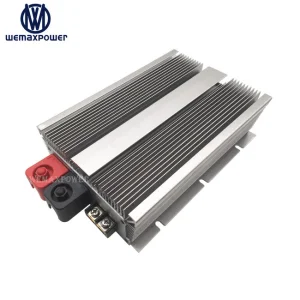
An In-depth Analysis of DC-DC Power Conversion Requirements in Central and Eastern Europe.
Romania has rapidly transformed into one of Central and Eastern Europe’s leading industrial hubs. Driven by substantial foreign direct investment and a highly skilled engineering workforce, the country's manufacturing, automotive, logistics, and telecommunication networks have experienced unprecedented growth. Within these sectors, the demand for highly reliable, efficient, and robust step down DC-DC converters has surged. Operating as the electronic "heart" of advanced machinery, battery electric vehicles (BEVs), and telecommunication towers, these converters ensure stable, low-voltage power distribution from higher voltage sources.
The Romanian industrial landscape is anchored by the automotive sector, representing over 14% of the country’s GDP. Automotive assembly plants, such as Automobile Dacia (Renault Group) in Mioveni and Ford Otosan in Craiova, alongside tier-1 suppliers like Continental, Bosch, and Hella, require high-precision power converters. Industrial lines, testing facilities, and automotive test-benches utilize step-down modules to simulate vehicular bus voltages and power control loops. Furthermore, Romania's strategic position along the European transport corridors (Corridor IV and IX) has prompted massive investments in automated logistic hubs in Ilfov, Timiș, and Cluj. Autonomous Guided Vehicles (AGVs) and electric forklift fleets in these warehouses depend on IP67 waterproof buck converters to step down 48V or 80V system voltages to 12V or 24V for control electronics, telematics, and LiDAR systems.
Globally, the DC-DC converter market is undergoing a transition driven by efficiency, power density, and thermal management demands. Standard Silicon (Si) MOSFET based designs are being pushed to their theoretical physical limits. The industry is progressively shifting toward wide-bandgap (WBG) semiconductors, such as Gallium Nitride (GaN) and Silicon Carbide (SiC). These technologies allow for significantly higher switching frequencies, which in turn reduces the footprint of passive components like inductors and capacitors. As a result, modern converters are achieving power densities exceeding 100W per cubic inch. Concurrently, environmental factors mandate that converters operating in industrial, agricultural, and transportation sectors must feature complete epoxy potting to guarantee dust-proof, moisture-proof, and shock-proof performance (meeting IP67/IP68 standards).
Fully compliant with Romanian CE EMC guidelines, optimizing signal-to-noise ratios in communication bands.
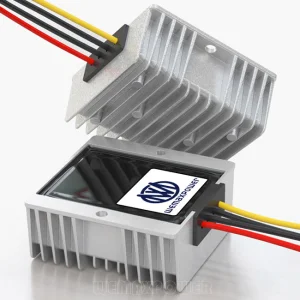
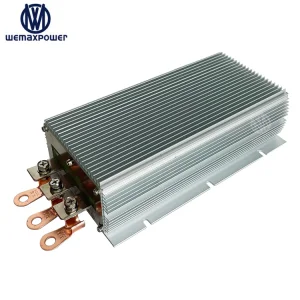
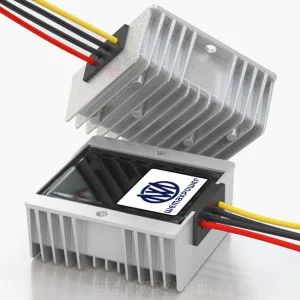
How Wemaxpower Converters Meet Precise Operational Requirements Across Romanian Sectors.
Romania boasts some of the fastest fiber-optic and mobile networks globally, with 5G deployment expanding across Bucharest, Cluj-Napoca, and Iași. Remote telecom base stations, especially those located in mountainous regions like the Carpathians, rely on highly reliable 48V DC battery banks. To supply stable 12V or 13.8V power to radio modules, telemetric microprocessors, and cameras, operators use our 80A 48V to 13.8V DC step-down converter. The high-current capacity guarantees uninterrupted communication even during peak transmissions, whilst integrated over-voltage and thermal shutdown protect sensitive telecom assets from grid surges.
With Romanian urban municipalities enforcing strict low-emission zones, electric buses, delivery trucks, and golf carts are expanding rapidly. Whether it is municipal fleet operations in Constanța or recreational tourism resorts along the Black Sea and Danube Delta, electric drivetrains operates on high-voltage battery arrays ranging from 36V up to 80V. To power auxiliary networks—including LED headlamps, windshield wipers, dashboard telemetry, GPS systems, and payment terminals—our Waterproof CE Approved 48V-80V to 12V 60A converters offer a robust solution. Standard conversion approaches fail under constant vibration and damp environments, making our IP67 polyurethane encapsulation critical.
Modern production facilities in Romania require high levels of equipment uptime. Inside massive logistics hubs, Automated Guided Vehicles (AGVs) transport materials continuously. To keep these vehicles lightweight and operational, their internal control boards, logic microcontrollers, and actuators must receive stepped-down voltages from high-capacity battery units. Standard industrial step-down modules must operate under substantial temperature variations, often from -40°C to +85°C. The 36V-72V to 12V 100A buck module provides stable power under high start-up surge currents, maintaining operational continuity in harsh environments.
7 Years of Precision Engineering and Global Supply Chain Excellence.
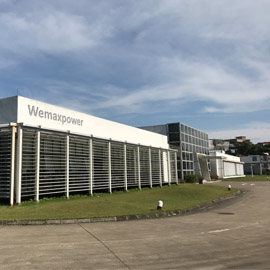
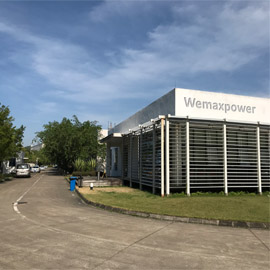
Shenzhen Wemaxpower Technology Co., Ltd. is a manufacturer with 7 years of specialized expertise in industrial power architectures. Our comprehensive product portfolio includes programmable DC power supplies, DC-DC converters, and specialized power modules designed to operate in challenging environments.
We export to multiple global markets, with a dedicated focus on quality engineering, compliance, and custom engineering support. In Romania, we support local distributors, engineering design houses, and industrial end-users by providing robust power conversion hardware backed by detailed documentation and application engineers.
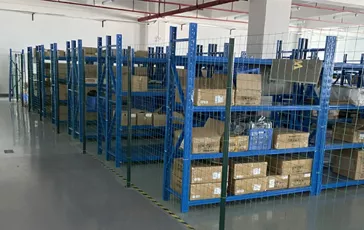
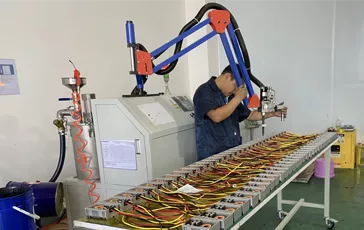
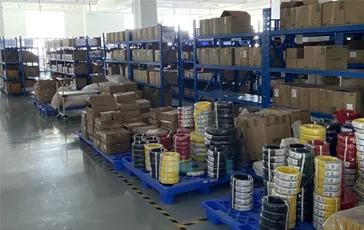
To ensure high operational reliability, all products undergo our strict 4-Step QC Process:
 |
 |
 |
Discover our range of IP67 aluminum encapsulated buck converters engineered for extreme resilience.
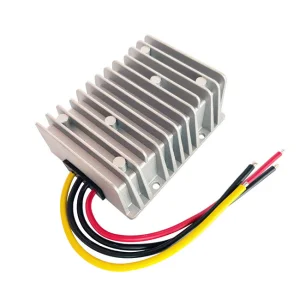
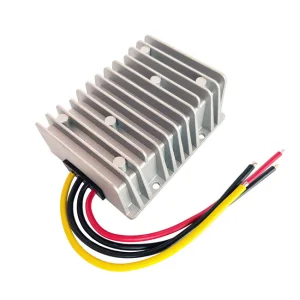
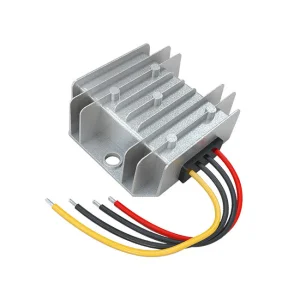
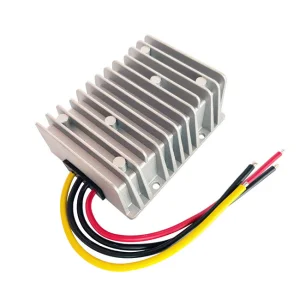
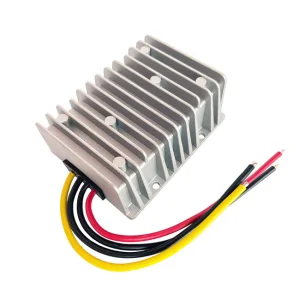
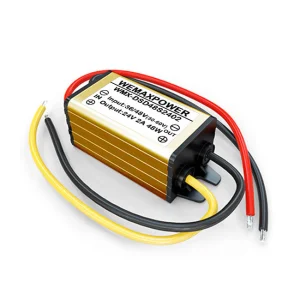
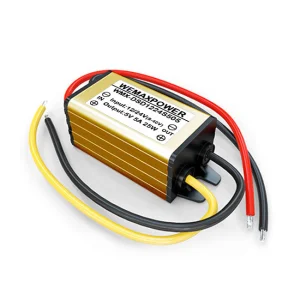
Engineered for low EMI, robust thermal dissipation, and wide input fluctuation tolerances.
When selecting step-down DC-DC converters for critical industrial or vehicular infrastructure in Romania, electrical engineers prioritize several parameters: electromagnetic compatibility (EMC), high efficiency under load variance, safety protections, and heat dissipation pathways. Below is an engineering overview of the core technologies integrated into Wemaxpower's DC-DC converters:
Conventional buck converters utilize a freewheeling diode to complete the circuit during the switch off-time. However, the forward voltage drop ($V_f$) of the diode creates continuous power losses ($P_{loss} = I_{out} \times V_f$). Wemaxpower replacing these diodes with ultra-low $R_{DS(on)}$ power MOSFETs. By controlling the gate drive of the synchronous switch to align with the main switch, conduction losses are reduced. This technology enables our converters to achieve conversion efficiencies of up to 96%, minimizing internal heat generation and allowing for smaller enclosure footprints without needing forced-air cooling.
High ambient temperatures inside engine compartments, industrial cabinets, or outdoor telecom enclosures require robust thermal management. Our converters utilize structural aluminum alloys for the shell casing, integrated with deep physical heat dissipation fins. The PCB assembly is vacuum-encapsulated with highly thermally conductive epoxy resin. This design serves a dual purpose: first, it transfers heat from high-temperature components (such as inductors and MOSFETs) to the aluminum chassis; second, it provides structural protection against moisture, industrial contaminants, and mechanical shock (meeting IP67 standard specifications).
For systems operating in Romanian remote monitoring sites or agricultural environments, electrical faults can occur due to cable damage or lightning surges. Wemaxpower DC-DC converters feature automated protections: Over-Current Protection (OCP) using Hiccup-mode, Over-Voltage Protection (OVP) to shield delicate digital microprocessors, Under-Voltage Lockout (UVLO) to protect source batteries from deep discharge, and Over-Temperature Protection (OTP) which temporarily disables the output if internal temperatures cross safe operating limits, automatically recovering once safe temperatures are restored.
Answers to common engineering questions regarding the installation and performance of DC-DC buck converters.
Whether you require standard step-down buck converters or custom power modules, Wemaxpower’s engineering team is ready to assist you. Contact us today for pricing, technical datasheets, or to request evaluation samples.
Send Inquiry Now Wemax Power