Next-generation high-current buck regulators designed to handle extreme inputs and deliver ultra-stable outputs for critical industrial electronics.
Analyzing the macroeconomic and environmental factors driving high-specification voltage regulation in Central America's key high-tech manufacturing hub.
Costa Rica has transformed into one of Latin America's primary high-technology corridors. Key areas like the Coyol Free Zone (Alajuela) and the Metro Free Zone (Heredia) are home to multi-national medical device giants, aerospace component manufacturers, and tier-1 electronic assembly plants. This level of advanced manufacturing requires an uncompromising standard of power quality.
Industrial machinery, diagnostic equipment, and medical sensor arrays operate under strict electromagnetic compatibility (EMC) regulations. The step-down DC-DC converters embedded within these devices must prevent high-frequency ripple, manage heavy transient loads, and guarantee a mean time between failures (MTBF) exceeding hundreds of thousands of hours. In these settings, power instability can lead to micro-second faults, ruining entire manufacturing batches or yielding faulty medical readings.
Costa Rica's National Decarbonization Plan focuses on shifting transport systems away from fossil fuels, resulting in a surge of light electric vehicles, commercial utility vehicles, and electric buses. The rugged topography and highly humid tropical climate place significant strain on electronic sub-assemblies.
A deep dive into synchronous rectification, thermal dynamics, and circuit safety mechanisms engineered for heavy-duty applications.
Traditional buck converters suffer significant power losses across the freewheeling diode. Our converters use low RDS(on) MOSFETs for synchronous rectification, minimizing conduction loss and boosting efficiency to 96%. This cuts thermal dissipation needs, allowing for compact designs.
Features short-circuit, over-current, under-voltage lockout (UVLO), and thermal shutdown protection. The converter acts as a defense barrier, isolating sensitive down-stream loads from high-voltage battery packs or volatile industrial rails.
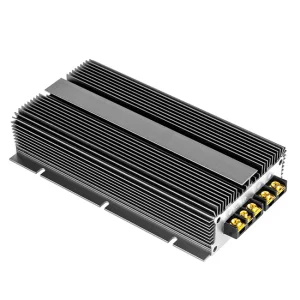
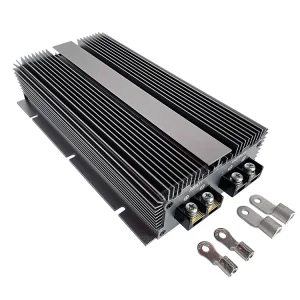
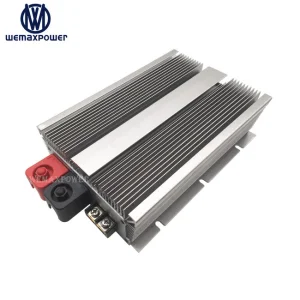
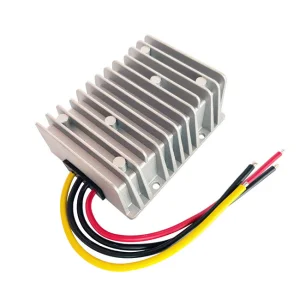
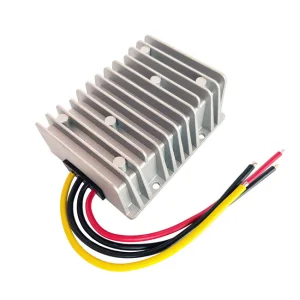
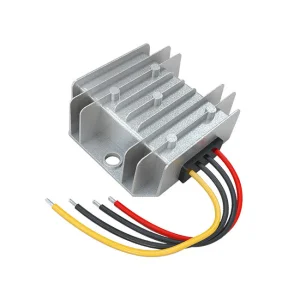
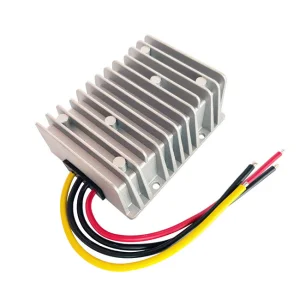
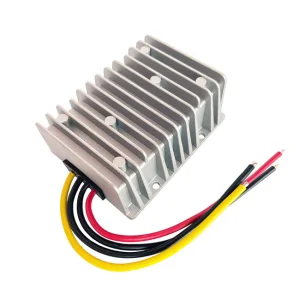
Encased in anodized extruded aluminum housings, our step-down regulators use high-conductivity thermal paste to route heat directly to the outer ribs. This allows operation at full loads in high-ambient environments without external fans.
Medical Device Integration: Supplying low-ripple, constant-voltage DC lines to critical diagnostic machines, cleanroom controls, and precision calibration apparatus inside San José's advanced medical industrial clusters.
Agricultural Fleet Electrification: Transitioning pineapple and banana plantation transport carts from lead-acid to high-efficiency lithium systems, using step-down converters for navigation, sensors, and lighting systems.
Off-Grid Solar Telemetry: Partnering with regional telecom operators to regulate fluctuated battery outputs (from 48V/60V banks down to 12V or 24V) on remote towers across Guanacaste, ensuring continuous cellular coverage.
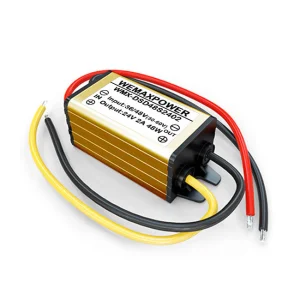
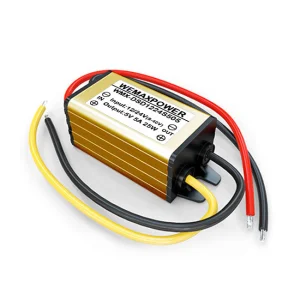
Explore our line of high-efficiency buck regulators, IP67-rated modules, and vehicle-grade step-down systems optimized for Costa Rican projects.
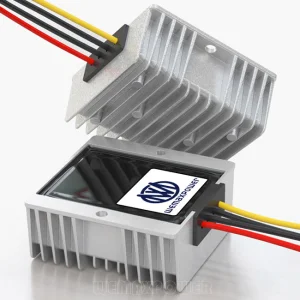
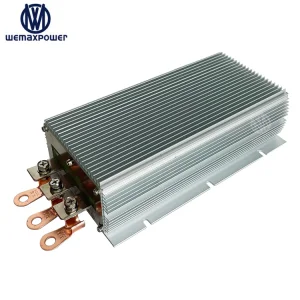
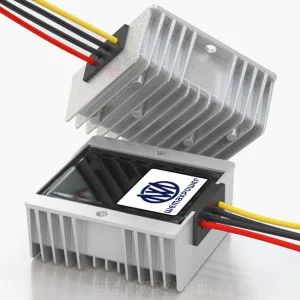
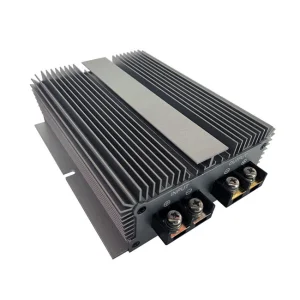
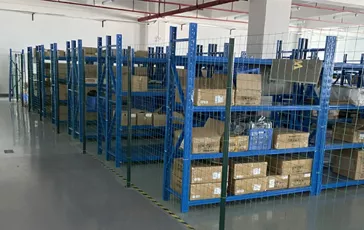
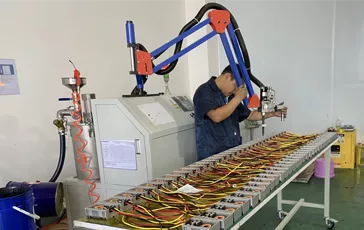
Learn about our state-of-the-art production capabilities and strict 4-step quality control system.
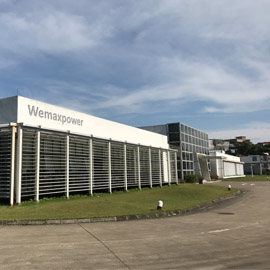
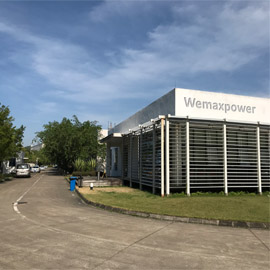
Shenzhen Wemaxpower Technology Co., Ltd. is an established manufacturer with 7 years of specialized experience in power electronics. Our products include programmable DC power supplies, DC-DC converters, and highly reliable power modules. We serve multiple global markets, offering robust engineering support, competitive lead times, and tailored design adaptations.
To ensure high performance in demanding applications, we implement a strict 4-step Quality Control (QC) process. Every unit leaving our production line is fully verified against nominal parameters before shipping.
| QC Stage | Processes & Metrics Evaluated | Impact on Reliability |
|---|---|---|
| 1. Raw Material Test | IQC inspection of components, power transistors, custom PCBs, and high-frequency transformer cores. | Prevents sub-standard components from entering production, maintaining consistent MTBF rates. |
| 2. Semi-Finished Product Test | Sub-assembly diagnostic checks, initial wave soldering checks, and active electrical component testing. | Pinpoints issues before final resin encapsulation and thermal sealing. |
| 3. Finished Product Test | Full-spectrum load variation analysis, transient response profiling, and ripple measurement. | Guarantees each module meets design guidelines for ripple limits under load. |
| 4. Full Aging Test | Continuous high-temperature full-load burn-in testing under real-world temperature cycles. | Filters out early failures, ensuring long-term field stability. |

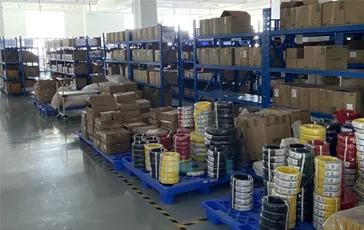
Technological trends and development pathways for next-generation power electronics.
Wide Bandgap (WBG) materials like Gallium Nitride (GaN) and Silicon Carbide (SiC) are transforming step-down architectures. WBG switches can operate at significantly higher switching frequencies than silicon. This reduces the size of passive components like inductors and capacitors, shrinking physical dimensions while maintaining power handling capabilities.
For Costa Rican logistics fleets, smaller converter sizes mean less integration bulk on electric forklifts and golf carts, freeing up space for battery capacity or diagnostic units.
Analog feedback loops are increasingly being replaced by digital signal controllers (DSCs). This transition enables real-time adjustments to load variations, temperature compensation, and communication via PMBus protocols. Digital power management helps operators monitor device health, calculate remaining life, and flag anomalies before system shutdowns occur.
Addressing technical inquiries, compliance questions, and integration configurations for step-down modules.
 Wemax Power