Direct replacement and custom engineered step-down converters optimized for Netherlands shipping, industrial logistics, and renewable grid requirements.
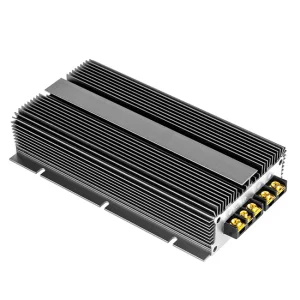
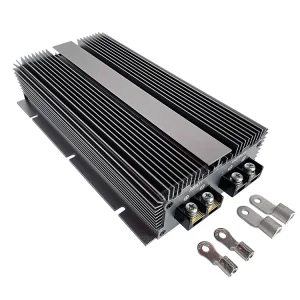
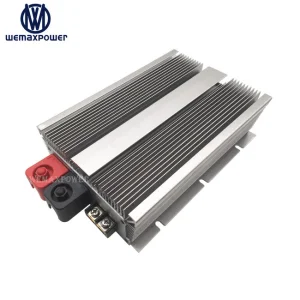
Consistently supplying ruggedized, efficient power convertors to the Netherlands maritime, agricultural automation (Westland), and clean energy infrastructures.
The Netherlands is a global pioneer in maritime electrification, greenhouse automation, and smart logistics grids. Rotterdam stands as the gateway to Europe, utilizing highly automated harbor cranes, automated guided vehicles (AGVs), and battery-operated equipment. Meanwhile, the waterways of Amsterdam are transitioning to zero-emission battery propulsion. In these heavy-duty scenarios, the demands placed on step-down DC-DC buck converters are exceptionally high.
Operating conditions in Dutch coastal logistics involve continuous exposure to moisture, salt, thermal cycling, and high-vibration stresses. A typical failure in a 24V-to-5V auxiliary system or a 48V-to-12V communication bus can result in system-wide downtime. Hence, engineers from Eindhoven to Groningen specify DC-DC step-down converters with IP67 hermetic sealing, excellent thermal management (cast aluminum structures), and robust electromagnetic compliance (EMC).
Shenzhen Wemaxpower Technology Co., Ltd. addresses these stringent demands by exporting specialized, highly efficient voltage buck transformers and regulators that are fully certified under CE and international quality frameworks.
| Parameter Demand | Industrial Target (Netherlands) | Wemaxpower Solution Value |
|---|---|---|
| Sealing Rating | IP65 to IP67 minimum | True IP67 Hermetically Sealed Epoxy potting |
| Operating Temp | -40°C to +85°C derating | -40°C to +80°C with full-load performance |
| Efficiency | > 92% to prevent heat trap | Up to 96% with synchronous rectification |
| Vibration Resist | IEC 60068-2-6 compliant | Cast aluminum shell, anti-vibration potting |
Perfect for agricultural robots, telecom stations, and industrial machinery where power stability is critical.
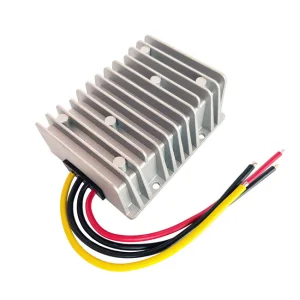
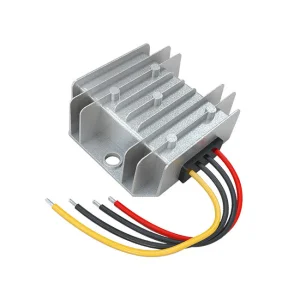
Integrating cutting-edge power topologies to address high power density and stringent safety rules.
Wide Bandgap (WBG) materials like GaN and SiC allow DC-DC buck converters to operate at significantly higher switching frequencies. This shrinks the footprint of magnetic components (inductors and transformers) while maintaining efficiency curves above 96% under partial load profiles.
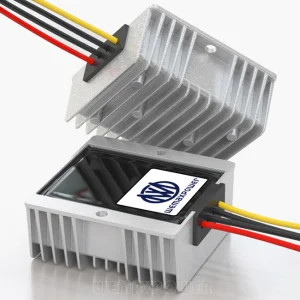
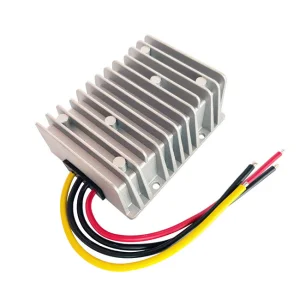
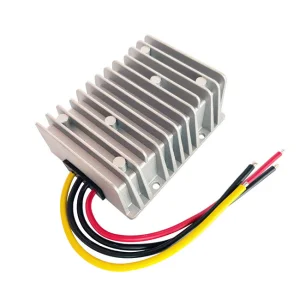
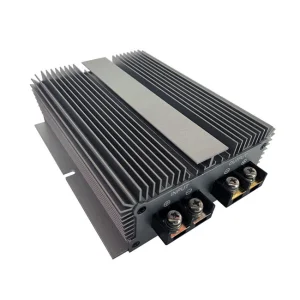
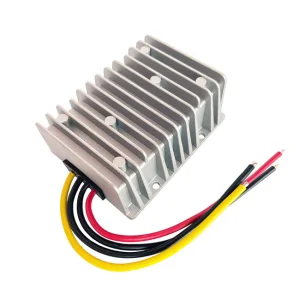
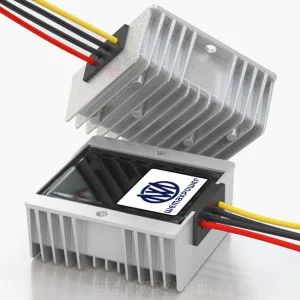
High-power converters must shed heat efficiently. Our structural design implements a die-cast, heavy-ribbed aluminum housing. The internal electronics are completely encapsulated in high thermal conductivity epoxy resin. This layout eliminates internal air gaps and prevents localized heat spots.
Industrial systems are highly sensitive to EMI noise. Wemaxpower converters employ integrated multi-stage Pi filters and shielding to limit conducted and radiated emissions. This complies fully with European Standards (EN 55032 and CISPR 25) for smooth communication integration.
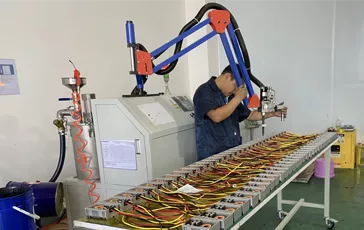
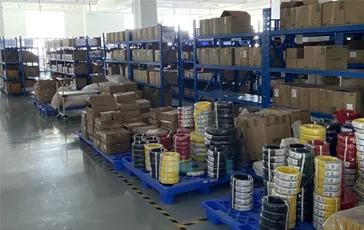
Operating out of Shenzhen, the hub of global power electronics manufacturing, Shenzhen Wemaxpower Technology Co., Ltd. has established a formidable reputation as an OEM/ODM powerhouse. Our facility blends agile supply chain advantages with rigorous engineering procedures, making us an ideal partner for European distributors and system integrators.
We supply a complete suite of programmable DC power supplies, step-down converters, and specialty power modules. To safeguard performance standards, every single converter undergoes a strict 4-step Quality Control (QC) process:
Our dedicated factory team is geared toward precision, delivering certified orders that match the expectations of demanding industrial environments.
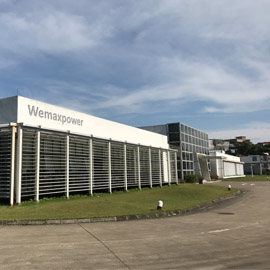
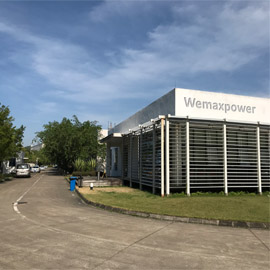

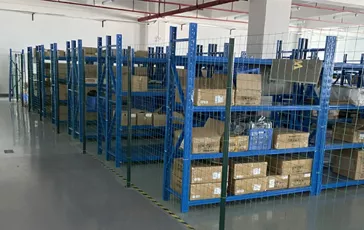
Fully potted, vibration-proof, and designed to survive in harsh agricultural, marine, and mobile systems.
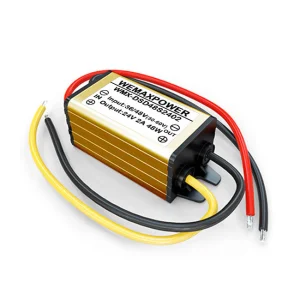
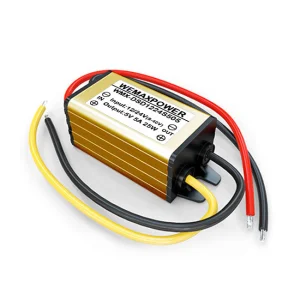
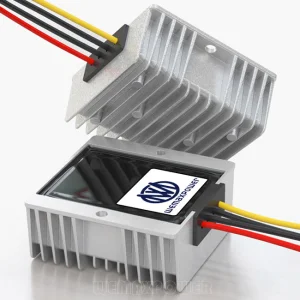
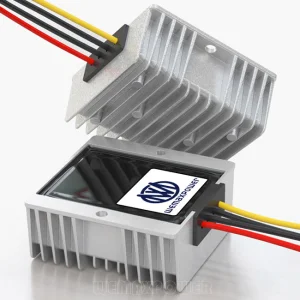
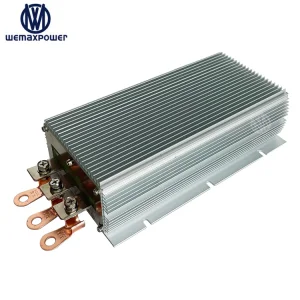
Electric transport barges and passenger boats rely on massive battery banks (normally 48V, 72V, or 96V). Auxiliary components like navigation radios, LED cabin lighting, bilge pumps, and onboard displays need safe 12V or 24V power. Wemaxpower converters offer isolated outputs with built-in surge protections to keep maritime systems operational under rough weather conditions.
Automated greenhouses in regions like Westland utilize robotic crop harvesters and autonomous distribution platforms. These AGVs run on high-capacity electric motors. Our step-down converters buck down the primary battery supply to highly regulated low-voltage rails, powering sensors, PLC controllers, and high-resolution cameras without injecting noise.
Logistics depots across Rotterdam and Amsterdam are transitioning to electric fleets. Our high-efficiency DC-DC step-down converters easily interface with 24V or 48V vehicle systems, delivering ultra-stable 12V or 5V rails to satisfy telematics equipment, Wi-Fi routers, and charging hubs inside commercial buses and trucks.
For technical buyers and engineers executing high-volume procurement in the European Union, standard specifications sheets are only part of the equation. Meeting strict regulatory mandates and long-term operating conditions requires close evaluation of the following parameters:
Under EU directives, electrical components imported into the Netherlands must bear CE marking, validating compliance with EN 55032 and related electromagnetic compatibility (EMC) regulations. In agricultural robots or telecommunication structures, high-frequency switching converters can generate noise that distorts telemetric data. Always verify that your converter supplier implements built-in noise suppression filters.
If the input and output circuits must remain completely separated to prevent potential electric shock or ground loops (critical in high-voltage EV or marine setups), an *isolated* DC-DC step-down converter is required. For common-ground vehicles and general utilities, a *non-isolated* buck converter offers superior conversion efficiency (up to 96%), lower heat generation, and a more compact chassis design.
During sudden current spikes—such as when a hydraulic pump on a forklift engages—the buck module must maintain a highly stable output voltage. Standard specifications demand a peak-to-peak ripple voltage of less than 100mV and recovery times in the range of microseconds. This level of precision protects fragile downstream components (e.g., GPS arrays or industrial microcontrollers) from resetting or experiencing hardware damage.
Connect directly with our engineering team to request detailed step-down DC-DC converter drawings, custom input/output configurations, bulk discount pricing, and complete reliability test data sheets.
Send Inquiry Now Wemax Power