Explore our core catalog of highly reliable step-down buck regulators, active PFC converters, and smart battery charging systems engineered for industrial reliability.
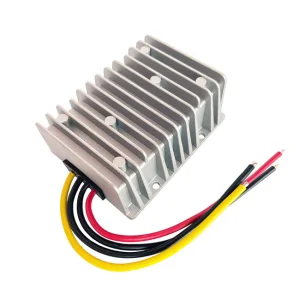
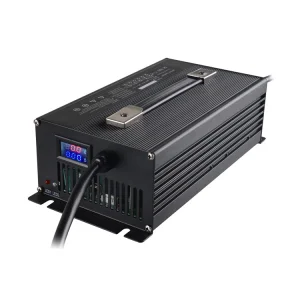
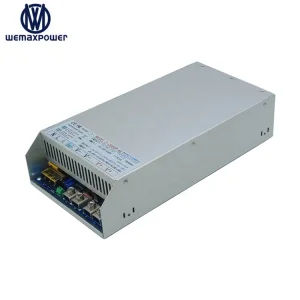
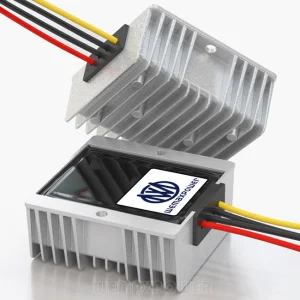
Key technical advancements and architectural shifts defining the future of high-power test equipment.
The global demand for high-reliability programmable DC power supplies is experiencing a paradigm shift driven by the expansion of electric vehicles (EV), renewable energy systems, and high-frequency aerospace testing grids. Modern architectures have moved beyond simple linear designs into high-frequency switching topologies utilizing advanced Silicon Carbide (SiC) and Gallium Nitride (GaN) semiconductors. This enables thermal efficiency benchmarks to exceed 95% while reducing the physical footprint of the supply units.
"Efficiency is no longer just about power consumption; it directly affects thermal design, Mean Time Between Failures (MTBF), and systemic integration capabilities in high-density rack enclosures."
Traditional manufacturing environments require stable voltage lines with minimal output ripple. Programmable DC power supplies allow engineers to define complex voltage and current profiles via standard SCPI (Standard Commands for Programmable Instruments) scripts. This adaptability is crucial for mimicking battery discharge curves, testing transient tolerance in automotive electrical systems, and driving high-frequency inductive loads.
Additionally, active Power Factor Correction (PFC) has become standard in high-power configurations (1KW to 3KW and above). The inclusion of active PFC circuits ensures harmonic distortion (THD) levels remain below 5%, complying with stringent European and American environmental standards while maximizing input grid performance.
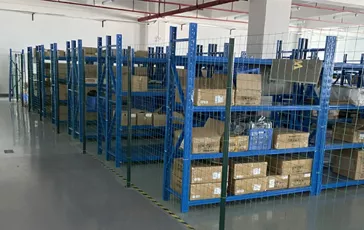
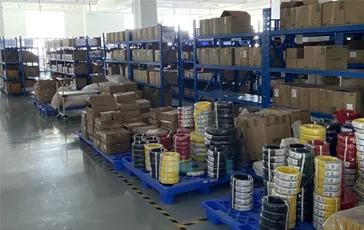
Exemplary production frameworks backed by rigorous testing systems to guarantee reliable field execution.
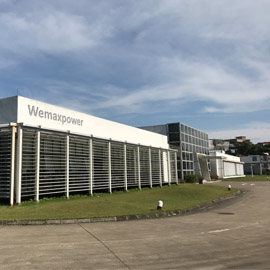
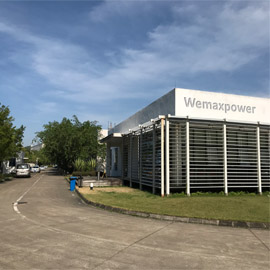
Shenzhen Wemaxpower Technology Co., Ltd. is a dedicated manufacturer with a 7-year history of producing high-performance programmable DC power supplies, DC-DC converters, and specialized power modules. Operating in Shenzhen, China's core electronics engineering hub, we support global distribution networks by optimizing production pipelines to supply durable hardware.
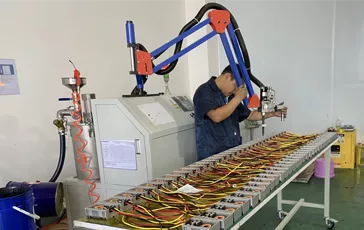
Our quality assurance program is built around our rigorous 4-step QC process. Rather than performing spot checks, we test 100% of our products at each process stage:
Incoming inspection of semiconductors, magnetic components, PCBs, and aluminum chassis elements.
Testing switching frequencies, gate drive waveforms, and soldering joints before encapsulation.
Full functional verification of load regulation, line regulation, ripple characteristics, and communication lines.
Continuous thermal and electrical stress testing under full load conditions to prevent early field failures.
This systematic verification mitigates thermal runaways, component degradation, and drift issues, ensuring that our systems deliver consistent power under demanding field conditions.

How our advanced power delivery networks align with international procurement requirements.
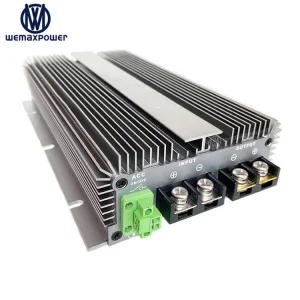
Vehicle electronic components must withstand volatile transients. Our 48V-to-24V step-down regulators and high-current buck converters deliver clean, transient-free voltage profiles for automotive R&D laboratories and assembly plants.
Fluctuating grid inputs disrupt automated systems. Our 2000W-3000W AC to DC power supplies use active PFC to provide steady output voltages, keeping production lines operational through brownouts.
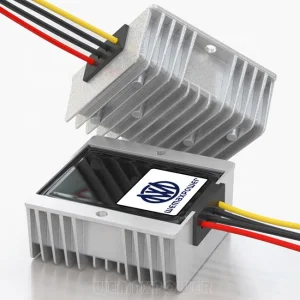
Marine environments demand ingress-protected, chemically resilient hardware. Our IP67-rated waterproof converters shield sensitive components from moisture and salt spray, preventing field degradation.
Strategic development initiatives focused on intelligent connectivity and efficiency.
Increasing power density across all 2KW+ platforms, allowing a larger power envelope within compact rack systems by reducing typical thermal dissipation losses.
Integrating Modbus, CAN Bus, and TCP/IP interfaces into our standard DC-DC converters to allow remote system configuration and predictive maintenance alerts.
Developing regenerative programmable power units that recycle excess electrical energy back into the local grid, reducing operating costs in high-power EV testing facilities.
Answers to engineering and compliance questions regarding programmable DC power supplies and converters.
Isolated DC-DC converters use a high-frequency transformer to physically separate the input and output ground lines, preventing electrical noise propagation and protecting downstream equipment from damage. Non-isolated buck/boost modules, while highly efficient and compact, share a common ground pathway and are best suited for systems where noise transmission is not a critical concern.
Active PFC automatically aligns the input current waveform with the grid voltage waveform, bringing the power factor close to unity (often above 0.98). This significantly reduces total harmonic distortion (THD), prevents grid overloading, and improves overall system efficiency in high-power applications.
Key parameters include exact voltage matching, multi-stage CC/CV charging curves, temperature compensation, and reliable overcharge protections. Using an uncalibrated charger can cause lithium battery cells to degrade prematurely or undergo thermal runaway.
IP67-rated enclosures prevent dust ingress and protect against water penetration during temporary submersion. This degree of sealing is essential for harsh operational settings, preventing field failures caused by salt spray, dust buildup, or humidity.
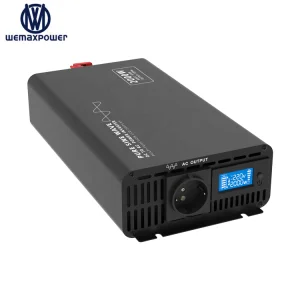
Explore our line of high-efficiency boost modules, pure sine wave inverters, and high-voltage industrial switching systems.
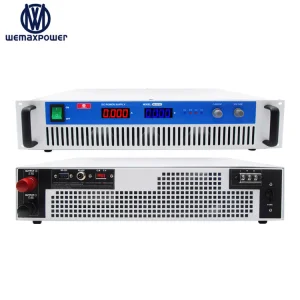
 Wemax Power