Advanced DC-DC chargers configured to withstand freezing temperatures, designed for modern smart alternators and high-capacity LiFePO4 battery banks.
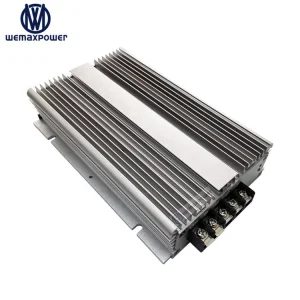
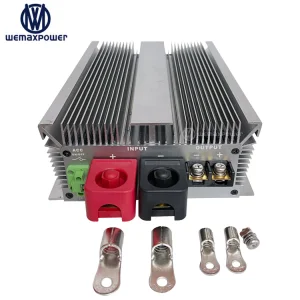
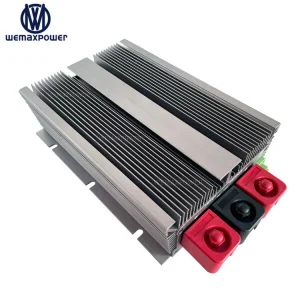
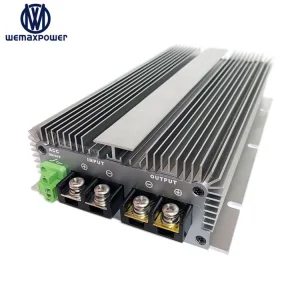
An in-depth analysis of battery management challenges, environmental demands, and engineering solutions for Nordic mobile power grids.
Norway represents one of the most advanced markets globally for recreational vehicle (RV) integration, sustainable off-grid mobile living, and electric mobility. The region's distinct geography, which spans the Arctic Circle, creates a unique set of demanding requirements for auxiliary vehicle power storage and management. Traditional isolator relays and basic chargers fail in Norway's environmental conditions, making intelligent DC-DC battery chargers a critical component for mobile power security.
The Norwegian commercial sector, including remote construction operations, coastal fishing, municipal utility fleets, and mobile medical clinics, relies heavily on auxiliary battery systems to support heating, communication, and medical hardware. In these setups, maintaining a primary vehicle starter battery while fully charging high-capacity lithium iron phosphate (LiFePO4) or advanced AGM auxiliary battery banks requires smart voltage boosting and step-down systems. Extreme low temperatures—frequently dropping below -25°C in regions like Røros or Tromsø—restrict the chemical charging capabilities of LiFePO4 cells.
Charging lithium batteries at sub-zero temperatures without dedicated thermal management or precise current limiting can cause permanent lithium plating, rendering expensive battery banks useless. Consequently, industrial buyers in Norway mandate DC-DC charging systems equipped with temperature sensor integration, customizable multi-stage profiles, and integrated low-temperature charge cutoff thresholds to safeguard critical energy assets.
Technologically, the Norwegian market is characterized by rapid adoption of Euro 6/Euro 6d compliant smart alternators. Unlike legacy charging systems that maintain a constant high-voltage output (typically 14.4V), smart alternators are dynamically regulated by the vehicle's engine control unit (ECU) to optimize fuel efficiency and reduce carbon emissions. Under engine braking, voltage surges up to 15.5V; during acceleration, voltage can plummet below 12V.
This wild fluctuation prevents standard parallel battery systems from achieving a full state of charge, often leaving RV operators and field service engineers with depleted auxiliary batteries. Modern DC-DC buck-boost charging topologies resolve this by actively conditioning variable input voltages to deliver a stable, program-controlled output curve, ensuring constant charging current regardless of alternator behavior.
Note on Norwegian Compliance Standards: All imports into Norway must comply strictly with CE directives, including the EMC Directive (EN 61000 series) to prevent electromagnetic interference with sensitive vehicle communications (CAN-bus, GPS, and marine VHF radios). Marine and external installations additionally require IP67/IP68 ingress protection ratings due to high exposure to salt spray and heavy snowpack.
For international distributors, commercial fleet operators, and industrial campervan converters catering to the Norwegian market, sourcing DC-DC chargers is a process guided by stringent engineering validation. B2B procurement professionals look for key characteristics when selecting manufacturing partners:
How Shenzhen Wemaxpower Technology Co., Ltd. delivers high-precision power solutions with standardized quality control.
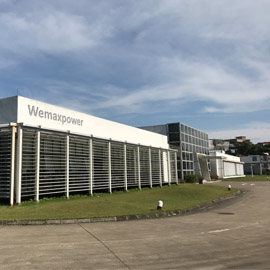
Shenzhen Wemaxpower Technology Co., Ltd. is a leading manufacturer with over 7 years of specialized expertise in the design, development, and high-volume fabrication of programmable DC power supplies, high-efficiency DC-DC converters, and robust battery charging modules.
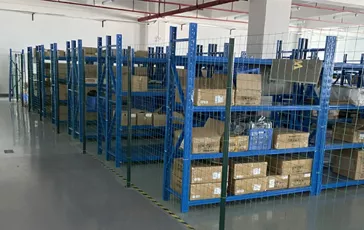
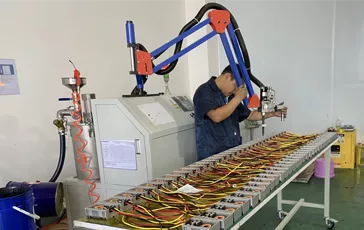
Operating under an optimized Factory 4.0 methodology, Wemaxpower focuses on supply chain resilience, component traceability, and automated precision. Every unit exported to challenging markets like Norway undergoes a rigorous, mandatory 4-step Quality Control (QC) process:
This systematic quality commitment guarantees that marine, RV, and industrial fleet customers receive reliable hardware engineered for continuous field service.

| QC Stage | Evaluation Parameter | Standard Applied | Target Outcome |
|---|---|---|---|
| Incoming Quality Control (IQC) | Silicon substrate verification, capacitor ESR values, PCB density inspection | MIL-STD-105E Equivalent | Zero defect entry into the production floor |
| In-Process Quality Control (IPQC) | Thermal profile monitoring, solder-paste thickness, micro-soldering alignment | IPC-A-610 Class II/III | Optimal heat dissipation and vibration resilience |
| Final Quality Control (FQC) | Multi-stage output profiling, transient response tracking, EMC monitoring | CE & RoHS Compliance | Stable, safe operation under dynamic vehicle conditions |
| Output Quality Control (OQC) | 100% active load burn-in run, final drop test, high-voltage isolation test | Wemax Factory Standard | Guaranteed field reliability and extended product lifespan |


The deployment of DC-to-DC converters in Norway spans highly specific scenarios requiring custom power curves and robust physical chassis:
Norwegian leisure vessels and utility boats operate in saltwater-heavy environments. Using an IP68 fully waterproof 12V-to-12V or 12V-to-36V DC-DC charger ensures trolling motors and marine instrumentation charge reliably from the main outboard alternator without risk of corrosion.
Sub-zero motorhome travel relies on auxiliary diesel heating and internal lighting. Smart DC-DC modules dynamically adjust charge voltages based on ambient temperature to deliver a complete charge to the LiFePO4 bank during short driving windows between locations.
Commercial utility vans and service fleets utilize heavy-duty hydraulic tailgates, electric winch rigs, and power tool recharge stations. High-current DC-DC chargers (80A to 100A) replenish secondary battery banks fast, minimizing engine-idle runtimes.
Implementing a high-performance converter preserves starter battery charge levels. Standard systems risk draining the starter battery to support auxiliary loads if the alternator stalls. A unidirectional DC-DC charger acts as a diode, guaranteeing that auxiliary power requirements can never draw down the main starter battery.
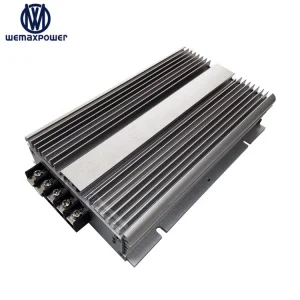
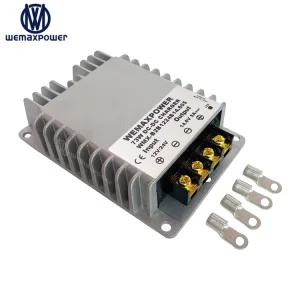
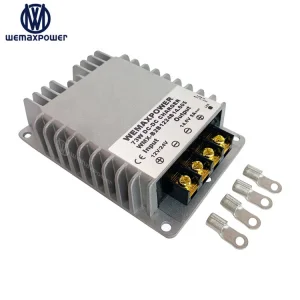
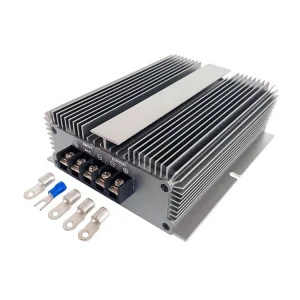
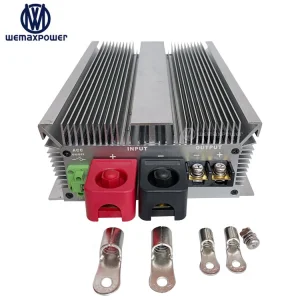
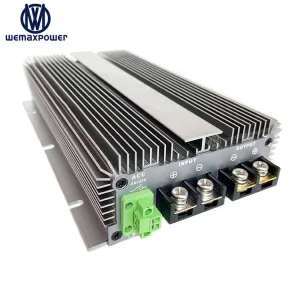
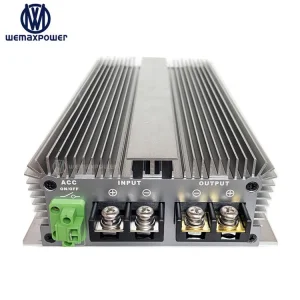
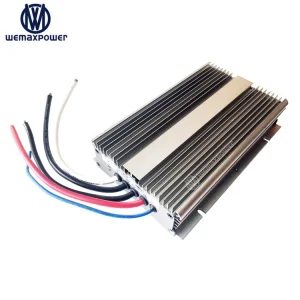
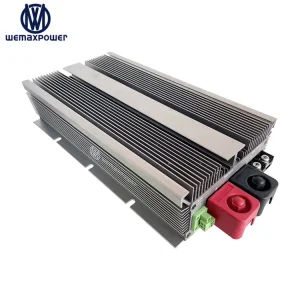
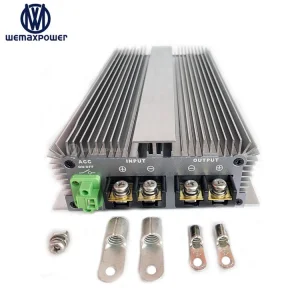
Wemaxpower's current portfolio utilizes high-frequency switching technology and synchronous rectification to minimize conversion losses, achieving thermal efficiency up to 96%. This means less heat dissipation, allowing for compact, fanless chassis structures. The integrated microcontroller unit (MCU) monitors input battery voltage levels and only activates the charging cycle when the engine alternator is running (sensed via D+ ignition cable connection or vibration sensing profiles). This safety feature prevents starter battery discharge.
For applications with long cable runs, voltage drops represent a significant issue in 12V configurations. If the wire runs from the front engine compartment to a rear caravan cabin, the voltage drop can prevent proper lithium battery charging. Wemaxpower DC-DC converters overcome this by utilizing integrated voltage sensing lines or boost active compensation, lifting the output voltage back to the required target profiles.
Explore our full range of certified conversion modules, heavy-duty marine chargers, and step-up boost regulators available for global export.
Expert answers regarding integration, compliance, and thermal dynamics in high-latitude auxiliary battery setups.
Euro 6 smart alternators utilize variable voltage outputs to reduce engine load, dropping output levels down to 12.0V or lower during cruising. This is insufficient to charge AGM or LiFePO4 batteries, which require stable bulk charging voltages between 14.2V and 14.6V. A DC-DC charger monitors input voltage fluctuations and uses a buck-boost topology to step up or regulate voltage to ensure auxiliary batteries reach a 100% state of charge.
Wemaxpower DC-DC converters feature connection terminals for external NTC temperature probes. When connected, the charging microprocessor references real-time battery temperatures. For lead-acid setups, it dynamically increases target charging voltages at low temperatures (temperature compensation). For LiFePO4 setups, it triggers an absolute charge cutoff below 0°C to protect cells from internal damage, while maintaining power path bypass systems.
IP67 rating guarantees protection against immersion in water up to 1 meter depth for 30 minutes, which is suitable for interior engine bays or sheltered lockers. IP68 guarantees continuous immersion under specified pressure depths, providing full protection against heavy swells, sea spray, and continuous damp exposure in marine compartments. Wemaxpower's IP68 modules utilize high-density epoxy potting compound to prevent moisture intrusion.
Our 4-step quality assurance program requires every product to undergo rigorous testing. Following automated optical inspection (AOI) during PCB fabrication, units are functionally loaded to test dynamic line regulation, noise output levels, and protective limits. They are then routed to thermal burn-in chambers for 4 to 8 hours under full electrical load, minimizing early field failures.
 Wemax Power