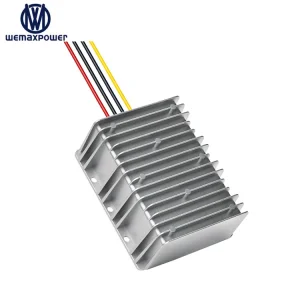
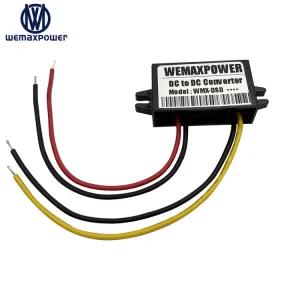
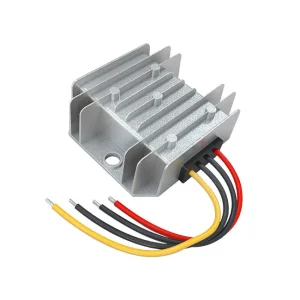
Advanced buck-boost systems with rugged thermal designs and high power density, tailored for European industrial profiles.
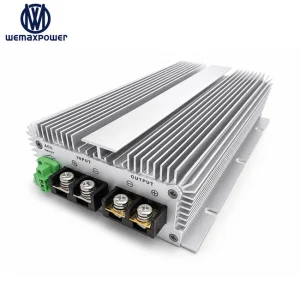
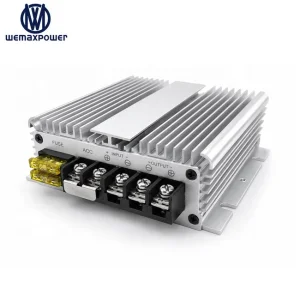
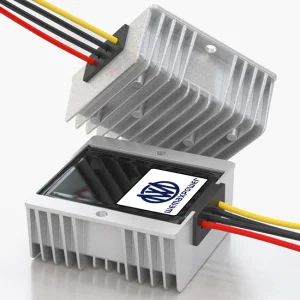
How the integration of robust buck-boost converter topologies fuels regional smart manufacturing, automotive growth, and infrastructural grid modernization.
Deploying high-efficiency step up-down power modules for automated assembly lines, logistics robotics, and heavy assembly components in Plovdiv and Sofia outskirts.
Providing ISO 7637-2 compliant, high-current transient suppressive buck-boost power stabilizers to the fast-growing automotive electronics sector in Bulgaria.
Regulating unstable field solar installations and wind-driven energy storage nodes, resolving fluctuations caused by line drops in rural infrastructure.
Bulgaria is strategically positioning itself as a central hub for industrial automation and automotive components within Eastern Europe. The growth of industrial zones, such as the Trakia Economic Zone (TEZ) and Sofia Tech Park, has accelerated the demand for high-reliability power modules. Because grid environments can fluctuate and wide-range battery inputs are common in industrial machinery and commercial transit systems, basic buck or boost step-down converters are often insufficient.
Step up-down (buck-boost) DC-DC converters act as the critical technological bridge. When system input voltages fall below or rise above the desired output rating—typical in standard 12V/24V lead-acid battery discharge cycles or unstable auxiliary power supplies in industrial fleets—these converters maintain a stable output voltage without dropouts. This ensures that delicate telematics, transit audio equipment, and complex sensors operate reliably under all electrical circumstances.
Years Power R&D Experience
Active Aging Tested
Ingress Protection Rating
EU Market Compliance
In the global market, high-efficiency power distribution is a crucial differentiator. Inefficient power conversion results in excess heat, which requires larger heatsinks, increases weight, and shortens component life. Modern industrial requirements demand efficiencies of 93% to 96%. To achieve this, synchronous rectification technology has replaced traditional diodes with MOSFETs, minimizing conduction losses.
For applications such as Bulgarian public transit buses, rail networks, and heavy machinery, step up-down converters must handle complex voltage behaviors. In commercial vehicle systems, a nominal 24V supply can drop to 12V or surge to over 36V during starter motor activation or load dumps. A converter with a wide input range (e.g., 8V to 40V) that maintains a stable 13.8V output is essential for the continuous operation of vehicle radios, GPS units, and safety systems.
Understanding which buck-boost topology to specify depends on your design constraints. Below is a comparative overview of the main topologies used in modern step up-down power regulation:
| Technology Topology | Typical Efficiency | EMI Signature | Component Count | Best Application Match |
|---|---|---|---|---|
| 4-Switch Synchronous Buck-Boost | 95% – 97% | Low to Medium | High (4 MOSFETs + Driver) | High-power automotive networks, industrial battery charging. |
| SEPIC (Single-Ended Primary-Inductor) | 85% – 90% | Very Low | Medium (1 Switch, 1 Diode, 2 Inductors) | Low-power sensors, noise-sensitive telecom receivers. |
| Traditional Inverting Buck-Boost | 82% – 88% | High | Low (1 Switch, 1 Diode, 1 Inductor) | Cost-sensitive designs where negative output voltage is acceptable. |
Shenzhen Wemaxpower Technology Co., Ltd. is a manufacturer with over 7 years of specialized expertise in engineering and producing programmable DC power supplies, DC-DC converters, and high-performance power modules. Our products are exported to global markets with a focus on high reliability, mechanical durability, and dedicated customer support.
Every step up-down DC-DC converter we supply to Bulgaria undergoes a strict 4-step Quality Control (QC) process to ensure it performs reliably under harsh industrial conditions:
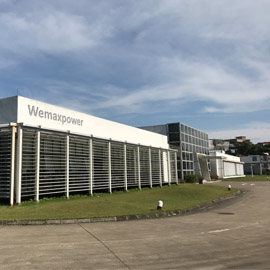
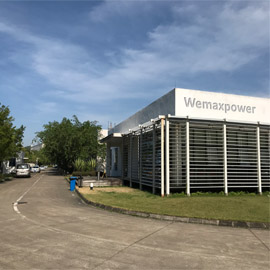
A look inside our ISO-compliant production lines, automated testing setups, and thermal aging labs.
Our facilities combine automated surface mount technology (SMT) with precision potting operations to produce fully waterproof, vibration-resistant converters. This ensures our step up-down DC-DC modules meet the requirements of heavy transit, mining, and industrial environments across Bulgaria and Eastern Europe.

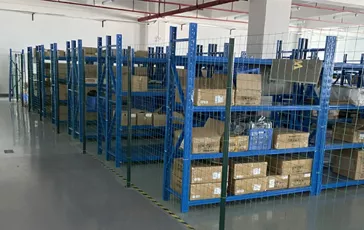
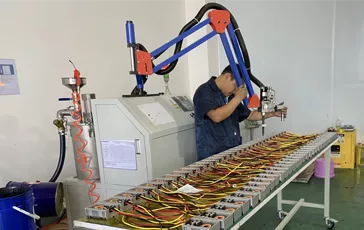
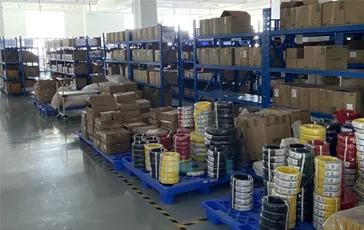
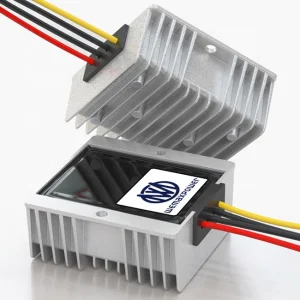
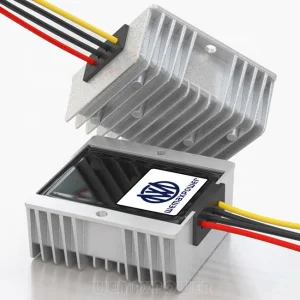
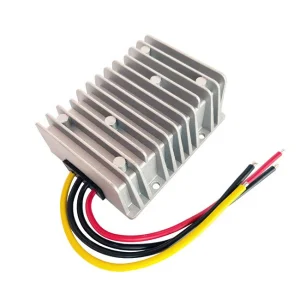
Bulgaria experiences significant seasonal temperature variations, ranging from sub-zero winters in the Balkan mountains to hot summers in the Thracian Valley. DC-DC converters installed in outdoor enclosures, solar tracking boxes, or engine compartments must operate reliably under these conditions. Our converters feature thermally conductive epoxy potting within an aluminum housing, allowing them to dissipate heat effectively even in sealed environments with no airflow.
To comply with EU regulations, electronic modules sold and installed in Bulgaria must bear the CE mark and conform to harmonized EMC standards (such as EN 55032 and EN 61000 series). Unshielded step up-down converters can generate radio frequency noise due to high-frequency switching. Our modules are designed with integrated multi-stage LC filters and shielded inductors to minimize emissions, ensuring compliance with strict European limits.
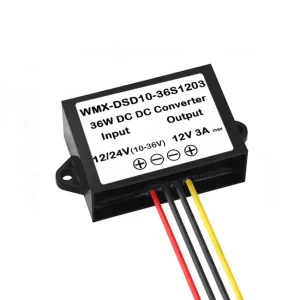
For agricultural machinery operating in central Bulgaria or marine applications along the Black Sea coast (Varna & Burgas), dust, water, and vibration can cause electronic failures. Our IP67-rated waterproof enclosures protect internal circuits from dust ingress and temporary water immersion, ensuring long-term reliability in harsh environments.
Explore our full range of waterproof, rugged buck-boost stabilizers and DC-DC converters.
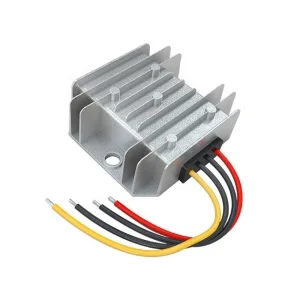
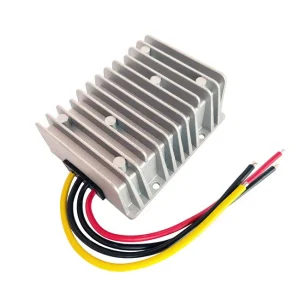
When specifying a step up-down converter for industrial or automotive applications, engineering teams must evaluate several critical parameters to ensure system reliability:
Operating within the European Union requires compliance with safety, environmental, and performance standards. Wemaxpower converters are designed and manufactured to meet these requirements, facilitating smooth integration into European industrial systems:
| Directive/Standard | Technical Scope | Implication for Bulgarian OEMs |
|---|---|---|
| 2014/30/EU (EMC Directive) | Limits electromagnetic interference to protect surrounding equipment. | Ensures trouble-free operation alongside wireless networks and control electronics. |
| RoHS Directive (2011/65/EU) | Restricts hazardous substances in electronic assemblies. | Ensures environmental compliance and simplifies recycling processes. |
| IP67 (EN 60529) | Specifies dust tightness and water resistance. | Allows installation in exposed outdoor, agricultural, and marine environments. |
Expert engineering answers regarding selection, application, and compliance of step up-down converters.
A: A buck-boost converter is required when the input source voltage can fluctuate both above and below the desired output voltage. For example, if you need a stable 24V output from a battery system that varies from 18V (fully discharged) to 36V (during charging), a buck-boost converter will maintain the output at 24V, whereas a standard buck converter would fail when the input drops below the output requirement.
A: Our automotive-grade converters, such as the fuse-protected and ACC-controlled models, feature integrated Transient Voltage Suppression (TVS) diodes and LC input filtering. These components protect the internal circuitry and connected loads from voltage spikes, load dumps, and starter-motor cranking events common in 12V and 24V vehicle electrical systems.
A: Sealed enclosures restrict natural airflow, causing heat to build up inside. Because our converters are fully potted in aluminum housings, they conduct heat away from internal components to the outer casing. When installing them in sealed boxes, mount the flat aluminum base of the converter directly against a metal wall or chassis to act as a heatsink and minimize thermal derating.
A: Yes. All of our step up-down DC-DC converters are built to meet CE and RoHS standards. Our manufacturing processes follow strict quality control procedures, and each unit undergoes a 100% full-load burn-in and active aging test to ensure compliance and reliability before shipping to customers in Bulgaria and other European markets.
A: Yes, we provide customization options for voltage inputs, outputs, current limits, and connector types. Contact our technical sales team with your specific requirements, and our engineers will work with you to develop a suitable solution.
Contact our application engineering team today to request 3D CAD models, detailed test reports, or a volume quote tailored for your project in Bulgaria.
Submit RFQ & Technical Request Wemax Power