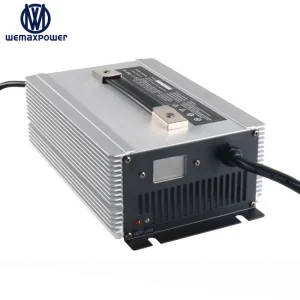
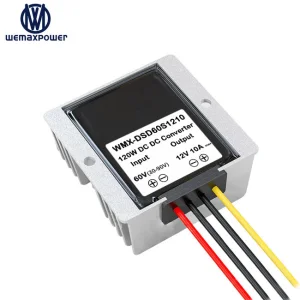
Explore our flagship product range featuring heavy-duty converters, industrial-grade power supplies, and smart chargers designed for seamless energy stabilization.
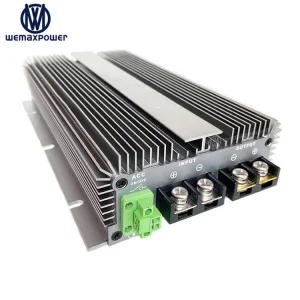
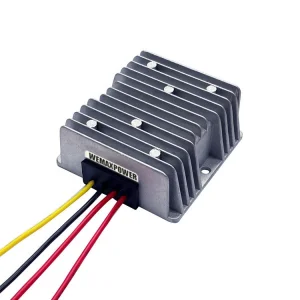
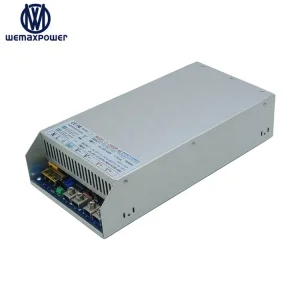
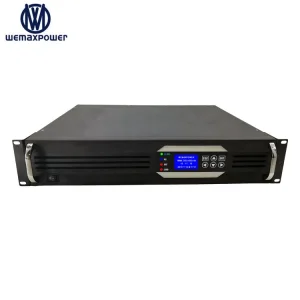
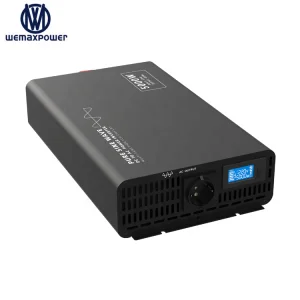
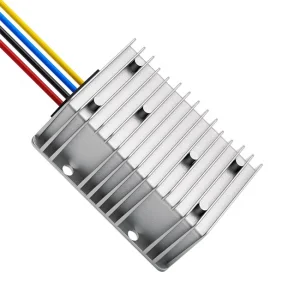
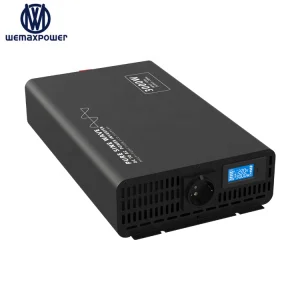
For over 7 years, Shenzhen Wemaxpower Technology Co., Ltd. has stood at the forefront of industrial power topologies, manufacturing state-of-the-art power conditioning solutions, programmable DC power supplies, step-down/step-up converters, and modular power conversion systems.
Modern electrical environments present harsh challenges—surges, voltage sags, harmonics, and electrical noise. Standard power products struggle to sustain long-term MTBF (Mean Time Between Failures) under these realities. Our R&D works at the physical and electromagnetic levels, engineering power conditioning devices that shield highly sensitive medical devices, telecommunications systems, marine electronics, and automation grids from power-line instability.
Serving industrial clients across Europe, the Americas, and APAC.
Every unit undergoes a rigorous 4-step proprietary testing process.
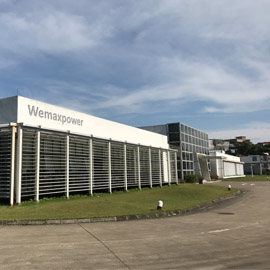
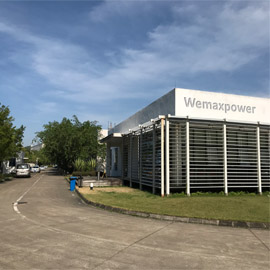
Quantifying our dedication to absolute reliability, global compliance, and manufacturing performance.
How global companies counter clean-energy conversion bottlenecks, high failure rates, and non-compliance.
Industrial machinery, robotic arms, and medical diagnostic clusters require extremely flat DC voltages. Line transients, micro-surges, and high frequency noise cause computational resets or hardware breakdowns. Modern power conditioning equipment must offer real-time filtration, galvanic isolation, and instant voltage stabilization to prevent costly factory downtime.
Outdoor applications—such as marine crafts, RV solar battery bays, telecom cell towers, and electric-vehicle charging pads—operate under heavy thermal strains, moisture condensation, and corrosive environments. Industrial power supplies must feature ingress protection (IP67 or IP68 ratings), heavy-duty heat sinks, and advanced encapsulation materials to guarantee decades of runtime.
Exporting machinery to Europe, the US, or Asia requires satisfying stringent CE, RoHS, UL, and FCC Part 15 standards. B2B purchasers must align with manufacturers whose systems inherently filter electromagnetic interference (EMI) and possess active Power Factor Correction (PFC) circuitry, bypassing expensive compliance hurdles at regional import levels.
How Shenzhen Wemaxpower Technology leverages deep industrial ecosystems to deliver cost-effective, custom-engineered power solutions at scale.
Shenzhen's electronic supply chain provides unparalleled advantages. Within a 10-mile radius, we source high-frequency transformers, solid capacitors, dynamic thermal pads, and semiconductor switches with zero delay. This proximity slashes raw-material transport times and enables rapid design modification loopcycles.
By integrating component procurement, automated surface mount technology (SMT) operations, cleanroom wave soldering, and our proprietary aging testing systems, we deliver customizable power conditioners and step-down converters with half the lead times of Western counterparts, without compromising structural integrity.
Whether a client requests an isolated DC-DC converter for industrial forklifts or a programmable high-wattage AC-to-DC lab power supply, our engineering team modifies firmware controls, enclosure dimensions, and connector terminal styles with minimum engineering overhead.
Improves real-power usage ratio up to 99%, minimizing reactive power losses in factory wiring.
Epoxy potted circuits and robust rubberized gaskets protect internal logic chips from water ingress.
Complete decoupling of input and output sides, preventing spikes from propagating down-stream.

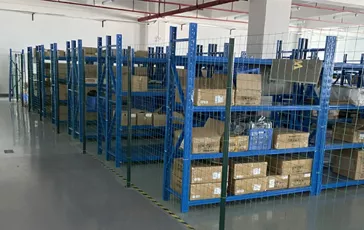
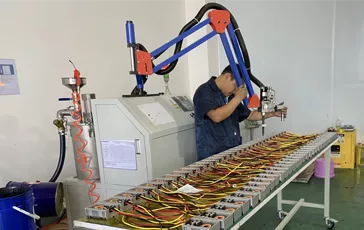
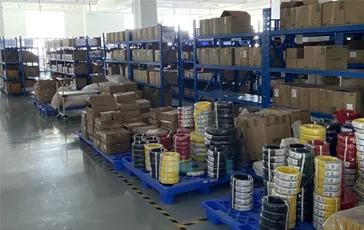
We believe that a power conditioner is only as strong as its weakest solder joint. Our factory implements a comprehensive testing sequence for every single unit.
Exploring the technological shifts reshaping smart grid stability, high-frequency conversion, and electric mobility.
Silicon carbide (SiC) and Gallium Nitride (GaN) are replacing standard silicon chips in high-efficiency converters. These wide bandgap materials allow power modules to switch at megahertz frequencies while minimizing thermal dissipation. This development leads to lighter, smaller DC-DC step-down converters with energy efficiency rates of 96% and beyond.
Industrial battery packs require custom charging curves (Lithium-ion, LiFePO4, Lead-Acid). Next-generation chargers use smart, multi-stage charge controllers with Bluetooth and App control. This setup enables fleet operators to monitor battery temperature, internal resistance, and voltage trends remotely, reducing battery degradation and fire risks.
As grids become saturated with non-linear loads (LED lighting, variable frequency drives), electrical noise rises. Modern switching power supplies must integrate active PFC (Power Factor Correction) to filter harmonics, prevent phase displacement, and shield sensitive nearby electronics from electromagnetic noise.
With the rise of renewable grids, vehicle-to-grid (V2G) tech, and industrial microgrids, bidirectional power conversion is vital. Power conditioners must act as dual-mode systems, handling both energy storage charge cycles and grid feed operations, and switching between them with microsecond response times.
How our components operate within critical sectors globally, from off-grid telecommunications to harsh marine platforms.
Telecom towers require stable 48V DC lines or clean sine-wave AC outputs. High power pure sine wave inverters convert standard battery array feeds (110V DC) into ripple-free 220V/230V AC output. This clean power path prevents noise overlay in audio signals and ensures RF transmitters run continuously.
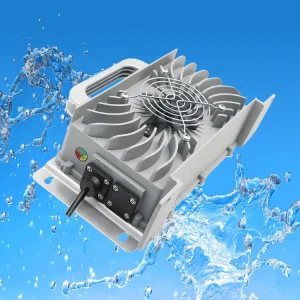
Electric rickshaws, scooters, and golf carts operate under tough mechanical vibrations and wet environments. Our smart, waterproof battery chargers dynamically adjust charge profiles according to Li-ion and LiFePO4 thermal profiles. This protection prevents grid fluctuations from overcharging the battery cells.
Automated production lines run on mixed voltages (24V AC, 12V DC, 72V DC). Our switching power supplies and isolated DC-DC step-down converters stabilize system voltages, keeping PLCs, sensors, and actuator loops safe from electrical noise and voltage dropouts.
Answers to common engineering questions regarding converter selection, thermal management, and power quality standards.
Our second tier of specialized chargers, step-down modules, and variable switching power supplies built for industrial integration.
 Wemax Power