Engineered for extreme environments, high efficiency, and precise power delivery
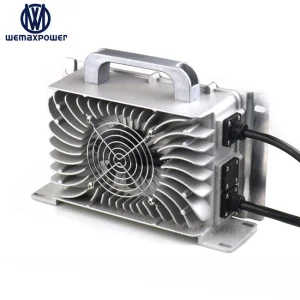
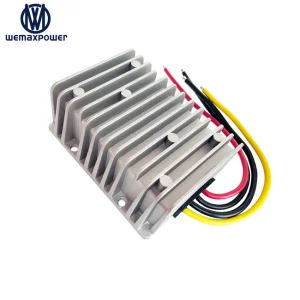
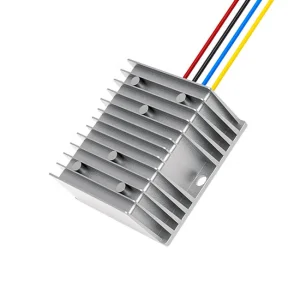
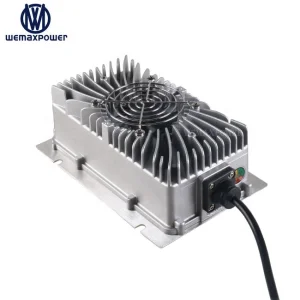
Deep-dive into the critical power requirements of Japan's manufacturing heartland
Nagoya, the capital of Aichi Prefecture, stands as the unmatched powerhouse of Japanese heavy industry, manufacturing, and technological R&D. Hosting the global headquarters and production hubs of the world's leading automotive conglomerates, tier-1 component suppliers, machine tool manufacturers, and aerospace systems developers, Nagoya represents a highly demanding market for advanced power electronics. In these smart factories, laboratories, and assembly lines, programmable DC power supplies are not merely standard testing devices—they are critical infrastructure that determines the validation speed, efficiency, and reliability of the next generation of industrial applications.
As the global industrial sector transitions towards electrification, automated guided vehicles (AGVs), advanced robotics, and hydrogen energy integration, power topologies must adapt. Traditional, static linear power converters no longer suffice for dynamic laboratory simulations. Today's R&D environments in Nagoya require highly responsive switching topologies, programmable waveform profiles, and robust isolation mechanisms. Engineers need to simulate real-world battery behavior, test the limits of wide-bandgap (SiC and GaN) semiconductors, and power harsh-environment marine and sensor networks.
Providing programmable transient voltage drops to simulate cold-cranking test sequences for automotive ECUs, sensors, and traction motors under JASO and ISO standards.
Hermetically sealed enclosures designed to withstand Nagoya's high-humidity marine manufacturing zones, protecting internal components from oil vapor, metal dust, and water ingress.
Delivering up to 18KW and beyond in compact rack-mount chassis configurations, optimizing crucial footprint space within dense automated testing cabinets (ATE).
High-efficiency conversion solutions engineered for seamless integration with Nagoya machinery
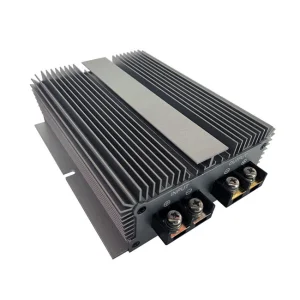
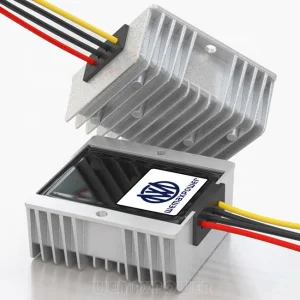
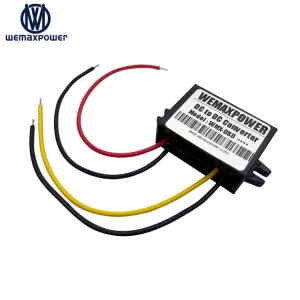
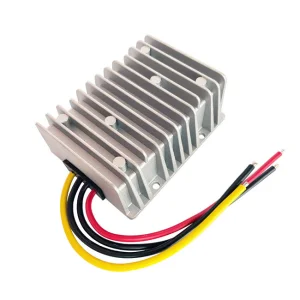
Why industrial buyers in Japan select Shenzhen Wemaxpower Technology as their primary OEM/ODM partner
Operating from the global epicenter of electronic engineering—Shenzhen—we leverage the absolute fastest turnaround times in components sourcing, circuit board layout design, thermal analysis modeling, and structural fabrication. For engineers in Nagoya who often face strict project timelines for new automobile model releases or industrial robot upgrades, our rapid engineering service translates to market leadership.
Unlike conventional suppliers that maintain static designs, Shenzhen Wemaxpower Technology Co., Ltd. brings 7 years of deep focus as an agile manufacturer. We can customize input voltage windows, output ripple levels, physical dimensions, and communication protocols (such as Modbus, CAN-bus, or LAN interfaces) within a fraction of the time required by local Japanese conglomerates.
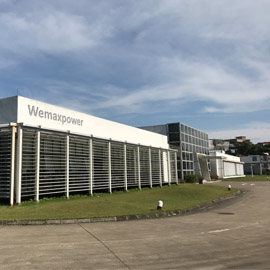
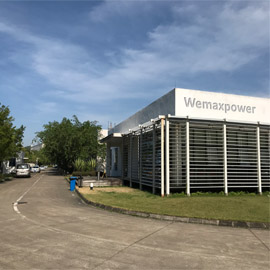
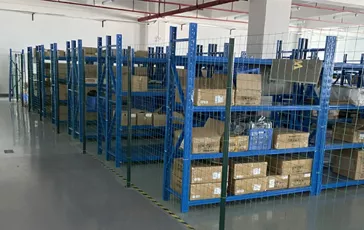
Every system is designed to sustain heavy duty workloads, backed by engineering assistance that starts from initial prototype evaluations down to high-volume commercial scaling.
| Performance Parameters | Wemaxpower Standard Specs | Typical Industrial Benchmark | Customer Benefits (Nagoya Market) |
|---|---|---|---|
| Quality Control Process | 4-Step QC (Raw Materials, Semi-Finished, Finished, Active Burn-In Aging) | Random Batch Inspection | Zero-defect deployment for precision automotive testing lines. |
| Enclosure Design | Milled Aluminum Extrusion with Integrated Heatsink & IP67/IP68 rating options | Stamped Sheet Metal | Outstanding shock resistance and passive thermal dissipation in oily/dusty factory environments. |
| Customization Latency | Prototypes engineered within 2–4 weeks | 8–12 weeks standard lead times | Accelerated validation cycles for R&D centers in Aichi Prefecture. |
| Protection Protocols | Over-Voltage (OVP), Over-Current (OCP), Over-Temperature (OTP), Short-Circuit (SCP) | Basic fuse protection | Maximum safety protection for expensive prototype loads and automated hardware. |
Proven reliability metrics validation through rigorous engineering and manufacturing processes
Ensuring system durability and electrical integrity before shipping to global industrial hubs
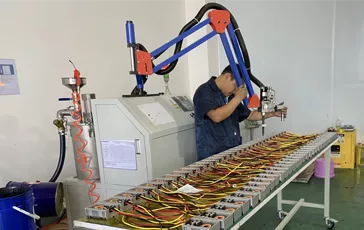
At Shenzhen Wemaxpower Technology Co., Ltd., we recognize that a power failure can compromise hundreds of hours of lab testing or halt automated lines. Thus, every programmable DC power supply, DC-DC converter, and voltage stabilizer is manufactured through a robust, four-tier quality control architecture:
Strict component level screening. Capacitors, MOSFETs, IGBTs, and magnetic transformers are sourced from tier-1 global semiconductor manufacturers and evaluated for ESR, leakage currents, and thermal tolerances.
Post-soldering, every printed circuit board assembly (PCBA) undergoes Automated Optical Inspection (AOI) and in-circuit testing (ICT) to verify solder joint integrity and electrical continuity.
Fully assembled devices undergo comprehensive load characteristic analysis. We test static and dynamic response times, ripple noise parameters, and check performance output across all programmable functions.
Our dedicated burn-in chambers operate units under full-load thermal stress profiles for extended periods. This isolates early component failures and ensures field reliability prior to packaging.

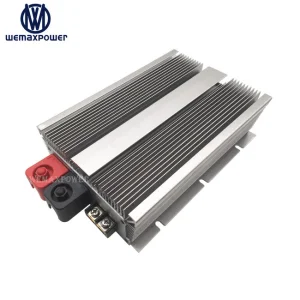
Premium class variable power supplies and step-down converters for global deployment
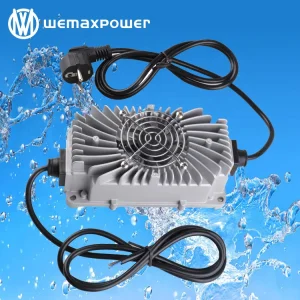
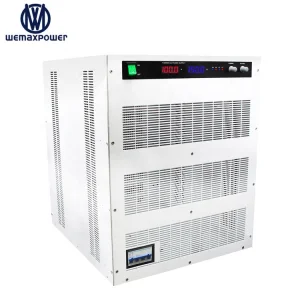
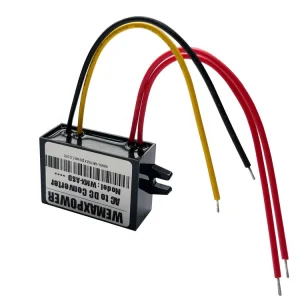
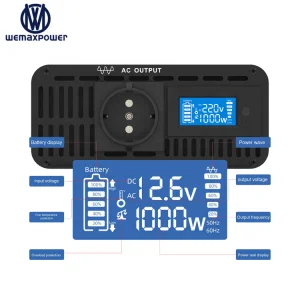
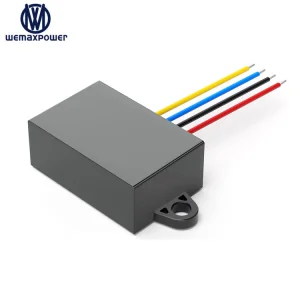
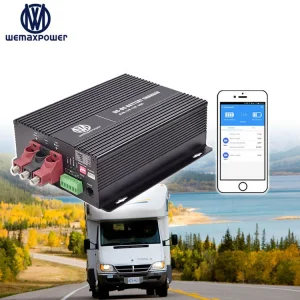
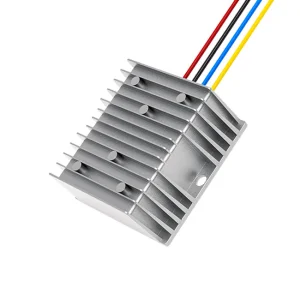
Comprehensive power distribution architectures engineered for system-wide plant operations
Beyond discrete converters and benchtop units, modern industrial enterprises require macro-level power architectures that interface with central manufacturing execution systems (MES) and supervisory control and data acquisition (SCADA) setups. Our programmable power solutions support native PLC protocol mapping, enabling real-time voltage profiling and diagnostic monitoring.
In hybrid and pure EV development, battery pack simulation demands rapid current reversals with negligible transient voltage overshoot. Our high-voltage programmable supplies allow labs in the Aichi industrial belt to simulate battery discharge dynamics, testing heavy-duty traction inverters and onboard electronics under realistic load changes.
Modern robotics installations utilize localized high-power DC-DC converters to step down power from high-voltage DC distribution lines to 12V, 24V, or 48V auxiliary channels. By localizing voltage conversion right at the robotic joint or actuator base, copper cross-section requirements are minimized, efficiency is enhanced, and line losses are virtually eliminated.
Expert answers addressing electrical parameters, quality standards, and logistics for Nagoya engineering buyers
Optimize your automation lines, EV testing labs, and industrial power distribution arrays. Contact our design department for custom topologies, detailed pricing schedules, and system specification options.
Send Inquiry Now Wemax Power