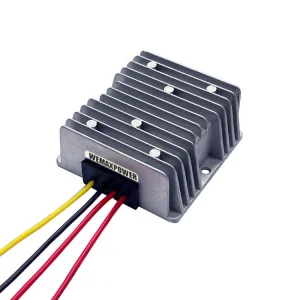
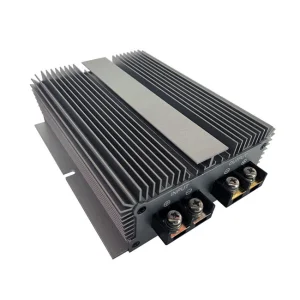
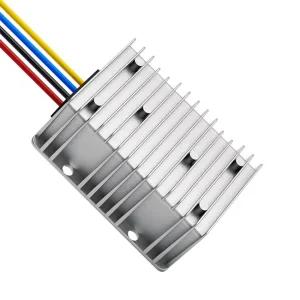
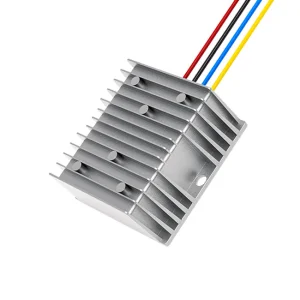
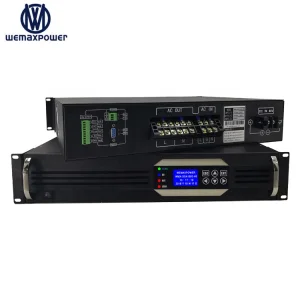
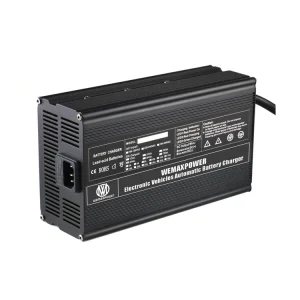
CE Certified 2U DC Converter Factory & Suppliers

Empowering Industrial Automation, Telecommunications, and Renewable Infrastructure with High-Efficiency, High-Density Power Conversion Modules.

Industrial Whitepaper: The Evolution of 2U DC-DC Power Conversion

Analysis of Global Integration Challenges, Market Trends, and Procurement Strategies in High-Density Power Engineering

>96%
Conversion Efficiency
2U
Standard Rack Format
CE
Safety Compliance
7+ Yrs
Engineering R&D

1. Global Commercial & Industrial Status

In modern electronic systems, power distribution architecture has shifted dramatically from centralized linear topologies to localized, highly decentralized modular DC-DC topologies. The standard 2U configuration represents a critical sweet spot in electrical integration. Large-scale enterprise systems, telecommunication base stations, edge computing facilities, and automation networks are demanding increasingly higher power density profiles. The 2U height limit (3.5 inches or 88.9 mm) permits maximum vertical airflow control and modular hot-swapping configurations.

Worldwide demand for CE Certified 2U DC Converters is expanding exponentially due to the rapid growth of autonomous industrial grids, electric vehicle infrastructure, and advanced signaling networks. Engineers require modules that can manage unstable incoming voltages (such as wide-range fluctuations from utility grids, generator dynamics, or large battery arrays) and convert them to clean, steady, localized power rails with minimal thermal loss. Without robust, high-efficiency conversion at the rack level, electronic hardware experiences decreased longevity, logic malfunctions, and costly, unplanned downtime.

"The critical requirement for modern industrial DC power delivery is no longer just voltage conversion—it is the synthesis of high thermal dissipation engineering, modular standard scaling, and international electromagnetic compliance (EMC) regulations."

2. Localized Application Scenarios & Engineering Adaptations

A key element in deploying power electronic components is adapting standard architecture to localized geological, climatic, and industrial conditions:

Heavy Industrial Automation & Transit

In railway networks and manufacturing corridors throughout North America and Europe, converters face persistent shock, mechanical vibration, and extreme temperature variations. WEMAXPOWER's aluminum-shell configurations provide the thermal mass and vibration tolerance required to ensure steady, uninterrupted power delivery for critical telemetry and locomotive signaling equipment.

Telecom Base Stations & Edge Computing

Typically operating on raw -48VDC or fluctuating 24VDC battery systems, telecommunication shelters require highly isolated converters with low electromagnetic interference (EMI) output. By utilizing advanced resonant topologies, our conversion modules ensure that wireless transceivers and switching nodes operate free from electrical interference and signal crosstalk.

Microgrid Storage & Renewables

Off-grid and grid-interactive solar/wind arrays utilize high-voltage battery systems (often ranging from 80VDC to over 120VDC). Transitioning these variable inputs down to stable, usable auxiliary rails (e.g., 24VDC or 12VDC) requires galvanic isolation to shield sensitive instrumentation from ground loop faults and voltage spikes.

3. Key Technological Trends Shaping the Power Supply Industry

Three prominent engineering transformations are currently redefining the design and procurement of 2U DC converters:

  • Wide Bandgap Semiconductors: The integration of Gallium Nitride (GaN) and Silicon Carbide (SiC) switches has allowed power supplies to operate at significantly higher switching frequencies. This shrinks inductive and capacitive component sizes, facilitating the packing of higher wattages into compact 2U form factors.
  • Digital Control Loops: Replacing analog compensators with high-speed digital signal processors (DSPs) enables dynamic loop adjustment, programmable output profiles, and comprehensive telemetry reporting via protocols such as PMBus or Modbus.
  • Stricter EMC/EMI Regulatory Frameworks: As electronic devices populate industrial environments, the CE certification's electromagnetic compatibility guidelines (such as EN 55032 and EN 55035) have become non-negotiable baselines. Converters must incorporate high-attenuation filters directly onto their internal PCBs to minimize both conducted and radiated emissions.

Shenzhen Wemaxpower Technology Co., Ltd.

Established with an unyielding commitment to technological leadership and product reliability, Shenzhen Wemaxpower Technology Co., Ltd. stands as a premier manufacturer with 7 years of specialized production experience. Our product catalog features high-reliability programmable DC power supplies, high-efficiency DC-DC converters, and robust power modules tailored for complex commercial environments.

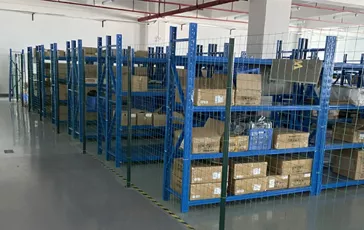
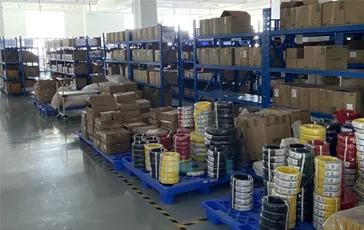
We pride ourselves on our highly flexible manufacturing structure, which accommodates both high-volume standardized supply and bespoke engineering adjustments. By maintaining deep vertical integration, we ensure that every critical sub-system is designed, manufactured, and qualified under one roof, guaranteeing component traceability and rapid lead times.
Rigorous 4-Step Quality Control Protocol

To fulfill the quality expectations of global infrastructure projects, all Wemaxpower modules undergo a strict, multi-stage quality assurance routine before leaving our assembly facility:

01
Raw Material Test

Comprehensive inbound inspection of active semiconductors, magnetic cores, capacitors, and PCBs to guarantee conformity to environmental and parametric limits.

02
Semi-Finished Test

Automated Optical Inspection (AOI) and in-circuit testing (ICT) of printed circuit board assemblies (PCBAs) to verify component placement and soldering integrity.

03
Finished Product Test

Functional parameter assessment under various load conditions, validating isolation resistance, voltage accuracy, current limits, and protection trip points.

04
Full-Load Aging Test

Extended environmental chamber run-in at elevated temperatures under full electrical load to induce infant mortality failures and ensure long-term field stability.

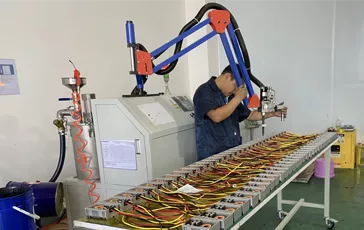
Advanced Automated Assembly & Testing Facilities

Automated testing loop
Wave soldering machine
Automatic component placement
Final assembly line QC inspection

4. China Factory Efficiency and Supply Chain Integration

The manufacturing ecosystem in Shenzhen provides an unmatched convergence of logistical efficiency, components supply, and design iteration speed. At Wemaxpower, we capitalize on this regional advantage to offer high-reliability power solutions at competitive price points. In the power electronics sector, proximity to component fabricators, raw copper suppliers, magnetic core winding plants, and high-density PCB tooling houses enables us to transition from blueprint design modifications to functional physical prototypes in days, rather than weeks.

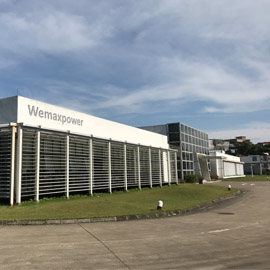
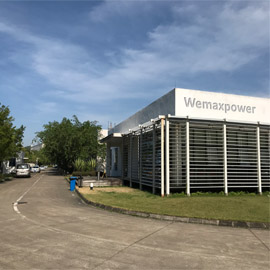
Furthermore, our highly optimized manufacturing lines feature advanced automated assembly machinery, high-precision wave-soldering equipment, and computerized component testers. This combination of precision automation and skilled manual calibration keeps our product defect rates extremely low, ensuring our globally shipped converters operate consistently from the day of installation.

5. Global Procurement Requirements and OEM/ODM Integration

For enterprise purchasing directors, power modules represent a critical engineering choice. When sourcing 2U DC converters, procurement departments must balance several key parameters:

  • Regulatory Compliance and Certifications: CE certification is a foundational requirement for European markets, assuring compliance with key safety (LVD) and electromagnetic (EMC) regulations. Additionally, meeting standards such as UL for North America or RoHS/REACH for environmental sustainability is essential.
  • Operational MTBF (Mean Time Between Failures): Industrial and municipal infrastructure installations expect lifetimes exceeding 100,000 continuous hours. Our modules utilize high-temperature electrolytic capacitors (rated at 105°C) and robust structural housings to ensure high reliability in these settings.
  • Comprehensive Protection Mechanisms: Converters must feature self-protection routines, including Over-Current Protection (OCP), Over-Voltage Protection (OVP), Under-Voltage Lockout (UVLO), Short-Circuit Protection (SCP) with auto-recovery, and Over-Temperature Protection (OTP).

Frequently Asked Questions (FAQ)

Comprehensive engineering and procurement answers regarding our 2U DC Converters and Power Modules.

1. What is the difference between isolated and non-isolated DC-DC converters?
Isolated DC-DC converters feature complete galvanic isolation between their input and output circuits, typically achieved using high-frequency transformer windings. This design blocks direct current paths, protecting sensitive output loads from high-voltage transients on the input side and preventing ground loop errors. Non-isolated converters share a common negative ground rail, making them more compact and cost-effective, though best suited for applications where electrical isolation is not a critical requirement.
2. How does Shenzhen Wemaxpower ensure product compliance with CE standards?
Our engineering team designs every converter from the circuit layout phase to comply with CE directives. This includes incorporating input EMI filter networks, selecting certified flame-retardant materials, and maintaining clearance and creepage distances on the PCB. Each batch is validated in our specialized testing labs and verified by third-party testing institutions to issue valid CE certificates.
3. Can you customize the input and output voltage ranges for 2U DC converters?
Yes. We offer extensive custom product development (ODM) services. If your project requires non-standard values—such as a wide-range input of 80V-150VDC down to a stabilized 13.8VDC or 24VDC output—our engineers can adapt our core circuit designs, modify magnetic component layouts, and customize firmware to meet your technical requirements.
4. What thermal management systems are integrated into your converters?
Our converters use several thermal dissipation methods depending on their power rating and ingress protection (IP). Our waterproof modules utilize thermal potting compounds to transfer heat directly to robust extruded aluminum housings, which act as high-capacity heatsinks. High-power 2U rack modules are equipped with temperature-controlled cooling fans to optimize internal airflow, ensuring stable performance across extended operating ranges.
5. What is the typical lead time for standard versus custom OEM orders?
Standard product orders are typically processed and shipped from our inventory or assembled within 10–15 business days. Custom OEM/ODM orders involving layout adjustments, specific metal enclosures, or alternative termination connectors require an engineering validation phase, resulting in typical lead times of 4–6 weeks.
6. How does the 4-step quality control process affect field failure rates?
Our 4-step quality control process—encompassing raw material inspection, semi-finished board verification, completed product parametric testing, and full-load burn-in aging—helps eliminate infant mortality failures before shipment. This strict quality routine ensures our field return rate remains below 0.2%, providing reliable performance for demanding remote installations.
7. Are these converters compatible with different battery chemistries like LiFePO4 and Lead-Acid?
Yes, our chargers and converters are designed to support a wide range of battery chemistries, including LiFePO4, traditional Lead-Acid, Gel, and Lithium-Ion cells. Many of our models offer adjustable output voltages and multi-stage charging algorithms to optimize charging efficiency and extend battery lifespan.