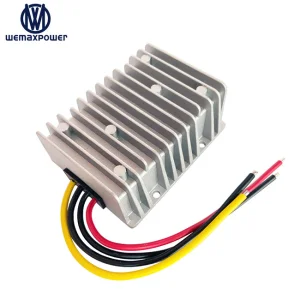
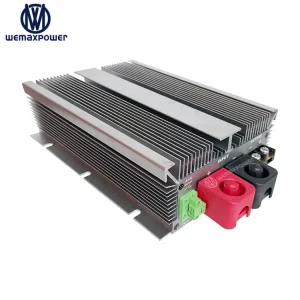
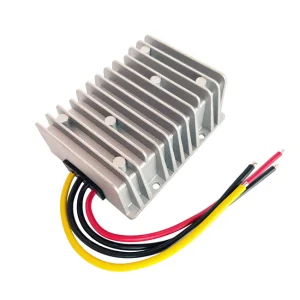
Engineered for harsh environments and precision voltage conversion, our top tier modules offer unparalleled power density and long-term durability.
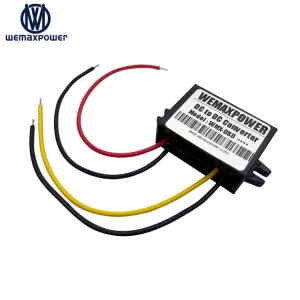
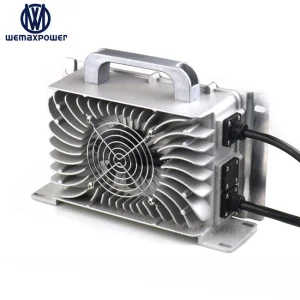
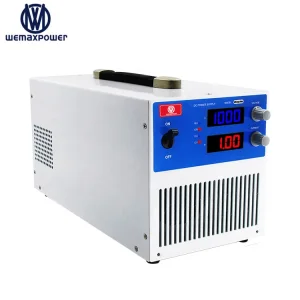
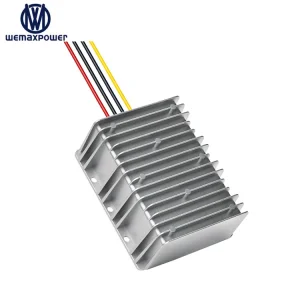
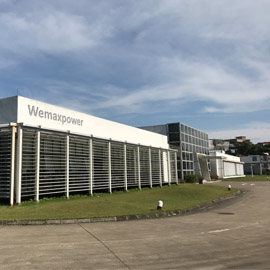
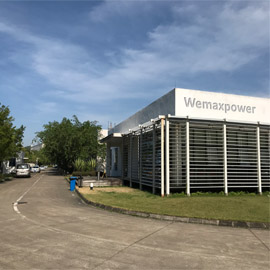
With 7 years of specialized manufacturing experience, Shenzhen Wemaxpower Technology Co., Ltd. stands at the forefront of high-reliability power design. Our specialized product range includes programmable DC power supplies, high-efficiency DC-DC converters, and advanced power modules engineered for the global market.
We pride ourselves on an engineering-first culture that ensures every system sent abroad matches international regulatory mandates. Our products are exported to multiple global markets, serving critical industrial niches where downtime is not an option. Our core commitment centers on uncompromised quality, customer-centric technical support, and competitive manufacturing pipelines.
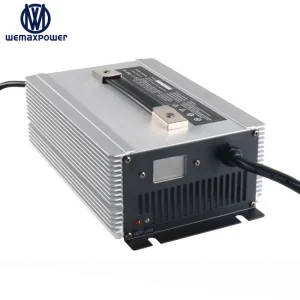
The transition toward high-voltage architectures and electrification demands intelligent, rugged, and certified external battery chargers.
The industrial battery charger market is experiencing a profound technological shift. Standard, low-efficiency analog chargers are rapidly being phased out. Today’s industrial operations require intelligent micro-processor controlled topologies capable of dynamically adapting to complex chemistries including Lithium Iron Phosphate (LiFePO4), Lithium-Ion, and advanced Lead-Acid batteries. With the rapid expansion of automated guided vehicles (AGVs), electric sweepers, marine vessels, and heavy electric utilities, external charging setups must guarantee maximum conversion efficiency with minimal thermal footprint.
In Europe and North America, strict regulatory bodies demand compliance with CE (LVD & EMC directives). These directives dictate strict limits on electromagnetic interference, harmonic distortion, and electrical insulation testing (Hipot isolation). Sourcing from a factory that integrates CE conformity natively into the design stage eliminates regulatory bottlenecks for global importers and distributors.
The global push towards commercial vehicle electrification (marine, material handling, AGVs) requires robust external chargers designed for reliable outdoor and warehouse operations.
Transition from standard linear charging transformer setups to resonant high-frequency (LLC) DC-DC conversion methods, achieving over 92% power conversion efficiency.
Protection against high vibration, water ingress, and toxic dust in agricultural, material handling, marine, and construction environments.
The factory team will deliver you quality-guaranteed orders through standard, traceable testing procedures.
Electrical safety and reliability are non-negotiable when dealing with high-voltage battery charging. An unstable charger can lead to thermal runaway, premature battery degradation, or catastrophic short circuits. To prevent infant mortality of electronic components, Shenzhen Wemaxpower Technology utilizes a rigorous 4-Step QC process:
Every batch of incoming materials—including semiconductors (MOSFETs, diodes), capacitors, magnetic cores, and aluminum chassis—undergoes strict parametric inspections to ensure conformity with international standards.
During assembly, PCB assemblies (PCBA) undergo automated optical inspection (AOI) and custom functional circuit testing to verify solder joint integrity and design logic tolerances.
Assembled systems are subjected to static and dynamic functional tests, validating nominal voltage outputs, ripple voltage levels, over-current thresholds, and isolation resistance boundaries.
Every single external battery charger and DC converter is subjected to a continuous heat-run burn-in under full loaded conditions. This simulated stress test identifies and filters out defective component performance prior to packaging.


From auxiliary systems in recreational vehicles to heavy-duty material handling in ports, our technology scales to meet localized application parameters.
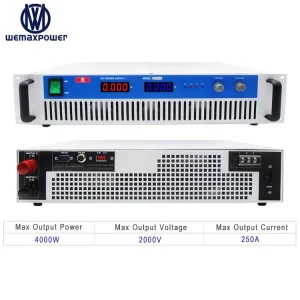
Industrial components must accommodate a broad array of operational constraints. In European transport fleets, auxiliary battery banks require DC-to-DC step-up boosters that draw from a 12V alternator to charge 48V auxiliary batteries without suffering voltage sag. In material handling warehouses throughout North America, high-power 2500W adjustable DC power supplies run continuous cycles, serving as active battery testing rigs or main charging stations.
Additionally, urban micro-mobility markets in Asia—ranging from electric rickshaws to commercial scooters—require high-current battery chargers (such as 60V 25A profiles) designed to withstand high ambient moisture, vibration, and dust. Sourcing chargers that balance local grid standard variations (ranging from 110VAC up to 380VAC) is critical to maintaining a homogeneous global distribution catalog.
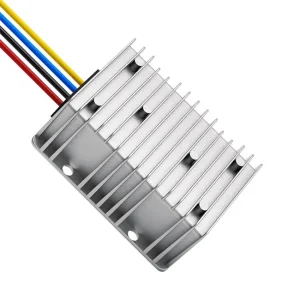
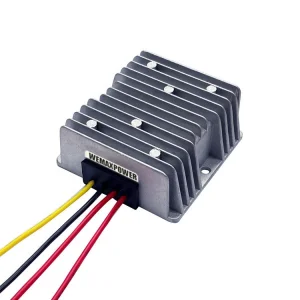
Designed with integrated low-voltage protection circuits, preventing main cranking battery depletion while delivering boosted constant-current/constant-voltage charges to secondary LiFePO4 cells.
Protects vulnerable telemetry sensors and audio equipment from industrial ground loop noise, offering isolated voltage conversion across heavy-duty automotive networks.
Get professional answers regarding design integration, thermal control, and custom electrical configurations.
Complete your power grid infrastructure with our certified, high-wattage converters and adjustable DC power configurations.
 Wemax Power