High-efficiency DC-DC converters, battery stabilizers, and smart chargers engineered for marine, automotive, and grid integration.
Deciphering supply chain risks, technical requirements, and standard compliance for strategic sourcing professionals.
Navigating grid codes across different jurisdictions demands inverters with sophisticated firmware. CE certification is mandatory in Europe for electromagnetic compatibility (EMC) and low voltage directives (LVD), protecting your commercial investments.
Power switching topologies utilizing IGBTs or GaN semiconductors require robust thermal management to mitigate the effects of high ambient operating temperatures. Sourcing products with high IP ratings (like IP67) reduces infant mortality failure rates.
Beyond initial unit cost, long-term procurement models analyze power conversion efficiency. A 96% efficient step-up/down buck-boost converter significantly lowers auxiliary load operating costs compared to 88% efficient alternatives.
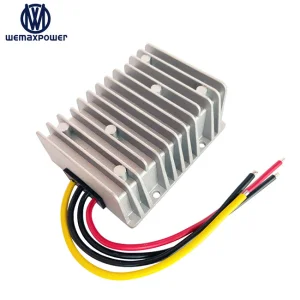
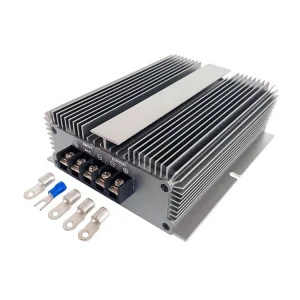
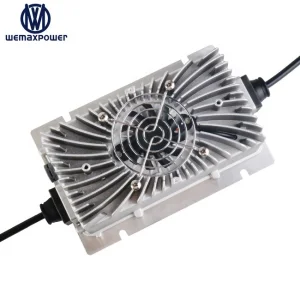
Commercial scale operations rely on highly customized DC-DC stabilizers and smart battery chargers to maintain power system integrity. From marine trolling motor arrays operating at 36V-43.8V to electric vehicle charging grids requiring isolated step-down modules, raw power delivery needs to be smooth and ripple-free. Engineering procurers must look for features such as active power factor correction (PFC), transient surge isolation, and intelligent battery chemistry profiles (Li-ion, LiFePO4, and Lead-Acid compatibility) to guarantee long-term operational success.
Under the hood of advanced converter topologies, silicon carbide (SiC) semiconductors, and high-frequency regulation.
| Feature / Parameter | Traditional Inverters | Smart High-Frequency Inverters (Wemaxpower) | System Level Benefit |
|---|---|---|---|
| Power Semiconductors | Silicon MOSFETs / Low-Frequency IGBTs | Wide Bandgap Semiconductors (SiC / GaN) | Reduced switching losses, higher operating temperature thresholds. |
| Isolation Topology | Non-isolated common ground | Galvanic Isolation (High-frequency transformer) | Prevents high voltage transients from transferring to sensitive logic loads. |
| Efficiency Profile | 85% - 90% peak efficiency | 94% - 97% peak conversion efficiency | Minimized thermal emissions, lower energy wastage during duty cycle. |
| Ingress Protection | IP20 open-chassis ventilation | IP67 epoxy-potted / fully sealed waterproof casing | Immunity to humidity, salt mist corrosion, dust, and mechanical vibration. |
| Control Logic | Analog hardware loop feedback | Microcontroller (MCU) driven digital PWM loop | Adaptive voltage stabilization under load steps and transient swings. |
Modern switching regulators operate via high-frequency pulse-width modulation (PWM) combined with buck, boost, or buck-boost topologies. In an isolated converter system (such as the 80V-150V to 5V step-down regulator), galvanic isolation is achieved using high-frequency magnetic coupling. The incoming DC input is first chopped into a high-frequency AC signal, passed through a miniature planar transformer to step down the voltage safely, and then rectified back to DC. This process prevents ground loop noise from interfering with instrumentation circuits like marine telemetry, sensors, and vehicle ECU controllers.
Furthermore, the integration of synchronous rectification replaces traditional diodes with power MOSFETs, minimizing the forward-voltage drop ($V_f$) losses. This allows units to maintain peak efficiency ratings of up to 96% even under heavy loads, eliminating the need for bulky active fan cooling and enabling highly compact, sealed aluminum enclosures.
Over 7 years of engineering expertise in programmable DC power, converters, and intelligent charging systems.
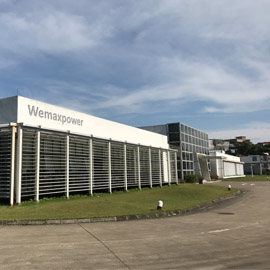
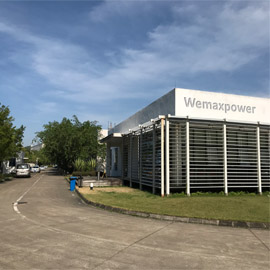
Shenzhen Wemaxpower Technology Co., Ltd. is a leading OEM/ODM manufacturer specializing in high-performance power conversion devices. With a strong R&D foundation and global export capabilities, our products power critical systems worldwide.
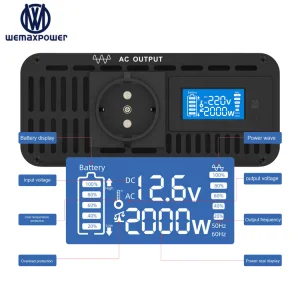
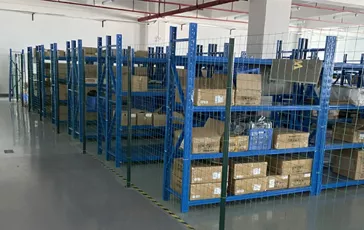
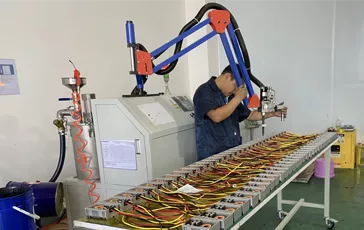
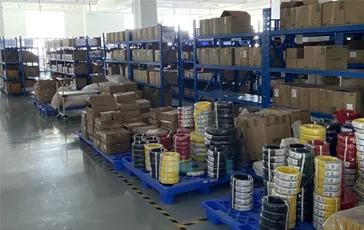
Our manufacturing facility features automated surface-mount technology (SMT) lines, selective soldering arrays, and automated testing rigs. We ensure that every batch of DC-DC buck/boost converters, marine chargers, and pure sine wave home inverters meets rigid industrial and automotive requirements before shipment.
Below is our specialized 4-stage quality control workflow. This strict validation matrix forms the backbone of our manufacturing reliability, ensuring that all distributed systems function at 100% capacity in the field.
Incoming component verification (IQC) for semiconductors, capacitors, inductors, and PCBs using LCR meters and thermal scanners.
In-circuit testing (ICT) on populated PCBs to verify electrical continuity, component values, and proper switching logic behaviors.
Functional testing under simulation loads. Verification of output voltage, current limits, ripple coefficients, and efficiency parameters.
Every unit undergoes continuous 100% full-load thermal burn-in chamber testing to screen out early-life failures (infant mortality stage).
The factory team will deliver you quality-guaranteed orders:

Assuring system safety, EMI mitigation, and mechanical toughness for global deployment.
Essential compliance for safety requirements of power converters used in photovoltaic and industrial systems. Ensures electrical shock hazards, energy-related hazards, and fire hazards are fully mitigated by physical isolation designs.
Evaluates electromagnetic emission limits and high-level industrial immunity. Guarantees that our converters do not disrupt nearby high-precision communication tools, radios, or sensors, and remain immune to grid noise.
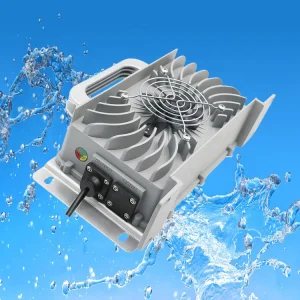
Applies to our heavy-duty marine converters and on-board chargers. A complete protective sealant prevents dust ingress and provides water immersion protection for 30 minutes at a depth of up to 1 meter.
Restriction of hazardous substances verification. All materials, solder compounds, and case finishes are lead-free and cadmium-free, satisfying European import compliance mandates.
Resolving common questions from electrical engineers, procurement directors, and supply chain managers.
Isolated DC-DC converters feature electrical separation between the input ground loop and output ground loop, typically using an internal high-frequency transformer. This prevents high-voltage surges on the input side from crossing over to destroy sensitive downstream devices. Non-isolated converters share a common negative ground, offering high efficiency and smaller footprint sizing at lower component costs.
CE certification guarantees compliance with safety standards (such as EN 62109-1 for solar/power converters) and electromagnetic compatibility requirements (such as EN 61000 series). Sourcing non-certified power components carries a major liability risk of electrical failure, grid feedback damage, or refusal of import at EU custom entry points.
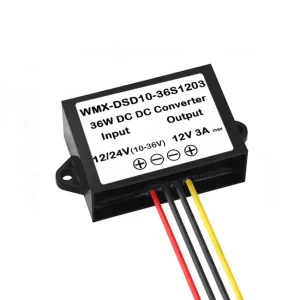
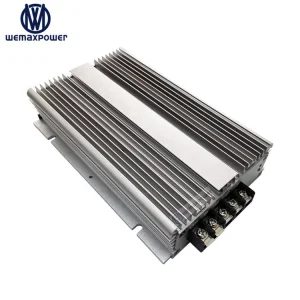
A buck-boost converter (such as our 12V/24V to 12V DC Stabilizer) employs a multi-switch H-bridge circuit configuration. When the input voltage falls below the target (e.g., alternator drops to 10V), it boosts the voltage. If the input climbs above the target (e.g., reaches 30V during battery charging spikes), the internal control logic automatically steps down (bucks) the voltage to maintain a precise, stable output.
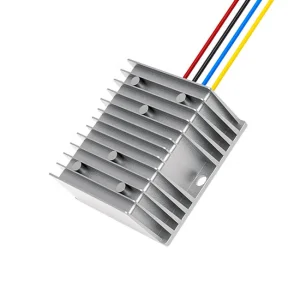
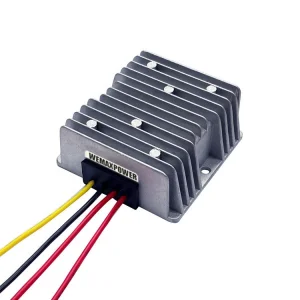
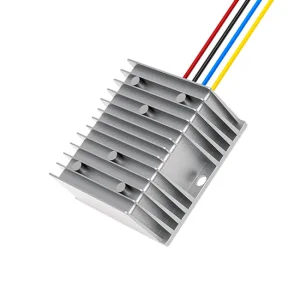
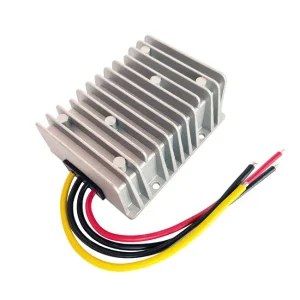
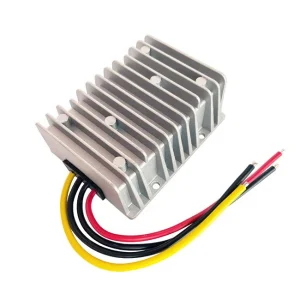
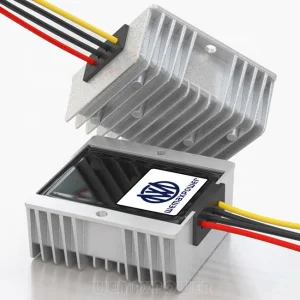
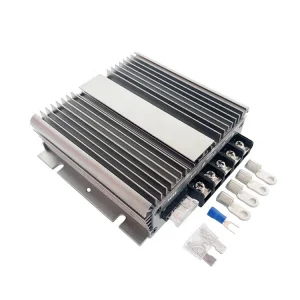
To preserve IP67 sealing, we do not use active fans. Instead, we use high-thermal-conductivity epoxy resin potting inside an extruded aluminum housing. The internal components conduct heat directly to the exterior aluminum fins, relying on natural convection currents to disperse heat safely into the ambient atmosphere.
Yes, as a manufacturer with 7 years of R&D experience, we offer custom firmware modifications for battery chargers (custom charge curves for specific Li-ion or LTO chemistries) and custom voltage steps for buck-boost converters down to a low minimum order quantity (MOQ).
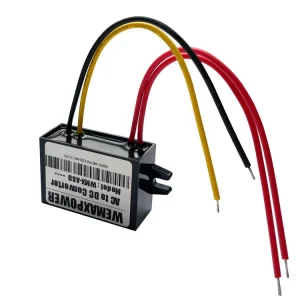
Advanced voltage stabilization products, AC-DC switching components, and high-amperage converters.
 Wemax Power