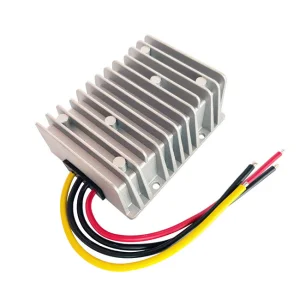
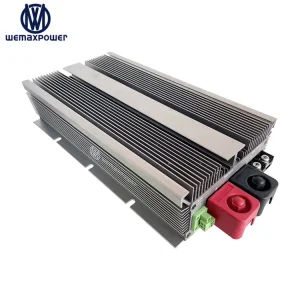
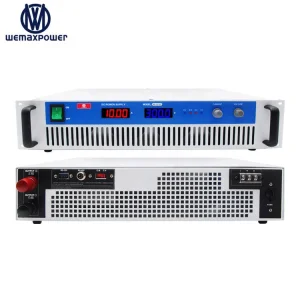
High-efficiency DC-DC converters, isolated voltage regulators, and intelligent chargers for commercial and industrial applications.
Years of R&D Excellence
4-Step QC Inspection
Global Export Markets
In-Field RMA Rate
Unlocking battery efficiency, lifespan, and safety through ultra-precise SoC, SoH estimation and balancing mechanisms.
In the transition toward global decarbonization, the demand for highly resilient Lithium-ion and LiFePO4 energy storage systems has accelerated. At the heart of these architectures lies the Battery Management System (BMS). As a critical electronics framework, the BMS manages the thermal envelope, regulates voltage, and ensures cells operate within their Safe Operating Area (SOA). From utility-scale grid storage to multi-kilowatt EV powertrains, our engineering focus at Shenzhen Wemaxpower Technology is centered on mitigating energy loss, balancing pack topologies, and providing stable power conversion interfaces.
Modern battery management strategies must adapt to the physical configurations of large-scale packs. To achieve scalability, modern system designers employ three primary topological options:
All battery cells connect directly to a single centralized controller. While cost-effective for low-voltage, small-scale packs, the high cabling overhead makes it less suitable for high-voltage setups.
A master module coordinates with local sub-modules (slaves) mounted on individual battery modules. It minimizes complex harness routing and maximizes noise immunity in high-voltage industrial setups.
Multiple independent BMS units communicate dynamically via CAN bus or daisy-chain communication. This provides plug-and-play expandability for containerized energy storage units (BESS).
A key determinant of system longevity is the cell balancing mechanism. While passive cell balancing dissipates excess charge as heat through bypass resistors, active balancing redistributes energy from higher-charged cells to lower-charged cells. This active technique significantly increases overall system round-trip efficiency and preserves operational life cycles, particularly in large industrial packs.
The accuracy of state estimation represents the core intellectual property of premium BMS manufacturers. Classic coulomb counting methods suffer from sensor drift over time. To resolve this, our engineering protocols integrate Kalman Filtering (KF) and Extended Kalman Filtering (EKF) to monitor cell behavior dynamically. By matching current, temperature, and open-circuit voltage (OCV) curves against integrated electrochemical models, we establish real-time State of Charge (SoC), State of Health (SoH), and State of Power (SoP) estimates, maintaining tracking deviations within an industry-leading ±1.5% margin.
How our technical foundations in power electronics drive next-generation battery management systems.
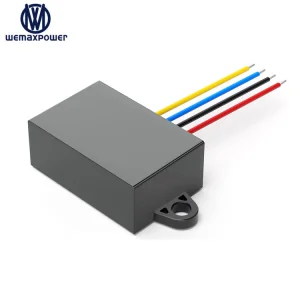
Shenzhen Wemaxpower Technology Co., Ltd. is a specialized manufacturer with 7 years of deep industry experience. Our core products include programmable DC power supplies, DC-DC converters, and power modules. Exports span multiple global markets with a distinct focus on unmatched product quality and professional customer support. All products undergo a rigorous, mandatory 4-step QC process: raw material testing, semi-finished product validation, finished product functional calibration, and full-load thermal aging test.
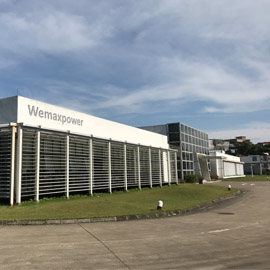

The factory team will deliver you quality-guaranteed orders.

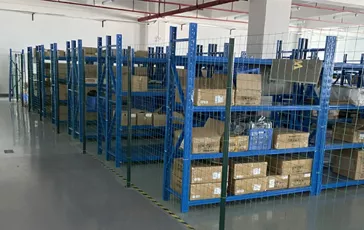
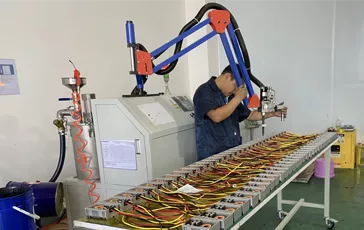
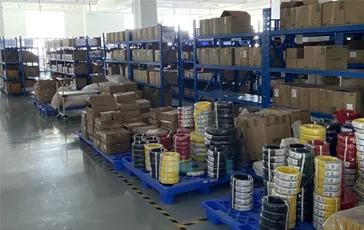
A battery management system is only as reliable as the quality of its components and assembly. To prevent in-field anomalies and guarantee functional safety, Wemaxpower implements a strict 4-step quality assurance program:
Adapting advanced battery management and power control topologies across diverse global sectors.
Different industrial landscapes demand tailored engineering specifications for battery management and power conditioning. Wemaxpower designs functional topologies suited to these exact environmental and regulatory constraints:
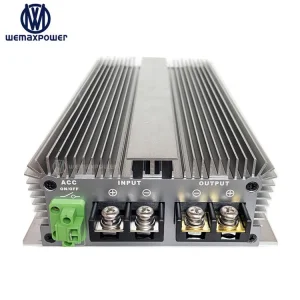
Grid-level energy storage systems require high-voltage battery modules stacked in series to achieve megawatt-level outputs. This demands robust insulation monitoring, lightning surge protection, and sub-millisecond balancing. Our range of programmable power modules and high-precision DC-DC converters act as the critical power conditioning link, allowing safe black-start processes and regulating output stability during sudden load transitions.
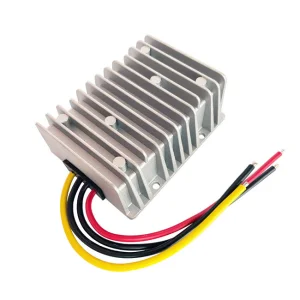
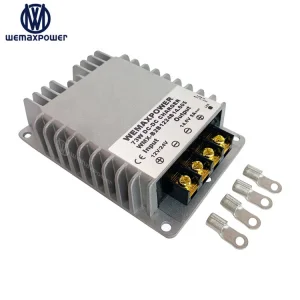
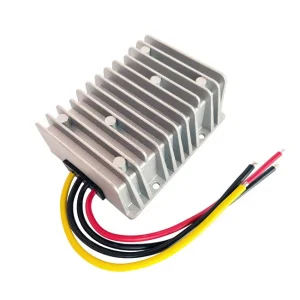
For electric forklifts, mining equipment, AGVs, and golf carts, environmental vibration and wide temperature fluctuations represent primary failure points. Standard systems run the risk of physical solder cracking or thermal runaway. We supply IP67-rated buck modules and highly efficient step-down transformers to ensure stable 12V/24V auxiliary power directly from high-voltage traction batteries (48V to 96V systems), maintaining constant current flow even under severe operating conditions.
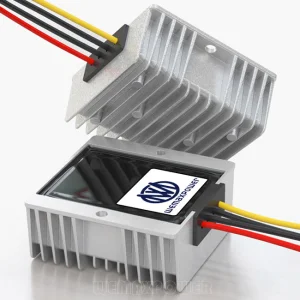
Marine environments require robust moisture and salt-fog protection. Our IP68-rated waterproof chargers and DC-DC stabilizers are fully sealed in polyurethane potting compound. These systems protect auxiliary LiFePO4 batteries against over-charge while stabilizing system bus voltages (e.g., from fluctuating 24V inputs to exact 13.8V or 24V outputs) for vital navigation, radar, and emergency telecommunications relays.
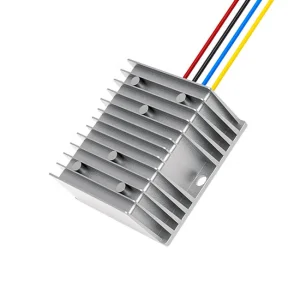
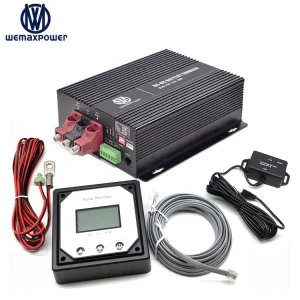
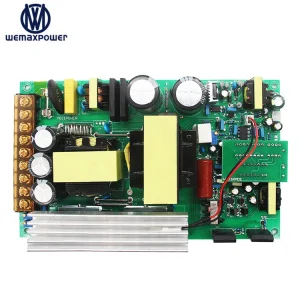
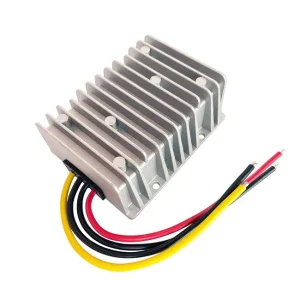
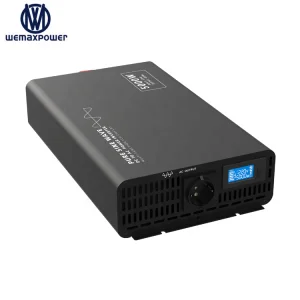
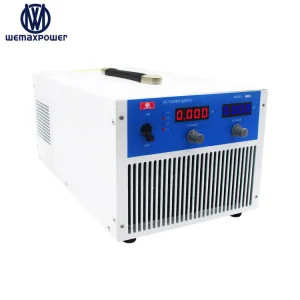
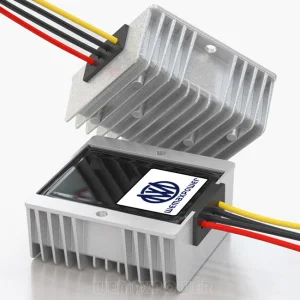
IP67/IP68 waterproof modules, high-power DC sources, and vehicle battery stabilization systems.
Future-proofing energy assets with cloud analytics, predictive modeling, and absolute safety certifications.
The engineering landscape of battery management is transitioning from localized isolation to cloud-enabled analytics. By utilizing high-speed CAN FD, Modbus TCP, and wireless networks, current battery management designs transmit continuous operational metrics directly to remote telemetry hubs. This cloud integration enables advanced diagnostic practices:
In global industrial commerce, safety standard compliance is non-negotiable. Shenzhen Wemaxpower Technology builds and qualifies its power conversion and charger architectures to align with key international safety frameworks:
Guarantees that converters, power supplies, and internal charging controllers operate safely under normal thermal conditions and meet European electrical safety regulations.
Designed to align with UL 1973 (batteries for stationary/vehicle applications) and IEC 62619, ensuring components resist high-voltage stress and isolate fault conditions.
Rigid adherence to structural shock tests and IP67/IP68 dust/water isolation. This ensures systems remain reliable during transport and under continuous moisture exposure.
Expert technical answers to common integration questions regarding battery management and power stabilization.
Passive cell balancing uses low-cost resistors to discharge excess energy from cells with higher voltage levels as waste heat, matching them to the lowest-capacity cell. Active cell balancing utilizes high-frequency inductive or capacitive shuttle systems to transfer charge from higher-voltage cells to lower-voltage cells. This dynamic redistribution maximizes overall pack efficiency, minimizes thermal buildup, and extends the cycle life of multi-cell battery packs.
Our quality control utilizes a rigorous 4-step testing methodology. It begins with Incoming Quality Control (IQC) on all passive components, microchips, and substrate boards. Next, In-Process Quality Control (IPQC) checks the boards post-SMT assembly. Finished Quality Control (FQC) measures functional limits and calibration, followed by Outgoing Quality Control (OQC) where all finished devices undergo continuous high-temperature thermal stress aging under full load conditions.
Galvanic isolation breaks the physical ground loop connection between high-voltage battery arrays and sensitive low-voltage microcontrollers or instrumentation buses (like CAN, RS485). By preventing high-voltage fault lines from bridging to secondary communication circuits, isolated converters protect auxiliary electronics from catastrophic failure and prevent electrical shocks for service technicians.
Temperature fluctuations affect internal cell resistance, load current capacities, and chemical reaction rates. A high-quality BMS features localized temperature sensors (NTC thermistors) that dynamically adjust SoC and SoH parameters. If temperatures exceed safe limits, the system triggers safety isolation protocols to prevent thermal runaway and protect the battery cells.
 Wemax Power