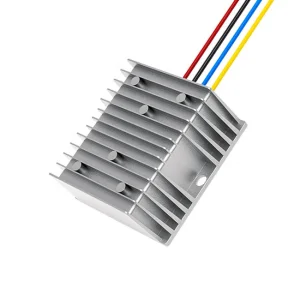
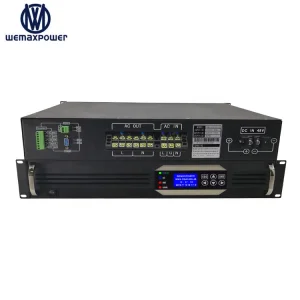
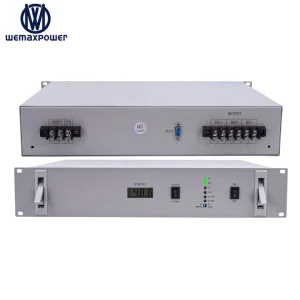
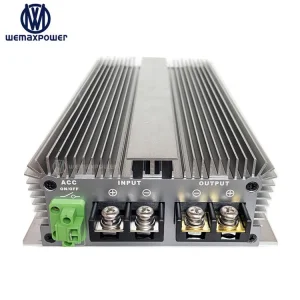
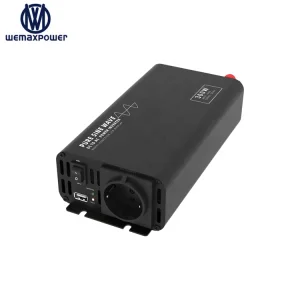
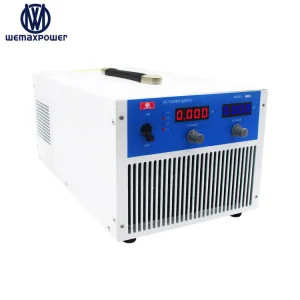
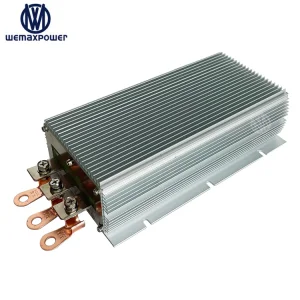
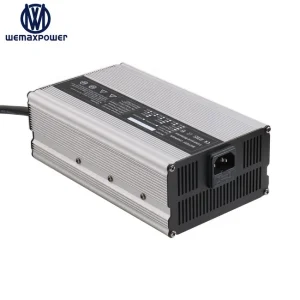
As a premier manufacturer specializing in power conversion solutions, Shenzhen Wemaxpower Technology Co., Ltd. integrates 7 years of pure-play technical expertise in R&D, structural design, and deployment of high-efficiency programmable DC power supplies, DC-DC converters, and modular power converters.
Our commitment transcends standard OEM services. We offer global markets specialized, localized support, robust customer protection frameworks, and systems engineered to withstand intense operational profiles. From high-power grid converters to industrial-grade waterproof step-down regulators, our design philosophy is built upon reliability, thermal resilience, and optimal power density.
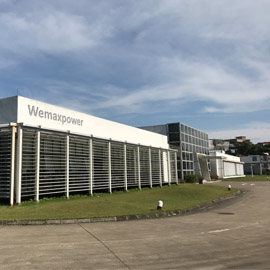
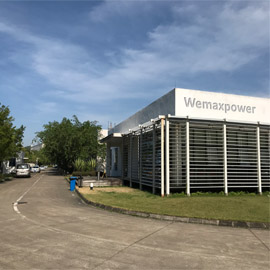
Our state-of-the-art facility utilizes automated SMT lines, advanced optical inspections, and rigorous stress testing pipelines to ensure that every power module shipped meets the highest global safety standards.
Complete validation of incoming semiconductor components, capacitors, magnetic cores, and PCBs. We partner exclusively with tier-1 component vendors to prevent downstream drift.
In-line testing of printed circuit board assemblies (PCBA) post-reflow, verifying structural alignment, component values, and solder joint integrity.
Comprehensive electrical parameter checkout: load regulation, efficiency analysis, voltage/current ripple, and protective triggers (OCP, OVP, SCP).
100% of manufactured units are subjected to active thermal chamber burn-in under dynamic full-load profiles, ensuring long-term field stability.

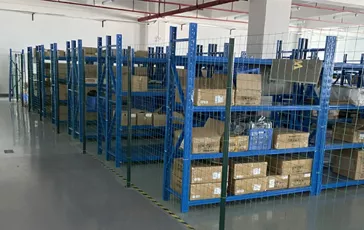
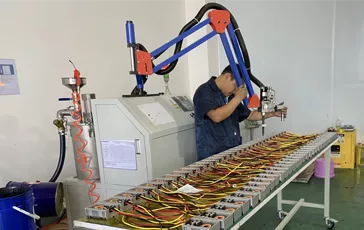
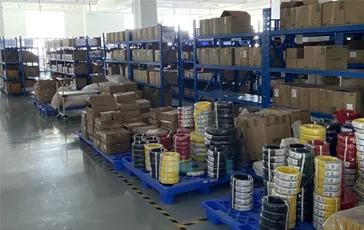
The factory team will deliver you quality-guaranteed orders.
Traditional silicon-based components are reaching physical limits. Wemaxpower’s roadmap details transition to Gallium Nitride (GaN) and Silicon Carbide (SiC) topologies, drastically reducing switching losses, improving power density by up to 40%, and allowing compact, passively-cooled chassis designs.
Future industrial charging demands seamless adaptation to lithium-ion, LiFePO4, and traditional lead-acid systems on a single line. Our smart processors execute auto-sensing charging algorithms, communicating with local BMS networks via CAN bus or PMBus protocols to adjust parameters dynamically.
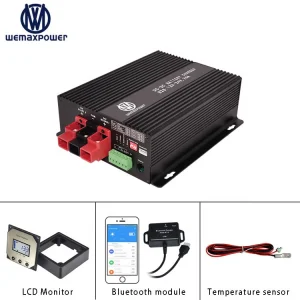
Integrating wireless control and telemetry modules allows plant managers to monitor thermal profiles, real-time efficiency metrics, and lifetime state-of-health (SoH). Preventative warnings are triggered before components fail, preventing costly unscheduled downtime.
Industrial machinery, marine vehicles, offshore installations, telecommunications infrastructure, and automated test environments all require specialized power conversion topologies. Standard off-the-shelf consumer chargers lack the structural rigidity and electrical specifications required to maintain high duty-cycle performance.
| Sector | Operational Challenge | Wemaxpower Applied Technology | Key Efficiency Metric |
|---|---|---|---|
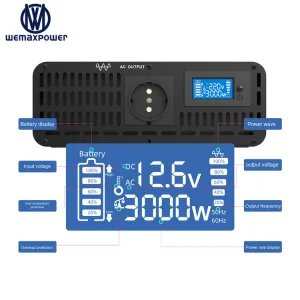
| Telecom & Datacenters | Sensitive equipment requires noise-free, stable high-voltage inputs under constant continuous-load scenarios. | 48Vdc to 220vac Pure Sine Wave Telecom Power Inverters with 2U Rack Mount Configurations. | >94% Efficiency, Clean <3% THD Output |
| Marine & Campers | Extreme vibration, moisture exposure, salt mist environment, and fluctuating alternator charging inputs. | Waterproof IP67 DC-DC Step-Up Alternator Battery Charger Boosters (12V to 24V/36V/48V). | Full Galvanic Isolation, Vibration-proof Epoxy potting |
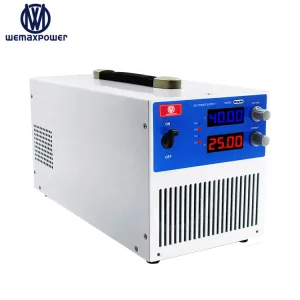
| Industrial R&D Testing | Variable load simulation, prototyping verification, and highly precise programmable voltage swings. | Variable switching DC power supplies with 0-5Vdc Analog / RS485 Remote Control interfaces. | 0.1% Program Precision, Dynamic Voltage Profiling |
| EV & E-Bike Logistics | Rapid turnover cycles requiring ultra-safe multi-stage (CC/CV/Float) temperature-compensated charging. | Smart Lead Acid & LiFePO4 Chargers with intelligent MCU battery curve diagnostics. | Auto cut-off, dual thermal protection loops |
Large-scale system integrators, EPC engineers, and supply chain managers require more than just a component manufacturer. They require compliance guarantees, reliable lead times, custom topological configurations, and engineering transparency.
Use this roadmap when evaluating industrial charger vendors:
Operating a global supply chain means satisfying complex national electrical and environmental safety regulations. Our industrial power supplies, battery chargers, and DC-DC converters are engineered from the ground up to comply with major safety directives:
Compliance with European EN standards, ensuring electromagnetic compatibility (EMC) and low electrical emission output profiles.
Providing heavy-duty protection against water ingress and dust particulate, critical for marine vehicles, RVs, and exposed industrial machinery.
Manufacturing processes that strictly avoid hazardous chemicals, allowing seamless logistics, customs processing, and zero environmental red tape.
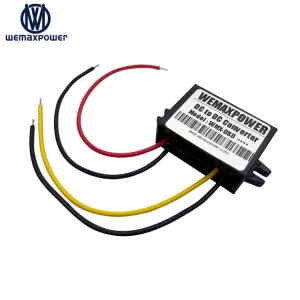
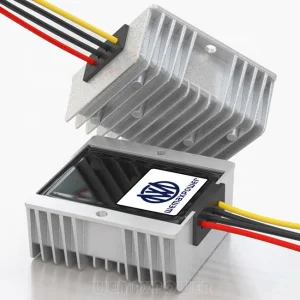
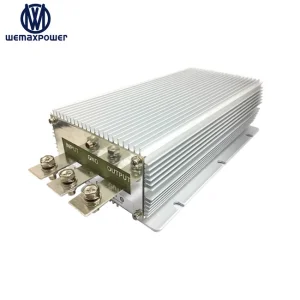
Isolated DC-DC converters feature complete galvanic isolation between the input and output circuits (using internal transformer magnetics), protecting downstream sensitive loads from upstream voltage spikes, noise, and grounding loops. Non-isolated converters share a common ground pathway and are highly efficient and cost-effective, but are best used where ground isolation isn’t critical to system safety.
Modified sine wave inverters output stepped, square-ish waveforms which introduce heavy harmonic distortion (THD). Telecom equipment, radio setups, and delicate testing systems require clean, low-distortion inputs. A Pure Sine Wave inverter replicates utility-grade AC power, preventing noise interference, minimizing heat generation, and prolonging the operational lifespan of inductive and capacitive loads.
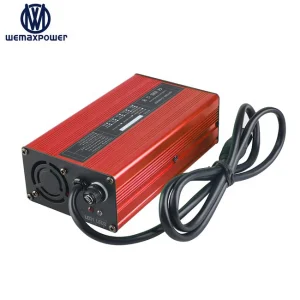
Different battery types require custom charging curves. Lead-acid batteries require a three-stage curve (Bulk, Absorption, Float) with temperature compensation. Lithium (Li-ion and LiFePO4) batteries require high precision Constant Current (CC) and Constant Voltage (CV) cycles without a float stage to prevent plating. Wemaxpower chargers feature MCU microcontrollers that monitor pack voltage and limit thermal stress through optimized curve tracking.
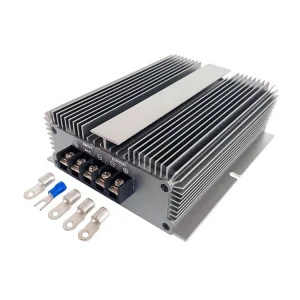
When charging a secondary auxiliary battery (especially low-resistance lithium packs) directly from a vehicle alternator, high current draws can burn out the alternator. A DC-DC charger acts as a current limiter and buck-boost stage, stabilizing charging currents and lifting voltage to the precise levels required by the auxiliary battery while insulating the vehicle's primary starting battery.
 Wemax Power