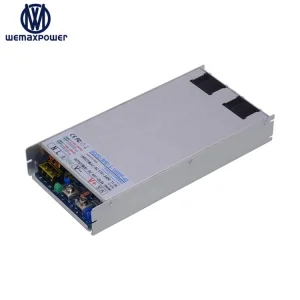
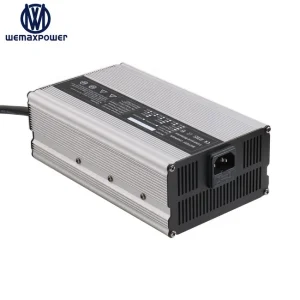
Explore our cutting-edge selection of power converters, smart battery chargers, and DC-DC step-down converters designed to maximize conversion efficiency.
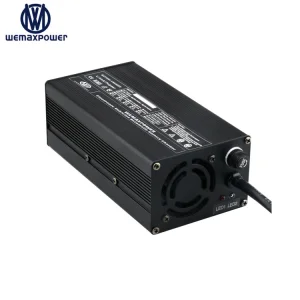
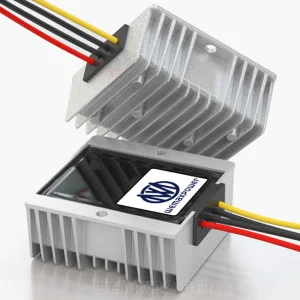
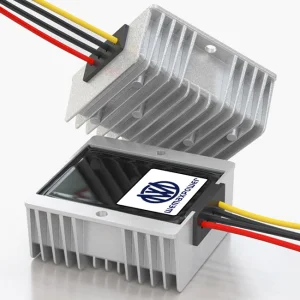
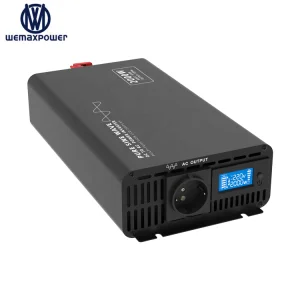
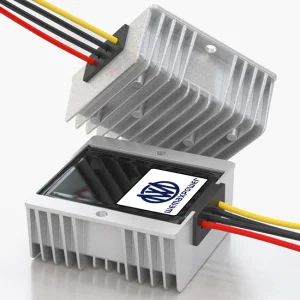
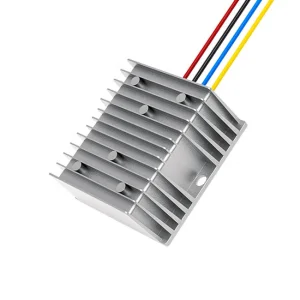
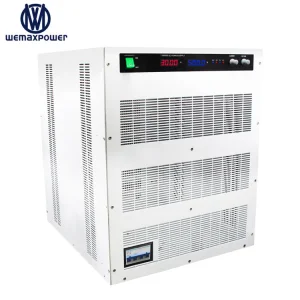
Driving operational excellence with optimized topology, rugged thermal management, and reliable grid integration.
Integrated Active Power Factor Correction (PFC) achieves up to 96% energy conversion efficiency, mitigating harmonic distortion and ensuring global grid compliance.
Complete galvanic isolation safeguards critical loads against system transients. Equipped with dynamic over-voltage, thermal throttling, and reverse polarity safety nets.
Engineered for high-humidity, marine, and rugged industrial applications with chemically inert silicon potting compounds that shield components from dust and water egress.
As industrial automation, micromobility, and off-grid storage expand globally, power supplies are no longer passive components. Today's systems demand smart interaction, adaptive voltage profiles, and precise thermal control. By operating at the intersection of power electronics and smart battery management, Shenzhen Wemaxpower Technology Co., Ltd. develops charging and regulation systems that maximize battery lifespans and system reliability.
A 1% increase in power converter efficiency translates to a disproportionate drop in waste heat. A system running at 96% efficiency generates 50% less heat dissipation than one operating at 92%. Our engineers utilize high-frequency topology configurations and advanced synchronous rectification to deliver high power density without relying on active fan cooling in environmental enclosures.
Our solutions cater to various battery chemistries, including Lithium Iron Phosphate (LiFePO4), Ternary Lithium (Li-ion), Sealed Lead-Acid (SLA), and Gel batteries. Each chemistry has unique charging requirements. For example, LiFePO4 chemistry requires tight float and absorb tolerances to prevent dendrite growth. Our smart chargers utilize custom constant-current (CC), constant-voltage (CV), and float algorithms to ensure battery cells reach their maximum state of charge (SoC) while maintaining structural integrity.
With 7 years of R&D and manufacturing excellence, our factory team delivers high-performance, quality-guaranteed orders to global markets.
To ensure fail-safe performance in the field, every power supply, converter, and module undergoes our certified 4-step quality control process before shipment:
Comprehensive incoming validation of all semiconductor switches, magnetic cores, capacitors, and PCBs to verify tolerances and component integrity.
Automated Optical Inspection (AOI) and initial in-circuit verification of populated boards during the assembly cycle to catch deviations early.
Static and dynamic load assessment, ripple voltage analysis, and active protection threshold validation of fully assembled enclosures.
Extended thermal soak testing under full rated load conditions to eliminate early components failure and guarantee long-term stability.
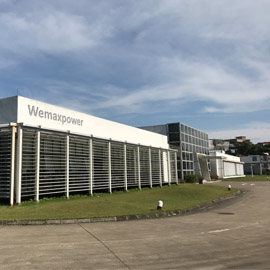
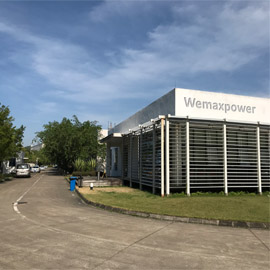
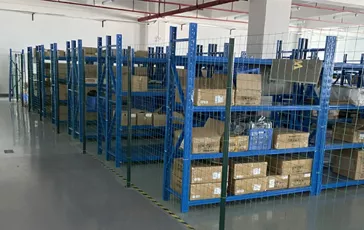
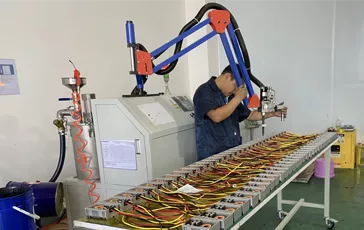
The factory team will deliver you quality-guaranteed orders
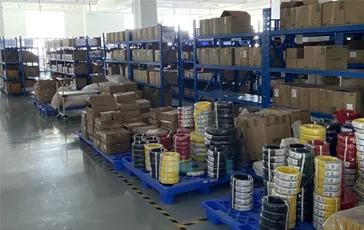

A strategic overview of our technological transitions in power conversion, efficiency benchmarks, and future goals.
Continuous evolution in charging solutions demands an adaptive technological roadmap. In response, Wemaxpower R&D focuses on transitioning key architectures from silicon base components to wide-bandgap (WBG) configurations to meet global requirements for compact footprints and ultra-low thermal dissipation.
How our localization in Shenzhen, China optimizes production time, material sourcing, and global logistics.
Situated within the Shenzhen electronic manufacturing hub, we maintain direct relationships with semiconductor suppliers, custom magnetic houses, and high-frequency capacitor producers, avoiding intermediary delays.
Our integrated R&D facility and dedicated prototype lines enable us to deliver custom OEM/ODM schematic updates in 7 to 10 days, accelerating time-to-market for complex projects.
Our modular production lines scale dynamically, allowing us to manage both small-batch specialty orders (e.g., custom 18KW laboratory power supplies) and high-volume industrial contracts without lead-time penalties.
This geographic clustering allows Wemaxpower to minimize the impact of global chip allocation events by utilizing equivalent, drop-in replacement components qualified by our internal testing division. Through collaborative relationships, we secure priority production queues for copper wiring, custom tooling, and alloy extrusion systems, ensuring consistent pricing and reliable lead times for our clients.
Years Manufacturing Experience
Max Conversion Efficiency
High-Temp Aging Tested
Strict QC Protocol
Meeting international regulatory frameworks to ensure smooth entry and deployment across key global markets.
Deploying energy systems globally requires compliance with strict safety directives. The Wemaxpower design philosophy prioritizes compliance from the schematic phase through to final casing construction. This proactive approach ensures our DC-DC converters, smart inverters, and battery chargers meet international standards:
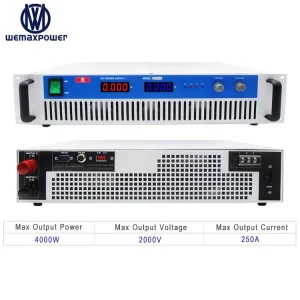
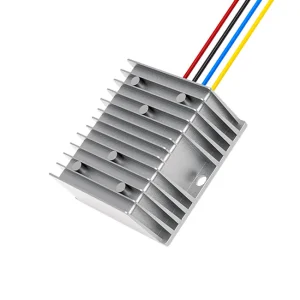
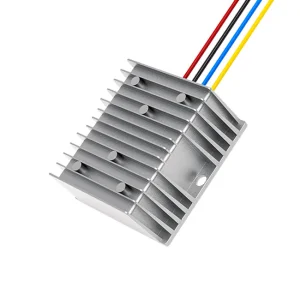
Choose from our high-performance power supply inventory, featuring variable AC-DC adjustable sources and high-efficiency step-down converters.
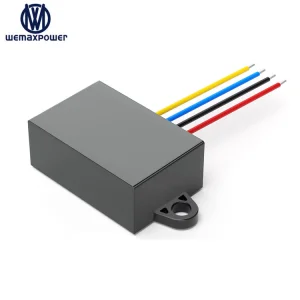
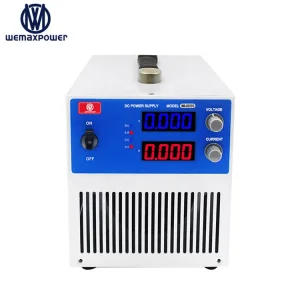
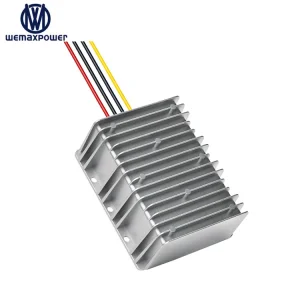
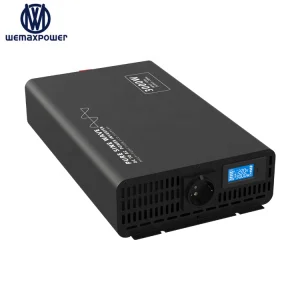
Find technical answers to common questions about our OEM/ODM custom power and battery charging systems.
Active Power Factor Correction (PFC) shapes the input current of the power supply to match the sinusoidal wave of the AC mains. It elevates the Power Factor (PF) to 0.99, reducing reactive power losses, eliminating harmonic emissions, and allowing for higher real power draw from standard circuit breakers.
Isolated converters use an internal high-frequency transformer to separate the primary input circuit from the secondary output load. This physical barrier blocks voltage spikes, protects delicate control circuits, and eliminates ground loops, making it essential for automotive and marine operations.
Yes. Our smart chargers utilize programmable charging algorithms designed for LiFePO4, Lithium-ion, Lead-Acid, and Gel batteries. They apply precise Constant Current/Constant Voltage (CC/CV) steps alongside balancing voltages to prevent overcharge damage.
Every unit is loaded to its maximum rated capacity and run continuously in a high-temperature chamber for several hours. This burn-in test reveals early semiconductor failures, transformer core issues, or solder anomalies before shipment, helping to ensure high reliability in the field.
IP67 modules are fully encased in a thermal-conductive epoxy resin. This potting process seals the electronics from moisture, dust, vibration, and impacts, allowing the converter to operate under water immersion depths up to 1 meter for short durations.
We offer customization of input/output voltage boundaries, current limits, smart charging curves, specific connector styles, communications protocols (CAN bus, RS485), and customized enclosure configurations to meet your specific system requirements.
Our programmable DC power supplies feature comprehensive protection mechanisms. These include Over-Voltage Protection (OVP), Over-Current Protection (OCP), Over-Temperature Protection (OTP) with thermal throttling, and Short-Circuit Protection (SCP) with auto-recovery mode.
We design our circuits with multi-layer PCBs featuring dedicated ground planes and integrate input and output EMI filters. Metal shielding covers our switching nodes, reducing radiated emissions to meet standard industrial EMI criteria.
 Wemax Power