Explore high-efficiency switching power modules, active PFC supplies, and rugged DC-DC converters built for heavy industrial, telecommunication, and mobility applications.
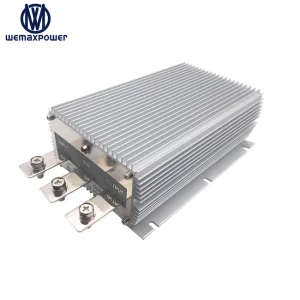
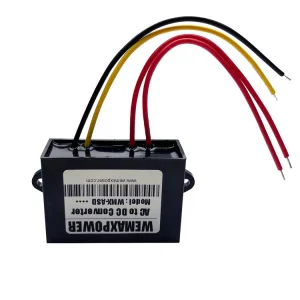
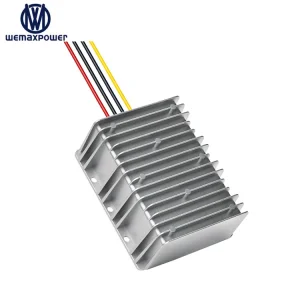

In modern industrial and commercial grid power systems, electrical efficiency is dictated by more than just raw wattage consumption. The Power Factor (PF) represents the ratio of real power flowing to the load over the apparent power in the circuit. A low power factor creates significant reactive load component requirements, causing electrical energy transmission losses and leading to harmonic distortion in localized and macro grids.
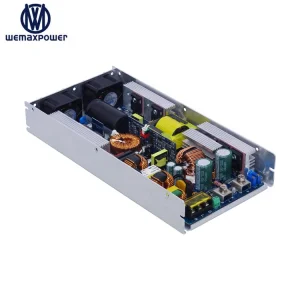
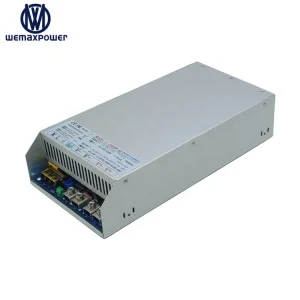
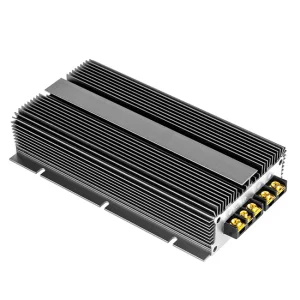
Power Factor Correction Modules (PFC Modules) are advanced electronic circuits that proactively align the current waveform phase with the voltage waveform phase. A standard active PFC topology relies on an electronic boost converter configuration, forcing the input AC current to follow the sinusoidal shape of the grid voltage. As highlighted by high-performance systems like the WEMAXPOWER 1000W Active PFC Switching Power Supply, this technique yields power factors greater than 0.99, minimizing Total Harmonic Distortion (THD) to comply with international power quality mandates such as IEC/EN 61000-3-2 Class D guidelines.
Information Gain Insight: Modern electrical installations utilizing non-linear loads (such as LED driver arrays, switching power supplies, and variable speed motors) introduce severe odd-order harmonics. Without active PFC modules integrated directly at the point of load, the root-mean-square (RMS) return current can saturate neutral conductors, causing equipment degradation, overheating, and localized voltage drops.
Shenzhen, China, has evolved into the hub for high-reliability power design and manufacturing. Chinese factories leverage deep industrial clusters that optimize lead times, lower bill-of-materials (BOM) costs, and guarantee strict component compatibility. When selecting a Power Factor Correction module factory, global procurement teams leverage the following regional dynamics:
The global transition to smart grids and clean energy demands highly efficient power conversion units. The power electronics landscape is transitioning towards digital power loop controls. Where traditional analog PFC control chips relied on fixed hardware configurations, current generation PFC modules incorporate high-speed Digital Signal Processors (DSPs). These microcontrollers dynamically optimize switching frequencies based on instantaneous load demands, reducing switching losses during light-load operating states.
Furthermore, the incorporation of Silicon Carbide (SiC) Schottky diodes and Gallium Nitride (GaN) transistors allows for significantly higher switching frequencies. Higher frequencies allow engineers to shrink the physical dimensions of boost inductors and filter capacitors, leading to ultra-high power density modules that fit seamlessly into compact rackmount server chassis, localized electric vehicle charger modules, and residential solar storage systems.
Dynamically adjusts feedback loops to mitigate transient voltage dips and maintains high efficiency at low-load margins.
Reduces switching loss and thermal output, allowing smaller inductors and achieving high-density packaging parameters.
Targets 3rd, 5th, and 7th order harmonics to maintain pristine AC waveforms and safeguard sensitive communication devices.
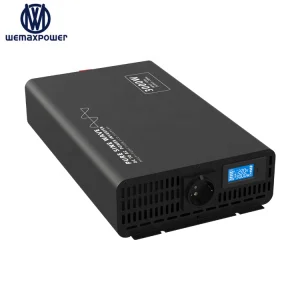
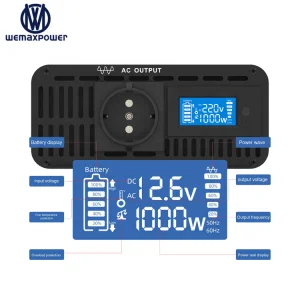
In residential and commercial microgrids, high-capacity power inverters convert raw DC generated by photovoltaic panels into grid-compliant AC. Advanced inverters, like the WEMAXPOWER 3kW Pure Sine Wave Inverter (48VDC to 220VAC), leverage internal switching regulators to maintain optimal energy conversion. By partnering with dedicated power module factories, solar solution providers ensure that the power quality meets strict utility injection requirements, protecting the microgrid from reactive power instability.
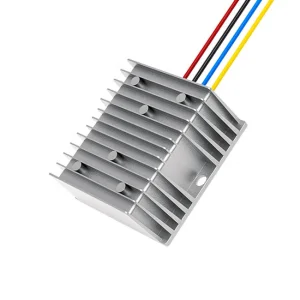
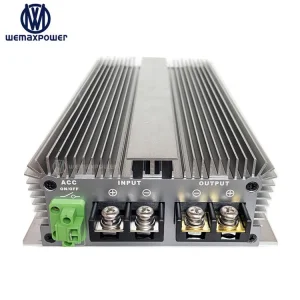
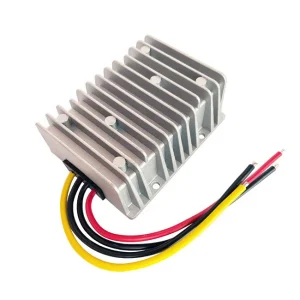
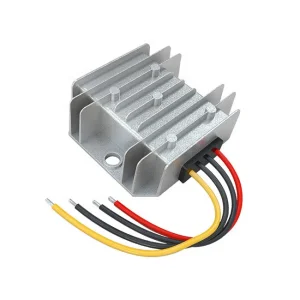
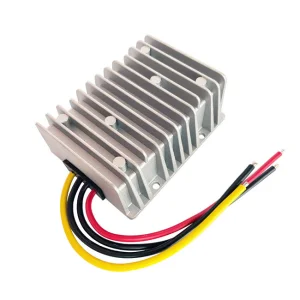
In vehicular environments, heavy-duty electronics operate under volatile supply conditions. Bus networks and industrial service vehicles require robust voltage regulation systems to bridge dynamic battery charge/discharge cycles. Using isolated DC-DC converters, such as the 12V DC Regulator or high-capacity 40A Boost Converters, prevents transient voltage drops from disrupting instrumentation clusters, telemetry systems, or engine control units (ECUs).
Enterprise datacenters require constant, reliable power. Active PFC switching power supplies convert AC utility power into steady, regulated DC outputs (e.g., 36V or 110V rails). High-efficiency units decrease energy overhead and reduce total cooling demands, resulting in lower operational costs for large-scale infrastructure deployments.
Engineering excellence with a certified 4-step quality control system and over 7 years of industrial power design experience.



Shenzhen Wemaxpower Technology Co., Ltd. is a manufacturer with 7 years of engineering expertise. The company's products include programmable DC power supplies, DC-DC converters, and specialized power factor correction active power modules. Serving multiple global markets, Wemaxpower focuses on quality control, structural longevity, and professional engineering support.
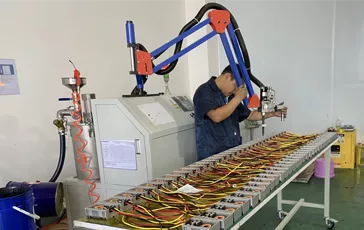
Every single power module delivered to the client undergoes a rigorous, mandatory 4-step Quality Control (QC) process designed to minimize early component failure rates:


Complete your design cycle with heavy-duty switching platforms, variable DC sources, and automotive buck-boost regulators.
Detailed technical answers to common integration questions asked by electrical engineers, system integrators, and strategic sourcing directors.
Passive PFC utilizes low-frequency inductors and large filter capacitors to reshape current waveforms, typically achieving a power factor of 0.70 to 0.80. Active PFC utilizes a silicon-controlled switching topology (boost converter) controlled by an IC or digital signal processor. This dynamically shapes the input current waveform to match the AC supply phase, consistently achieving a power factor above 0.99 with low Total Harmonic Distortion (THD).
High efficiency (such as 89.5% on the Wemaxpower 36V 1000W module) is achieved through synchronized rectification, magnetic core selection, and silicon-carbide components. By shaping the current input dynamically, internal heat dissipation and reactive load overhead are minimized, allowing the system to run cooler and consume less electrical overhead.
A buck-boost module stabilizes a target voltage rail even when the input source fluctuated above or below that set target. For instance, in vehicular or battery storage applications, system voltage can drop from 36V down to 9V depending on system load. A buck-boost converter regulates that variable voltage down or steps it up to keep the downstream electronics functional.
Depending on the application site, critical requirements include CE certification, FCC Class A/B compliance, and UL/TUV standards. In addition, to prevent industrial network pollution, regulations like IEC 61000-3-2 govern harmonic emission levels. Active PFC designs are essential to meet these strict limits.
During finished testing, active parameters like ripple voltage, transient load responses, isolation strength, and PFC tracking speed are measured. The aging test then operates the module under full thermal and electrical loads for extended periods (typically 12 to 48 hours) to verify component integrity under sustained stress conditions.
 Wemax Power