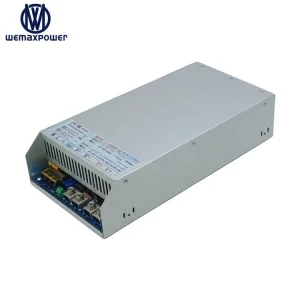
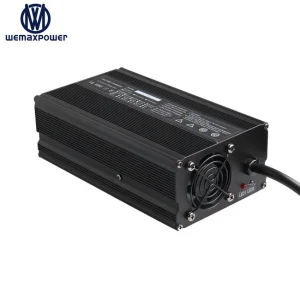
Engineered for maximum thermal dissipation, stable voltage regulation, and certified international safety standards. Click on any product below for complete specifications and customization details.
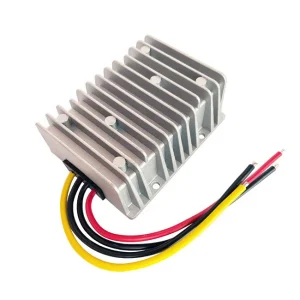
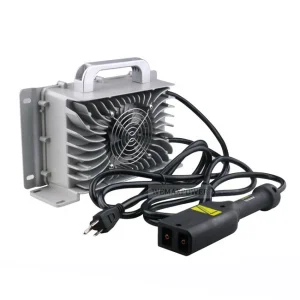
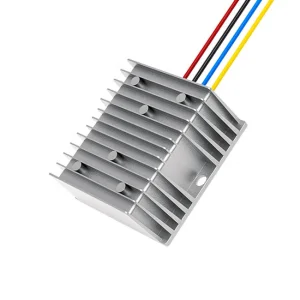
Modern industrial, telecom, and transit systems require stable power conversions to prevent equipment damage and costly operational downtime. Modern automation requires flexible, rugged, and intelligent power electronics that can adapt dynamically to fluctuating grid and operating environments.
From high-performance programmable switching power supplies powering precision automation testing in German factories, to waterproof marine battery chargers operational in heavy-saline environments across North America, quality power electronics form the bedrock of modernization. Galvanic isolation, thermal dissipation, active Power Factor Correction (PFC), and microsecond-level safety cut-offs are no longer premium upgrades—they are industry prerequisites for critical systems.
As microgrids, 5G base stations, electric vehicles (EV), and renewable arrays proliferate, the demand for customizable DC-DC converters and high-capacity battery chargers continues to climb. High-grade converters must support wide input voltage ranges (e.g. 9-36VDC to 12VDC) while sustaining operational efficiency upwards of 87%, minimizing thermal conversion losses.
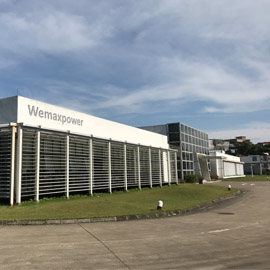
A Premier Chinese OEM/ODM Manufacturer of Professional Power Supplies and Systems.
Established as an industry leader in R&D and manufacturing, delivering standard and fully tailored power systems for global export.
Specializing in programmable DC power supplies, step-up/down DC-DC converters, isolated buck-boost regulators, and heavy-duty battery chargers.
All units must satisfy an exhaustive 4-step quality control workflow to assure reliable operation even under extreme thermal stress.
Ensuring the Long-Term Stability of Industrial Electrical Infrastructures.
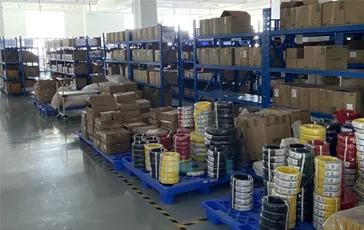
Comprehensive testing of semiconductors, magnetic cores, capacitors, and enclosures prior to production assembly.
PCB inspection and component soldering testing to guarantee correct routing, circuit values, and load flow path layouts.
Full electrical parameter validation, checking voltage accuracy, transient response margins, and ripple coefficients.
100% capacity continuous burn-in tests inside thermal test chambers to confirm high reliability in high-temperature environments.
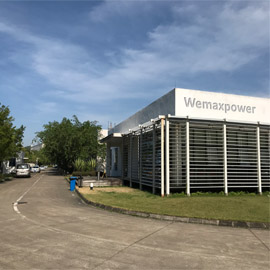
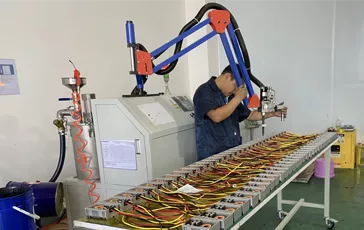
Our production facilities utilize modern surface-mount technology (SMT) and automated wave soldering machinery to eliminate manual variability. Each programmable power supply and isolated converter is designed using solid-state electronics, preventing output drift and minimizing electromagnetic interference (EMI) output.
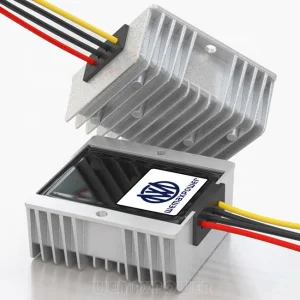
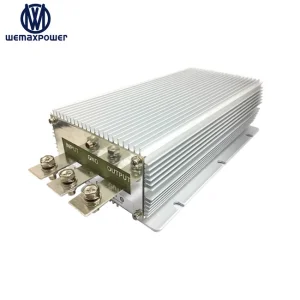
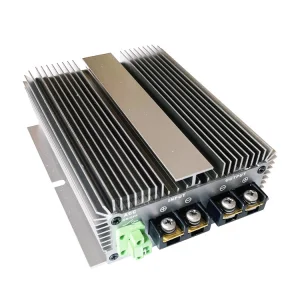
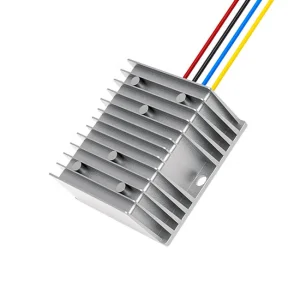
By using anodized aluminum housing with deep-ridge heat sinks, our DC-DC converters achieve passive, fanless cooling, leading to an increased mean time between failures (MTBF). For units requiring active ventilation, intelligent temperature-controlled fans operate dynamically to limit noise and dust ingress.
Moreover, our designs feature critical protections: Over-Voltage Protection (OVP), Over-Current Protection (OCP), Over-Temperature Protection (OTP), and Short-Circuit Protection (SCP). These safeguard your downstream electronic systems from grid-level anomalies and source power interruptions.

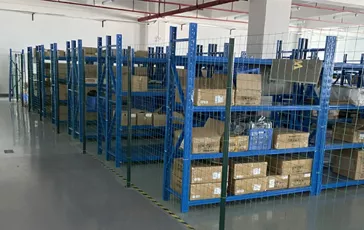
Ensuring continuous, clean power in demanding applications worldwide.
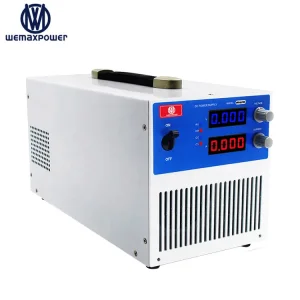
Operating environment requirements for industrial control loops demand high reliability. Programmable DC power supplies provide precise outputs for semiconductor validation and component burn-in testing, protecting sensitive diagnostic tools from voltage sags.
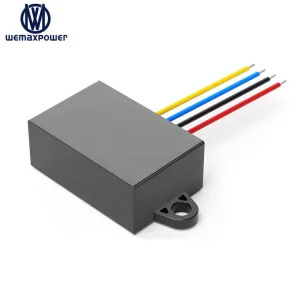
Saltwater and high moisture necessitate IP68 waterproofing. Resin-potted converters prevent corrosion and vibration failure on vessel instrument arrays, ensuring consistent 12V outputs during generator startup surges.
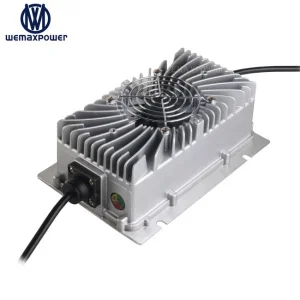
Harsh ambient warehouse conditions need intelligent battery chargers. Multistage CC/CV charging curves optimize LiFePO4 and Lead-Acid battery life on machinery, sweepers, and specialty transport carts.
| Product Category | Primary Application Scenario | Critical Parameter Requirements | Standard Protections |
|---|---|---|---|
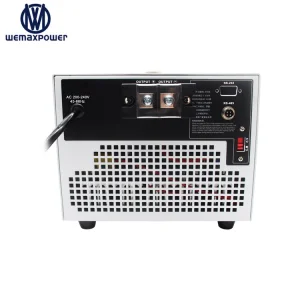
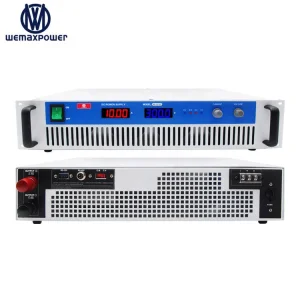
| High-Power Programmable DC Supply | Automotive Lab Testing, Component Burn-in | 0-300VDC Range, Adjustable current, 0-5V remote control | OVP, OCP, OTP, Short-circuit protection |
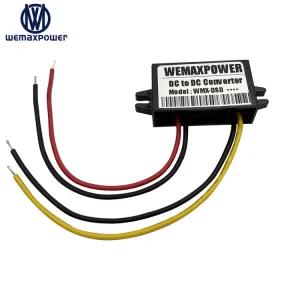
| Waterproof DC-DC Converter | Marine Navigation, Heavy machinery rigs | IP68 rating, Wide input range (9-36VDC), high efficiency | Thermal limit shutdown, Reverse polarity check |
| Smart Battery Chargers | EV Carts, Industrial Floor Scrubbers, AGVs | Multi-stage profiles, dynamic temperature compensation | Overcharge cutoff, short-circuit protection |
Addressing key technical concerns for system designers and sourcing engineers.
Isolated DC-DC converters feature complete electrical separation between the input and output circuits, typically achieved via high-frequency transformers. This prevents high input voltages from reaching output systems in the event of a internal component failure, and breaks ground loops to eliminate signal noise. Non-isolated converters share a common negative ground path, offering higher power density and lower cost, making them suitable for localized point-of-load regulation where safety-critical isolation is not required.
Active PFC uses a boost converter stage to align input current waveforms with line voltage waveforms. This raises power factors to 0.98 or higher, minimizing total harmonic distortion (THD). This reduces current draws from AC grids, lowers cable sizing requirements, and prevents penalties from municipal utility providers for poor power factors in industrial plants.
IP68 enclosures guarantee that power supplies are fully dustproof and protected against continuous immersion in water up to specified depths. For marine applications, high humidity and salt atmospheres cause oxidation and short circuits on unprotected PCBs. Potting electronics in epoxy resin shields them from vibration damage and prevents moisture contact with internal components.
Yes, smart battery chargers feature micro-controller units (MCU) that use multi-stage charging algorithms. Users select profiles to ensure correct bulk, absorption, and float voltage levels. LiFePO4 chemistries require precise constant current/constant voltage transitions without float stages, whereas Lead-Acid batteries require temperature-compensated float charge profiles to prevent sulfate accumulation and water loss.
Our 4-step QA workflow guarantees high reliability. Inspecting raw materials prevents defective semiconductors from entering the production line. In-process testing checks internal routing before sealing, and final parameter checks ensure target voltage limits are met. Lastly, the thermal chamber burn-in test forces early component failures to occur in the factory, preventing field-level failures.
Ensuring stable power conversion in telecom, material handling, marine, and light electric vehicle systems.
Analyzing technical shifts in industrial manufacturing and global sourcing requirements.
Silicon Carbide (SiC) and Gallium Nitride (GaN) are replacing silicon components. This permits higher switching frequencies, leading to smaller inductors and heat sinks, and pushing efficiency boundaries to 95% and above.
Traditional analog feedback loops are being replaced by high-speed Digital Signal Processors (DSP). This allows real-time tuning of voltage outputs, adaptive transient responses, and digital diagnostics via CAN bus communication.
As microgrids develop, DC-to-DC converters must handle bidirectional energy flow. This enables power to be routed dynamically back into battery arrays from braking motors or solar installations, reducing overall energy footprints.
Sourcing components requires thorough verification of quality standards. Wemaxpower maintains strict traceability from raw materials to final shipment, helping prevent downtime and early component degradation in heavy duty installations.
 Wemax Power