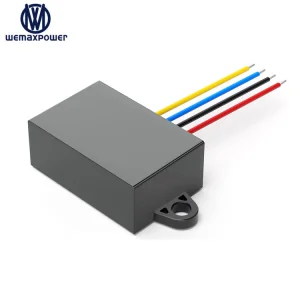
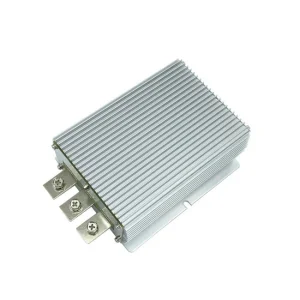
Explore our premium grade switching power supplies, intelligent vehicle step-up/down modules, and industrial battery charging solutions.
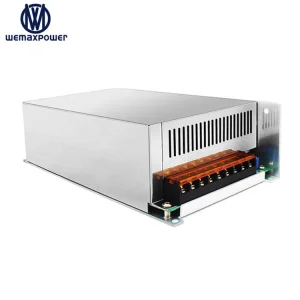
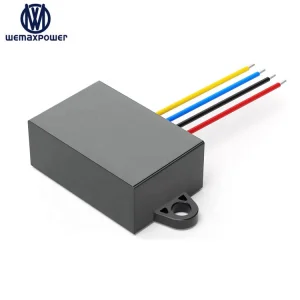
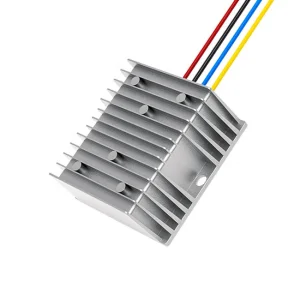
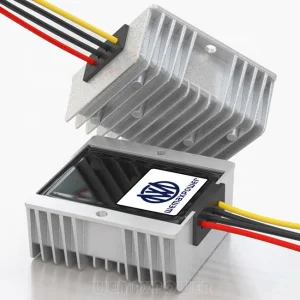
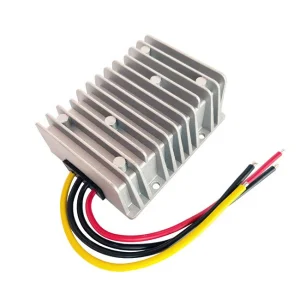
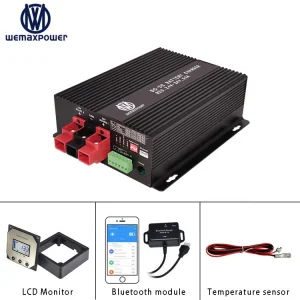
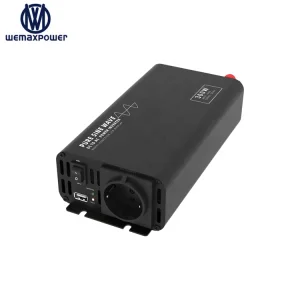
As the global transition to electrification accelerates across industrial, e-mobility, and renewable energy sectors, the demand for highly stable and efficient power conversion architecture has reached unprecedented heights. Constant Current (CC) charging is not merely a method; it is the fundamental safeguard for energy storage devices, electroplating lines, and advanced LED array configurations. Traditional power topologies struggle with dynamic load drops, heat dissipation bottlenecks, and efficiency curves, resulting in higher operational cost and decreased product lifespan.
By leveraging sophisticated Closed-Loop Feedback Circuits and high-frequency switching controllers, modern constant current power supplies deliver a non-pulsating, continuous current flow. This ensures that even when internal cell resistances fluctuate due to state-of-charge (SoC) or thermal fluctuations, the electrical current delivered remains strictly within operating specifications. Working with an experienced partner like Shenzhen Wemaxpower Technology Co., Ltd. allows industrial system integrators to secure custom, high-durability converters and power supplies optimized for harsh environments.
How wide bandgap semiconductors, localized digital signal processing (DSP), and intelligent charging software are rewriting efficiency limits.
Moving away from legacy silicon-based switches, our roadmap prioritizes Gallium Nitride (GaN) and Silicon Carbide (SiC) MOSFETs. These materials enable higher switching frequencies, drastically lower RDS(on) resistances, and smaller footprint configurations, achieving efficiencies exceeding 96% in active converters.
Analogue control loops are prone to component aging and temperature drift. Modern constant current supplies incorporate 32-bit DSP microcontrollers that monitor current and voltage inputs at megahertz sampling rates, executing complex PID algorithms to prevent overshoot and undershoot states.
The future of energy grids relies on Vehicle-to-Grid (V2G) and battery buffering. Our developmental topologies focus on bidirectional buck-boost phases, allowing a seamless transition from drawing grid power for charging to dumping stored battery power back into industrial DC buses.
Providing specialized power regulation and constant current designs tailored to complex operating conditions.
Industrial switching supplies must withstand aggressive atmospheres, high humidity, and continuous load profiles. By implementing IP65-IP67 isolation layers and massive thermal dissipating structures, our solutions provide uninterrupted 1500W+ adjustable output arrays for anodizing and automated production machinery.
Automated Guided Vehicles (AGVs), golf carts, and electric bikes depend on quick charging turnarounds without shortening cell life. Our smart buck-boost chargers dynamically adjust output voltages (e.g., DC 24V to 24V, 25.2V, or 29.2V) to fit the exact battery cell configuration and temperature coefficient.
Wide-input buck-boost converters and isolated power blocks regulate fluctuant voltages from PV panels or backup generator setups. With inputs spanning from 20V to 120V down to a stable 12V/24V, we ensure remote micro-stations maintain consistent telecom link operations.
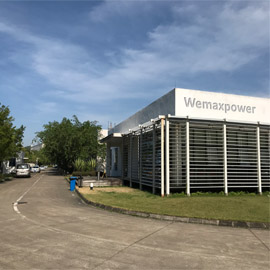
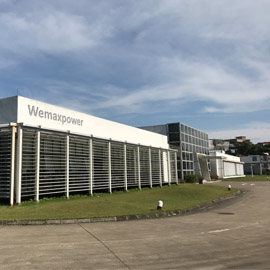
Operating out of Shenzhen, the silicon heartland of China, Wemaxpower Technology Co., Ltd. capitalizes on a highly integrated electronics supply ecosystem. This geographic location allows us to source raw active elements, premium magnetics, and advanced PCB laminates with unparalleled efficiency. The localized production network reduces typical B2B lead times by 30-40% compared to non-hub manufacturers.
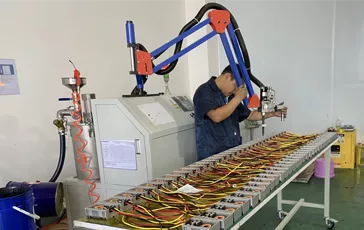
Our facility emphasizes digital control workflows and modern quality assurance principles to prevent human assembly failures. From automatic component placement on advanced SMD lines to computerized optical inspection, our system leaves no room for manufacturing anomalies.
Guaranteeing failure-free deployments through continuous stress-testing at every production step.
Incoming SMT chips, transformers, and enclosures undergo strict parameter verification and thermal tolerance tests before going onto the assembly lines.
Assembled PCBs are analyzed for electrical continuity, solder joints quality, and circuit trace resistance via Automated Optical Inspection (AOI).
Completed units are calibrated for operational accuracy, checking current regulation limits, isolation resistance, and cooling fan activation points.
Every single power unit runs for hours under simulated full-load environments in high-temperature chambers to weed out premature component drift.
Premium solutions for voltage stabilization, marine/automotive auxiliary systems, and high-load industrial applications.
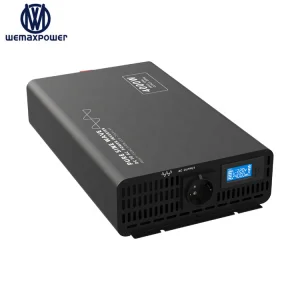
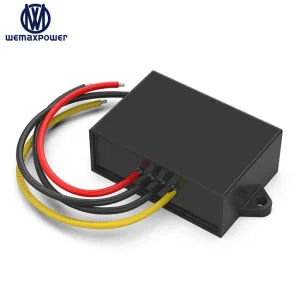
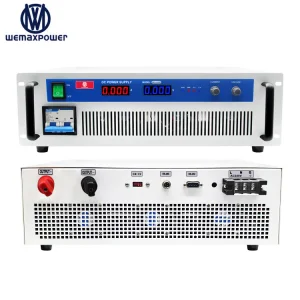
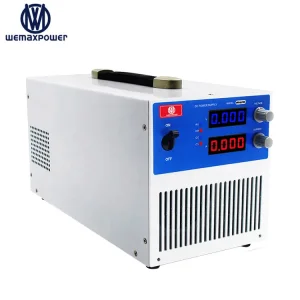
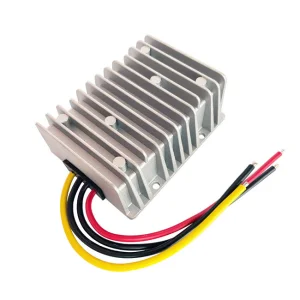
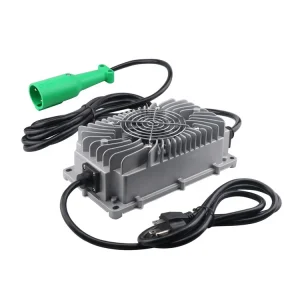
A B2B guide to evaluating constant current charger suppliers on reliability, long-term costs, and technical compatibility.
Initial acquisition cost is only 30% of the lifecycle cost of industrial power supplies. Low-quality converters lack active thermal mitigation, leading to breakdown-induced production stops. We prioritize high-grade components that extend MTBF (Mean Time Between Failures) to over 50,000 operational hours.
Procurement departments must specify ingress protection based on actual field environments. For marine, dust-heavy manufacturing, or vehicle undercarriages, selecting IP67/IP68 hermetically sealed and potted options eliminates risks associated with environmental contamination.
Exporting to European, North American, or Asia-Pacific markets requires strict adherence to localized directives. Our designs conform to CE, FCC, CB, and RoHS guidelines, assuring clean EMC/EMI spectra and electrical safety barriers that pass stringent local inspections.
Addressing core integration, safety, and supply inquiries commonly raised by global engineering teams.
A Constant Voltage power source maintains a pre-set voltage output while the output current fluctuates dynamically based on load impedance changes. Conversely, a Constant Current power supply regulates the output current at a strict target rate by shifting the output voltage dynamically in response to changes in the load resistance. This constant current regulation is critical during the initial phases of battery charging and LED operation to prevent thermal runaway.
Physical isolation (utilizing high-frequency transformers rather than shared ground circuits) decouples the primary high-voltage input side from the sensitive low-voltage output side. This blocks high-voltage surges, transients, and common-mode noise from passing to the load, safeguarding downstream logic circuits, controllers, and human operators.
Yes. Our programmable designs allow customization of output voltages, current limits, and multi-stage charging profiles (such as Bulk, Absorption, Float, and Equalization curves). This tailoring matches the thermal and electrochemical profiles of specific Lithium-ion, LiFePO4, or Lead-Acid configurations.
We utilize highly thermally conductive silicone potting compounds that fill all internal voids. This structure transfers heat from internal switching MOSFETs and inductors to the outer aluminum-finned heat sink, maintaining safe junction temperatures without requiring active cooling fans.
Delivering quality-guaranteed orders through transparent operations and verified production steps.
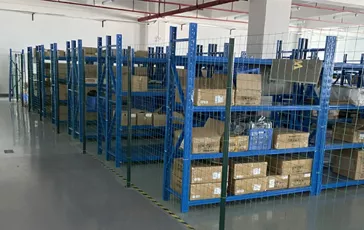
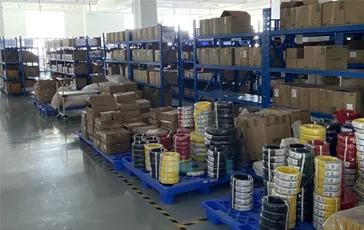
The Wemaxpower factory team guarantees quality-approved products for every batch, relying on rigorous engineering and a highly optimized supply chain based in Shenzhen, China.

 Wemax Power