Explore high-efficiency pure sine wave inverters, buck-boost modules, and adjustable variable DC power supplies designed for global engineering operations.
Analysis of modern power supply architecture, efficiency parameters, and industrial demand shifts.
The global demand for high-efficiency, reliable power distribution modules has entered an era of aggressive convergence. Power supply adapters, formerly treated as simple passive voltage step-down units, are now critical components of system-level architectures in telecommunications, IoT, electric vehicles (EV), medical diagnostics, and laboratory infrastructure. Leading industrial sectors require customized converters capable of operating near theoretical limits of electrical efficiency under extreme temperature ranges.
For strategic procurement directors, navigating the supply chain of a China Power Supply Adapter Factory requires evaluating capabilities beyond bulk pricing. True market leaders distinguish themselves via deep engineering expertise, adherence to international regulatory frameworks, advanced topology implementation (such as LLC resonant converters and synchronous rectification), and dynamic diagnostic reporting interfaces.
Deciphering WBG semiconductors, IoT telemetry integration, and high power density configurations.
Transitioning from Silicon (Si) to Gallium Nitride (GaN) and Silicon Carbide (SiC) switches allows for elevated switching frequencies (200kHz to 1MHz+), reduced thermal output, and smaller footprints.
Modern industrial environments require real-time current, voltage, and internal thermal performance analytics. Integrating I2C, SMBus, or CAN bus interfaces provides host-system level control.
Utilizing LLC and Phase-Shifted Full Bridge (PSFB) architectures reduces switching losses through Zero Voltage Switching (ZVS) and Zero Current Switching (ZCS) transitions.
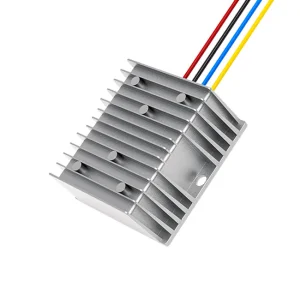
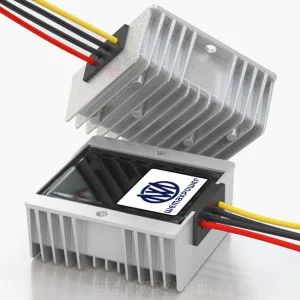
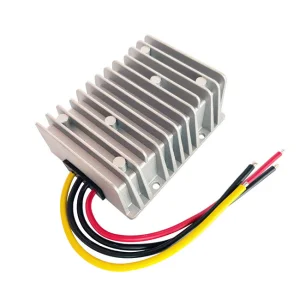
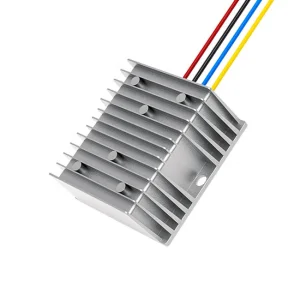
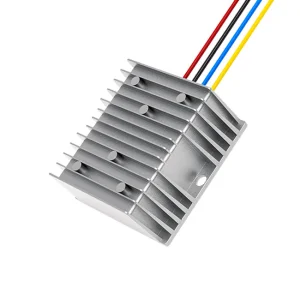
In municipal grid infrastructures, telecom hubs, and high-capacity automotive settings, power adapters are exposed to dust, moisture, and high vibration. Advanced manufacturing methods focus on high thermal conductivity potting compounds and IP67/IP68 ingress protection. Hermetically sealed aluminum enclosures allow passive dissipation of heat from high-density power stages, eliminating noisy fan assemblies while preventing corrosion and moisture ingress.
A validated blueprint of Chinese high-tech electronic manufacturing processes and system output capabilities.
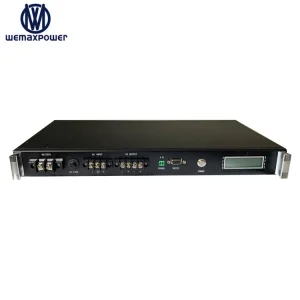
Located in the electronics capital of China, Shenzhen Wemaxpower Technology Co., Ltd. has designed and produced highly reliable power systems for over 7 years. Specializing in programmable DC power supplies, DC-DC converter modules, and high-performance telecom inverters, Wemaxpower addresses key engineering problems for industrial customers worldwide.
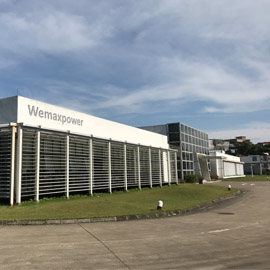
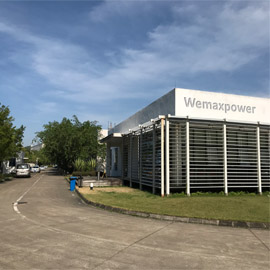

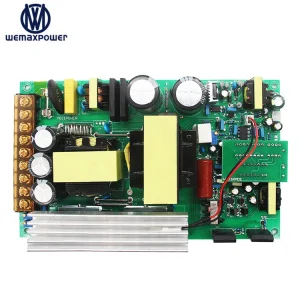
The company maintains a high ratio of R&D engineers within its facility, focusing on optimizing high-frequency transformers, refining control loops, and designing robust PCB layouts. Using advanced component brands for MOSFETs, capacitors, and microcontrollers ensures high reliability in challenging industrial applications.
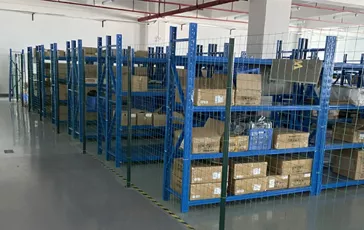
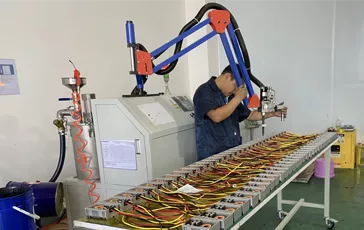
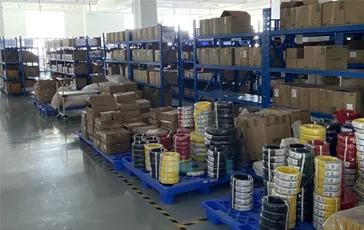
How Wemaxpower systematically guarantees product reliability and reduces field failure rates to less than 0.15%.
Power conversion systems are prone to component degradation if sub-standard materials are introduced. A reliable manufacturer must establish clear check-gates throughout the production process. The Wemaxpower facility utilizes a structured 4-step quality control system:
Component-level parameter testing verifies incoming MOSFETs, diodes, high-temp electrolytic capacitors, and ferrite cores match specified tolerances.
In-process inspection uses Automatic Optical Inspection (AOI) to evaluate solder joint integrity, thermal interface compound application, and correct component orientation.
Electronic load modules analyze the primary output parameters, checking transient response, line/load regulation, and Ripple & Noise (PARD) limits.
Every production batch undergoes active-load burn-in at elevated temperatures to precipitate early semiconductor/capacitor infant mortality failures before shipment.
Navigating electrical safety, electromagnetic compatibility, and localized grid challenges.
Exporting electrical equipment to international markets requires strict compliance with localized electromagnetic emission guidelines. Power supply adapters must incorporate line filters (common-mode and differential-mode chokes, X and Y class safety capacitors) to pass CE, FCC Part 15 Class B, and UL regulatory tests. These shielding and suppression designs prevent high-frequency switching noise from feeding back into the AC mains utility or radiating as EMI, which could disrupt nearby telecommunications or processing hardware.
Sustainably designed adapters must comply with current RoHS (Restriction of Hazardous Substances) and REACH declarations. Top-tier Chinese factories utilize lead-free wave soldering machinery, clean-room assembly practices, and recyclable packaging materials to support circular-economy directives in European and North American territories.
Adapting standard designs for telecommunications, high-reliability automotive, and laboratory R&D settings.
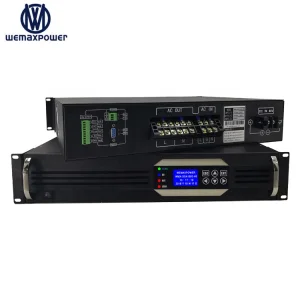
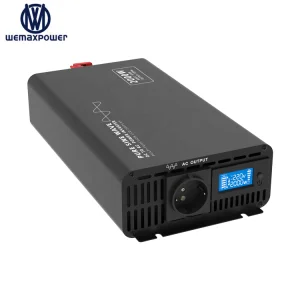
Telecommunication stations require stable DC-DC converters and robust inverters to power critical signaling modules. These power modules must operate without disruption, providing continuous pure sine wave AC output from variable battery inputs (such as 12VDC/24VDC/48VDC/125VDC systems).
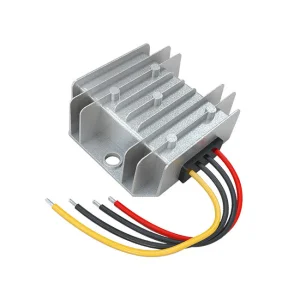
Adapters for golf carts, marine vessels, and specialty logistics vehicles must endure physical impacts, vibration, and wet conditions. Utilizing fully potted aluminum shells with IP67 ratings prevents moisture and dust ingress while protecting internal components from vibrational stress.
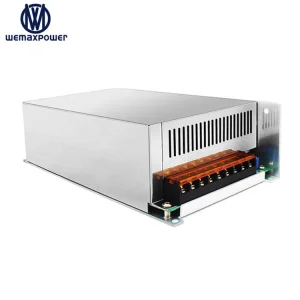
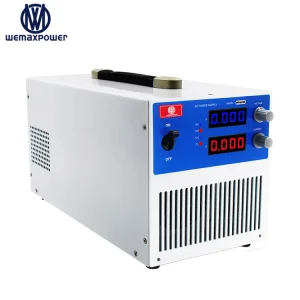
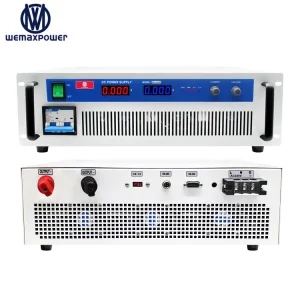
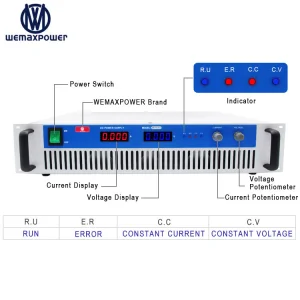
Automated manufacturing lines, electrical motor test stations, and LED aging systems require variable DC sources. Implementing digital microprocessor control boards allows users to precisely program output voltages up to 600V and current limits up to hundreds of amperes.
Answers to common engineering questions regarding adapter performance, safety margins, and custom builds.
Review our rugged automotive converters, variable high-power switching regulators, and smart DC-AC inverters.
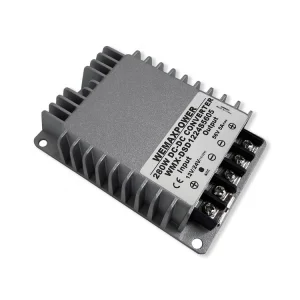
 Wemax Power