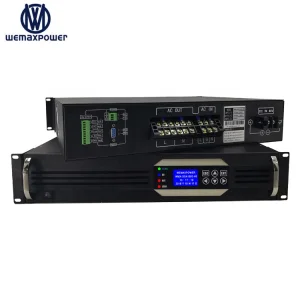
Engineered for high-efficiency thermal dissipation, safety certification compliance, and precise output calibration.
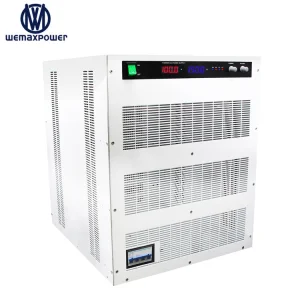
A Technical Whitepaper on Advanced Power Electronics, OEM Customization, and Supply Chain Integration.
The global transition to solid-state lighting (SSL) and intelligent industrial hardware has pushed power conversion topologies to their theoretical limits. The modern LED driver is no longer just a simple current regulator; it is a highly sophisticated subsystem integrating electromagnetic compliance (EMC), thermal equilibrium architecture, and communication protocols. For heavy industrial installations, smart infrastructure, and high-reliability automotive systems, the efficiency of power supplies determines overall lifecycle costs and maintenance schedules.
Modern system architects demand topologies like LLC Resonant Half-Bridge Converters and Active Power Factor Correction (PFC) circuits to maintain power factor (PF) metrics above 0.95 and Total Harmonic Distortion (THD) below 10%. As global standards such as Title 24, ErP (Energy-Related Products), and UL8750 become more stringent, OEM manufacturers must innovate in substrate selection, potting materials, and magnetic components. Switching frequencies are optimized between 50 kHz and 150 kHz to strike an optimal balance between transformer footprint reduction and electromagnetic interference (EMI) mitigation.
Standard off-the-shelf LED drivers frequently fail to meet specialized commercial demands. The need for custom physical dimensions, non-standard voltage ranges (such as high-voltage inputs ranging from 347V to 480V AC), and target currents tailored to specific LED configurations dictates a robust OEM/ODM capability. Custom engineering allows lighting designers to control parameters such as:
Through close technical consultation, exporters of industrial power systems analyze specific load-to-source dynamics, transient voltage spikes, and expected ambient operating environments to design optimized PCB designs with minimized footprints and optimized thermal layouts.
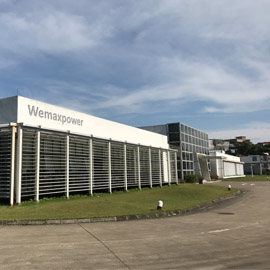
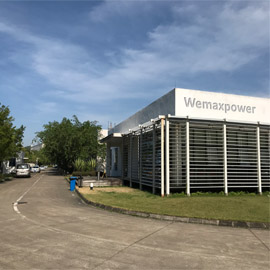
Shenzhen, China stands as the world's most mature cluster for power electronics engineering and manufacturing. This geographic concentration gives manufacturers like Shenzhen Wemaxpower Technology Co., Ltd. a significant advantage. The regional integration of supply chains enables rapid sourcing of components, ranging from high-frequency magnetic cores and planar transformers to advanced semiconductor switches like Gallium Nitride (GaN) devices.
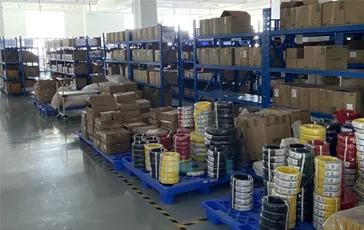
By operating inside Shenzhen's high-tech manufacturing hub, Wemaxpower leverages rapid prototyping cycles, automated surface-mount technology (SMT) lines, and computerized optical inspection (AOI) to significantly reduce the time-to-market for bespoke OEM power solutions. Our proximity to material suppliers enables cost efficiencies that are passed directly to international buyers while maintaining strict Western compliance standards.
Our facility brings together 7 years of deep product development expertise. Our core product portfolio spans programmable DC power supplies, step-down and step-up DC-DC converters, high-frequency chargers, and dedicated power modules. By exporting to major global markets, we optimize engineering processes to comply with regional safety frameworks including UL, CE, RoHS, and FCC.
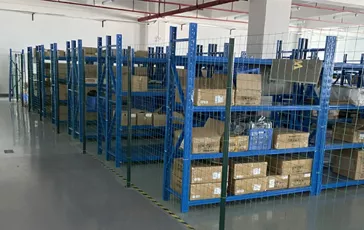
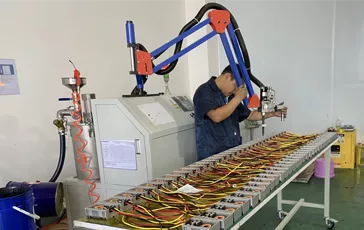
Our production line runs on state-of-the-art testing equipment, precision wave soldering machines, and automated multi-channel burn-in chambers.

Modern power systems must adapt to highly specific environmental and electrical constraints across diverse applications. Here are the core industries utilizing customized LED drivers and DC-DC power modules:
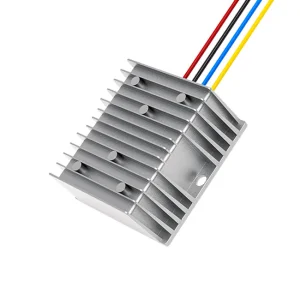
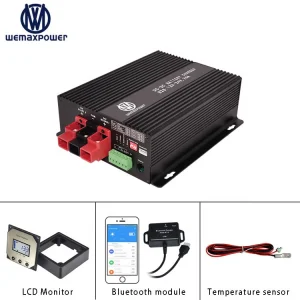
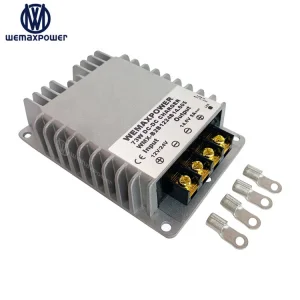
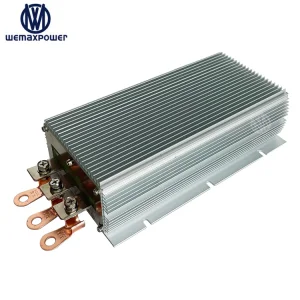
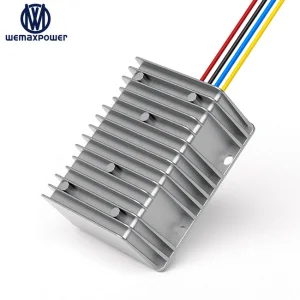
DC-to-DC converters and regulators (such as 12V to 24V step-up systems or isolated step-down modules) ensure stabilized outputs for electrical accessories in RVs, heavy-duty automotive networks, and boats, where alternator output fluctuations and load dump surges are common.
Super-efficient dimmable drivers power architectural linear profiles, commercial high-bay fixtures, and emergency exit signs, offering flicker-free dimming profiles and compliance with building energy conservation codes.
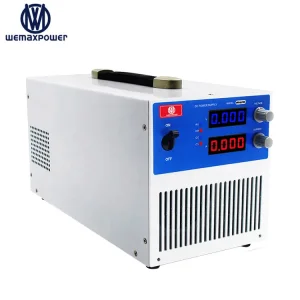
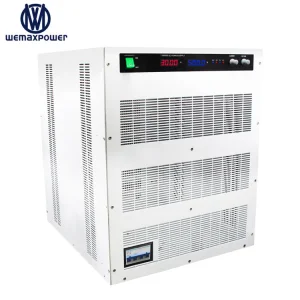
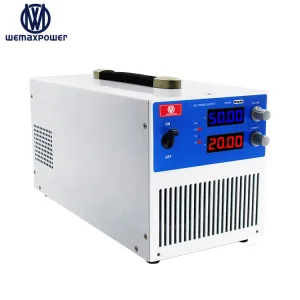
High-power programmable DC supplies (such as 15KW setups or electroplating rectifiers) deliver adjustable constant-current/constant-voltage currents to electrolytic tanks, automated plating paths, battery chemistry cycling, and laboratory research desks.
Furthermore, specialized applications like agricultural lighting require LED drivers equipped with spectral tuning and high-humidity protection. Urban street lighting requires surge protection devices (SPD) capable of absorbing electrical transients up to 10kV to 20kV, guaranteeing uninterrupted public safety infrastructure.
Our commitment to maximum reliability is backed by a rigorous physical testing regimen. All products are tested for compliance before they leave our factory.
Parametric inspection of critical components including electrolytic capacitors, MOSFETs, and magnetic cores under thermal stress.
Functional checks on the soldered PCBs before casing, identifying any cold solder joints or circuit traces off-spec via ICT systems.
Full voltage and current envelope testing, validating active PFC curves, voltage tolerances under load, and isolation resistances.
100% of manufactured units are subjected to continuous high-temperature thermal chambers under load to eliminate early component failures.
As we look to the future, three key trends are reshaping the development of LED drivers and industrial power modules:
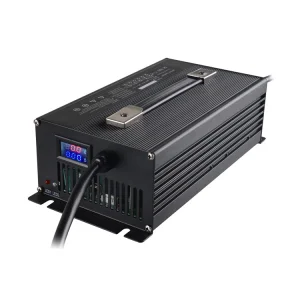
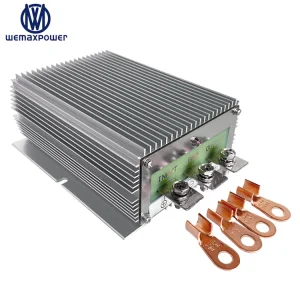
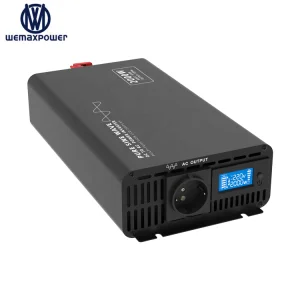
Browse our second segment of high-efficiency switching rectifiers, smart battery chargers, and voltage converters.
In-depth responses to critical design, qualification, and mechanical installation queries regarding custom power supplies.
 Wemax Power