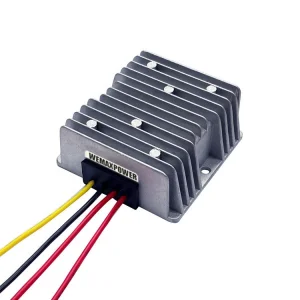
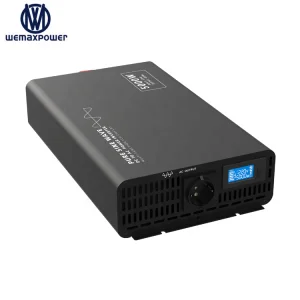
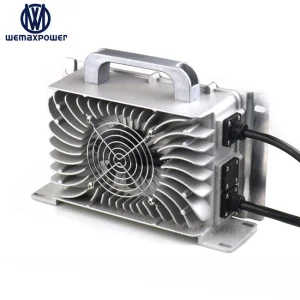
Explore our premium selection of rugged marine chargers, high-efficiency buck converters, and variable high-power industrial switching power supplies.
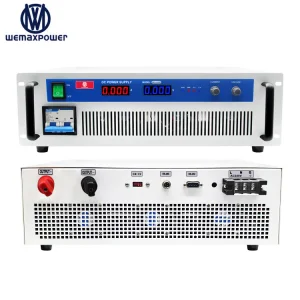
An in-depth analysis of how smart grid integration, wide-bandgap semiconductors, and strict international compliance standards are redefining expectations for OEM/ODM power supply sourcing.
The global AC/DC adapter and power conversion industry is undergoing a structural paradigm shift. Driven by aggressive carbon-neutrality mandates and the rapid electrification of vehicular transportation and industrial automation, power supply units (PSUs) are no longer viewed as simple passive accessories. Instead, they are critical, active components optimized for dynamic load-handling, intelligent communication, and ultra-high efficiency.
Historically, silicon-based power architectures dominated the market, but physical limitations restricted density and efficiency thresholds to roughly 85% - 90%. Today, leading-edge manufacturers like Shenzhen Wemaxpower Technology Co., Ltd. integrate advanced topologies—such as LLC resonant converters, active clamp flybacks (ACF), and synchronous rectification. These technologies drastically minimize switching losses, allowing power densities that exceed traditional limits. This is particularly crucial for space-constrained applications like car-mounted RV chargers, telecom battery racks, and compact step-down regulators.
Wide-bandgap (WBG) semiconductors like Gallium Nitride (GaN) and Silicon Carbide (SiC) allow higher switching frequencies, smaller magnetic footprints, and lower dissipation loss. This directly supports modern requirements for fast charging and high efficiency.
Global procurement teams must navigate complex certification landscapes. Adapters must conform to the latest IEC/EN 62368-1 standards for ICT and AV equipment, along with regional safety marks like UL (North America), CE (Europe), and FCC (EMC/EMI compliance).
Modern industrial and automotive systems require power supplies that do more than just deliver voltage. Integrating CAN bus, PMBus, and Modbus communication protocols allows telemetry monitoring of real-time temperature, load currents, and fault logs.
With 7 years of specialized manufacturing experience, Shenzhen Wemaxpower Technology Co., Ltd. has established itself as an industry-leading OEM/ODM developer. Our extensive portfolio includes programmable DC power supplies, heavy-duty DC-DC converters, isolated step-down regulators, and rugged battery chargers. We export globally, delivering reliable power components to customers across Europe, North America, and Southeast Asia.
Our commitment to long-term reliability is backed by systematic testing and engineering integrity. To ensure that every power supply unit functions flawlessly under high thermal stress and electrical volatility, we employ a comprehensive 4-step quality control process.
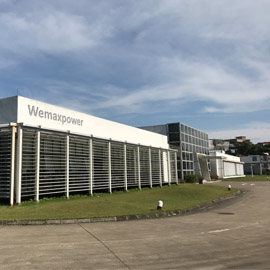
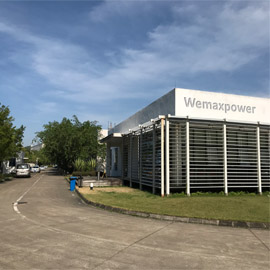

Automated SMT Assembly & High-Speed Component Placement
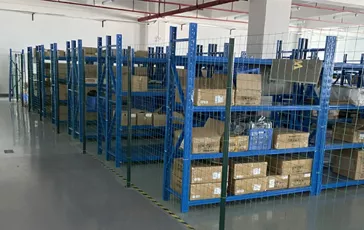
Precision Solder Reflow & Visual Joint Inspection
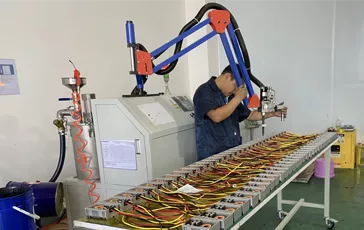
Manual THT Assembly & Connector Post-Processing
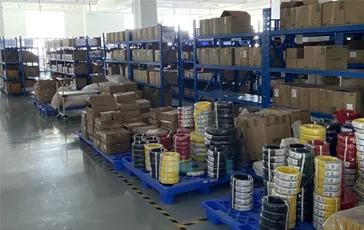
Final Safety & Functional Calibration Stations
We implement a strict quality control loop to maximize Mean Time Between Failures (MTBF) and guarantee total compliance with strict industrial standards.
100% incoming component inspection, checking MOSFET parameter compliance and capacitor ESR values before line dispatch.
Visual and Automated Optical Inspection (AOI) checking structural joint integrity and tracing signal paths.
Comprehensive parameter calibration evaluating load regulation, transient response times, and ripple profiles.
Extended operational testing under full-load in heated chambers to isolate and prevent field failures.
Bridging the gap between raw grid power and high-performance, sensitive industrial applications.
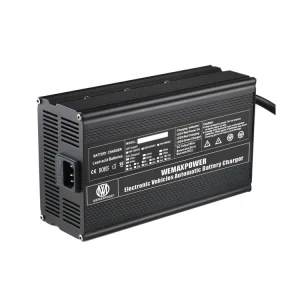
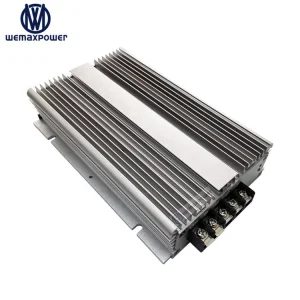
Our intelligent RV chargers (12V to 28V 20A) and high-efficiency boost converters deliver clean DC power to auxiliary batteries. Designed to withstand engine bay vibration, voltage spikes, and high ambient temperatures.
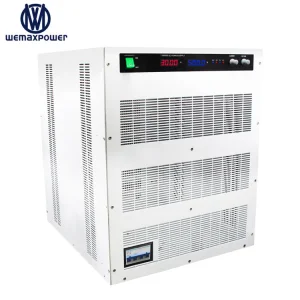
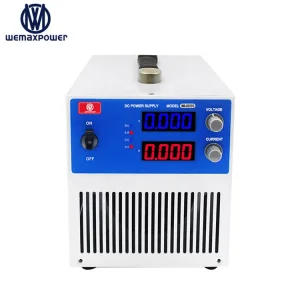
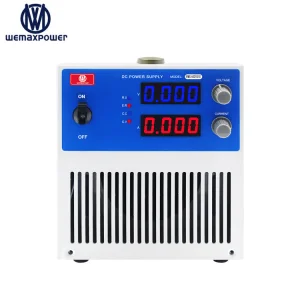
High-power switching supplies with adjustable voltage outputs (up to 18KW) provide precise constant current (CC) and constant voltage (CV) regulation required for electrolysis and heavy-duty electroplating baths.
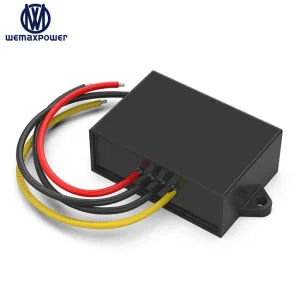
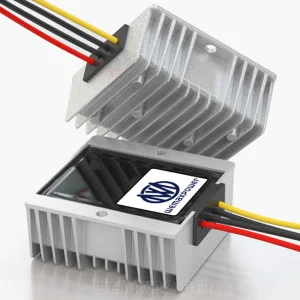
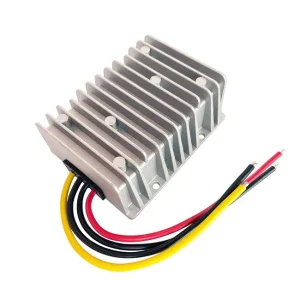
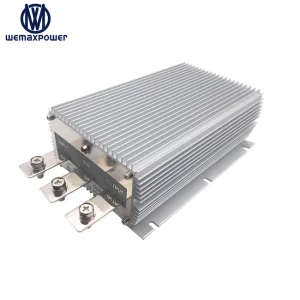
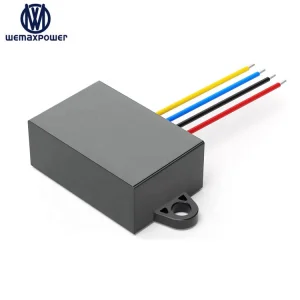
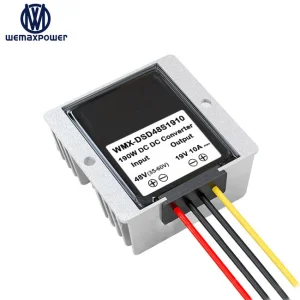
Reliable step-down buck regulators and isolated converters step down higher-voltage DC rails (e.g., 48V, 72V, 80V) to stable low voltages (e.g., 5V, 12V, 19V) to supply network interface cards, backup units, and client equipment.
Selecting the right power converter requires matching electrical topologies with target application demands. Review our engineering quick-reference table below.
| Converter Type | Primary Topologies | Efficiency Range | Best Suited Applications | Key Strengths |
|---|---|---|---|---|
| Isolated DC-DC Buck | Forward, Push-Pull, Half-Bridge | 88% - 94% | Telecom infrastructure, clean instrumentation | High galvanic isolation, low noise, protects downstream chips |
| Non-Isolated Buck-Boost | Synchronous Buck-Boost | 93% - 97% | Automotive dual-battery systems, battery charging | Excellent flexibility, operates above or below input rails |
| Adjustable AC-DC Supply | Phase-Shifted Full-Bridge, LLC | 90% - 96% | Industrial electroplating, motor test stands | High power density, digital programmability, broad output range |
| Intelligent Charger | Multi-stage switching mode with MCU | 92% - 95% | E-bikes, electric sweepers, marine battery banks | Targeted profile curves (LiFePO4, Lead-Acid), automatic shut-off |
As power converter designs progress, our engineering team continuously focuses on three primary developments:
1. Digital Control Loop Migration: Conventional analog control loops are gradually being replaced by high-performance microcontrollers (MCUs) running digital signal processing (DSP) routines. This allows for real-time adjustments to line voltage variances, load shifts, and aging behaviors, resulting in near-constant efficiency across the entire load curve.
2. Bidirectional Energy Flow: Future industrial environments will rely on power supplies that can both deliver energy and accept regenerative energy back into the system grid. We are actively developing bidirectional DC-DC modules to support advanced battery energy storage systems (BESS) and electric vehicles (V2G/V2H).
3. Advanced Thermal Encapsulation: To meet IP67 and IP68 standards without sacrificing power output, we use custom-engineered, thermally conductive potting compounds. This compound fills all internal voids, pulling heat directly from heavy inductors and switching transistors to the aluminum chassis, allowing for fanless convection cooling.
Providing clear answers to key technical questions from engineering, logistics, and quality assurance teams.
Isolated converters use an internal high-frequency transformer to separate the input and output electrical loops. This prevents electrical noise from transferring to sensitive downstream equipment and protects against high-voltage surges. Non-isolated converters lack this safety barrier but offer higher conversion efficiency (often up to 97%), smaller physical dimensions, and a lower total cost.
Our QC loop eliminates potential points of failure at each stage of manufacturing. IQC keeps lower-grade raw components off the line; IPQC verifies mounting and solder joints during SMT; FQC checks that every parameter meets its target specification; and the final full-load aging test stresses the unit in a heated chamber to isolate and replace components prone to early failure before shipment.
Yes. Our chargers, such as the 48V 20A and 12V 30A series, feature charging profiles customized for specific chemistries. Lithium batteries require a precise Constant Current/Constant Voltage (CC/CV) curve with an automatic safety shut-off, while Lead-Acid batteries require a three-stage charging cycle (Bulk, Absorption, Float) to prevent gas build-up. We configure these profiles to match our customers' battery specifications.
We manufacture products to meet global regulatory standards. Depending on the model and destination market, our products carry or are designed to comply with CE, FCC, RoHS, and UL safety standards. We provide complete testing reports and certificates of compliance to support custom clearance and regional retail approvals.
We work directly with your engineering team. You provide the required inputs, outputs, dimensions, protection ratings (e.g., IP67 waterproofing), and connector types. Our team designs a prototype, carries out performance and safety tests, and submits sample units for your approval before starting volume production.
For standard catalog products, standard lead times run between 2 to 3 weeks after payment confirmation. For complex custom designs or bulk production runs, lead times typically range from 4 to 6 weeks, which allows for component sourcing, assembly, and our rigorous 4-step quality assurance process.
Explore our industrial-grade boost modules, isolated step-down transformers, and high-power pure sine wave inverters.
 Wemax Power