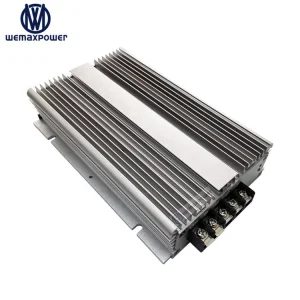
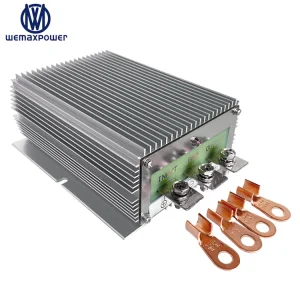
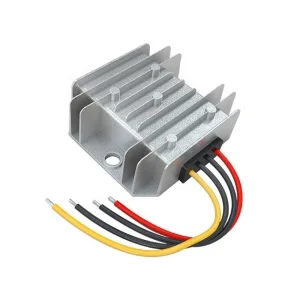
Explore our primary series of highly efficient, step-up/down, and isolated DC-DC / AC-DC converters, ideal for demanding automotive, industrial, and marine electronics.
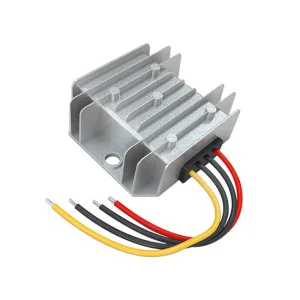
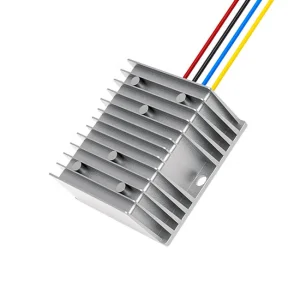
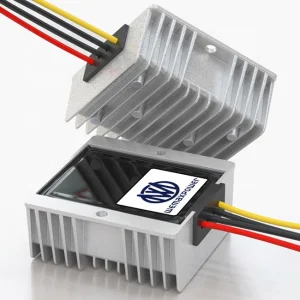
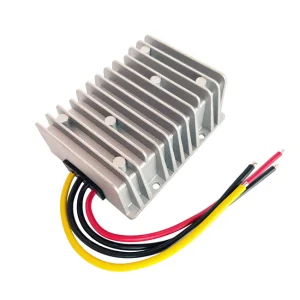
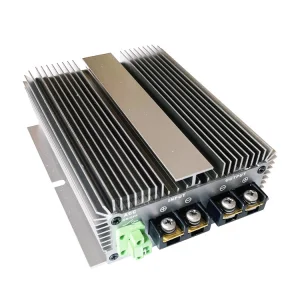
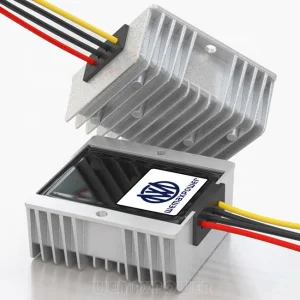
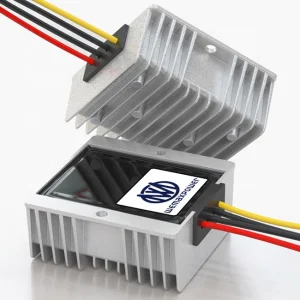
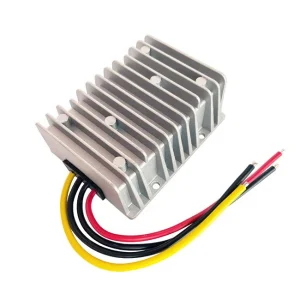
Modern electrical engineering relies on the seamless converting of raw power into precise, stable output voltages. The demand for reliable AC/DC and DC/DC topologies has grown exponentially with the rapid expansion of electric mobility, smart factory automation, telecommunications, and high-latitude marine deployment. When purchasing power converters globally, procurement specialists and engineers must prioritize converters that mitigate electromagnetic interference (EMI), provide high power density, and withstand severe thermal and ingress threats.
Choosing an industrial power solution is more than a low-cost sourcing decision; it is a critical calculation of Mean Time Between Failures (MTBF), system safety, and overall efficiency. An uncertified or poorly insulated converter can lead to costly component blowouts, voltage sags, and severe damage to downstream logic circuits or high-capacity batteries (such as LiFePO4 chemistry). Investing in products designed with strict thermal dissipation channels, synchronous rectification topologies, and industrial-grade electrical insulation is essential to guaranteeing uptime and system safety.
Shenzhen Wemaxpower Technology Co., Ltd. is a high-tech manufacturer specializing in advanced programmable DC power supplies, high-efficiency DC-DC converters, and ruggedized power modules. With 7 years of deep domain experience, Wemaxpower has established itself as an authoritative partner for global industrial companies, exporting custom-engineered and standard catalog power solutions to diverse, demanding markets.
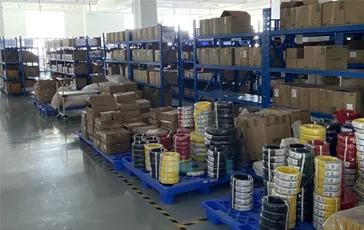
Our facility in Shenzhen is optimized for complex product design and rigorous, high-volume production. By maintaining total control over component selection, trace layouts, and thermal potting technologies, we ensure that every unit leaving our production line operates flawlessly within its designated operational window.
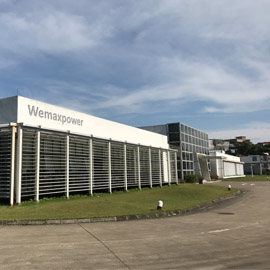
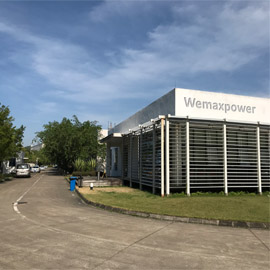

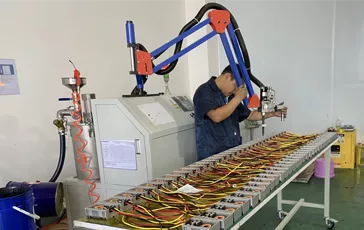
To guarantee zero-defect deployment, every power module undergoes a strict 4-step quality assurance pipeline prior to packaging and container shipment.
Strict incoming material inspections (IQC) targeting semiconductor die variance, transformer winding insulation, and capacitor ESR values.
In-circuit testing (ICT) immediately after SMT component placement to verify soldering integrity, trace impedance, and operational voltages.
Comprehensive electrical verification testing for line regulation, load regulation, output ripple, and cross-regulation performance.
100% of manufactured units run continuously under high temperature and maximum rated load to induce and weed out early infant mortality.
Sourcing power electronics from Shenzhen, China, offers unmatched advantages. The geographical proximity of key component suppliers, high-tech SMT assembly lines, and specialized testing laboratories enables Wemaxpower to accelerate prototyping and lower production overheads.
Immediate access to global shipping lanes through Hong Kong and Shenzhen Ports minimizes delivery times for overseas manufacturing runs.
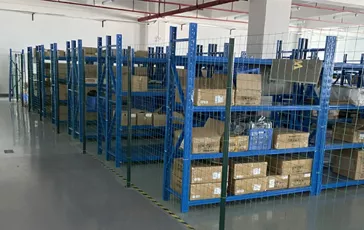
Our direct access to major semiconductor vendors allows us to maintain a stable component inventory, reducing product lead times even during global chip shortages.
Whether you require a custom output voltage or a specific mounting bracket, our design engineers can transition from 3D models to working PCB prototypes in days.
B2B procurement teams must verify that imported power converters comply with regional safety frameworks and environmental conditions. Operating a converter in marine or vehicle environments without proper ingress verification can lead to catastrophic system degradation.
For applications exposed to water, heavy condensation, or dense dust particles (such as vehicle undersides, marine vessels, and solar arrays), standard ventilated metal enclosures are insufficient. High-quality waterproof converters utilize specialized vacuum-injected epoxy resin potting.
IP67 Enclosures prevent dust ingress entirely and shield the interior components from water immersion for up to 30 minutes at a depth of 1 meter. This is achieved using specialized silicone seals and anti-corrosion anodized aluminum frames.
IP68 Enclosures offer continuous submersion protection, allowing devices to operate reliably under deep water pressures, making them suitable for long-term bilge pump installations and direct marine mounting.
Wemaxpower prioritizes global safety certifications, designing converters to meet strict electromagnetic compatibility (EMC) regulations. The electrical architecture includes integrated filters that reduce high-frequency radiation, ensuring clean, noise-free operation near sensitive communication equipment.
Our designs incorporate standard protection circuits: Over-Temperature Protection (OTP), Over-Current Protection (OCP), Over-Voltage Protection (OVP), and Output Short-Circuit Protection. If a fault is detected, the converter enters hiccup mode and resumes normal operation once the fault condition is cleared.
The power supply market is moving towards smaller footprints, higher power densities, and digital power management. Understanding these technical shifts helps procurement engineers choose future-proof power designs.
Silicon Carbide (SiC) and Gallium Nitride (GaN) components are replacing traditional silicon transistors. They allow for much higher switching frequencies, reduce heat generation, and significantly shrink overall package sizes.
Modern DC-to-DC converters now feature intelligent interfaces (such as CAN bus, Bluetooth, or RS485). These protocols permit real-time monitoring of input voltages, load currents, internal temperatures, and battery health via mobile apps or centralized controllers.
Modern battery chemistries, specifically Lithium Iron Phosphate (LiFePO4), require customized charging profiles (CC/CV phases). Modern smart chargers adjust output based on temperature and cell feedback to maximize battery life.
Our converters are designed to operate reliably across a wide range of real-world industrial environments.
Heavy machinery and logistics vehicles run on 12V or 24V bus architectures. Engine starts can cause extreme voltage drops. Our step-up/down regulators stabilize the output, protecting connected scanners, GPS, and communication modules from rebooting.
Marine environments are highly corrosive. Using a dedicated IP68-rated DC-to-DC battery charger isolates starter batteries from house batteries, preventing discharge issues and ensuring reliable alternator-based charging.
Off-grid systems experience fluctuating panel voltages depending on weather conditions. Our wide-input step-down converters stabilize voltage levels for remote telemetry, monitoring cameras, and auxiliary electronics.
Enclosed areas on heavy vehicles or inside industrial machinery lack natural airflow. Traditional fans are prone to mechanical failure under vibration and dust. Our fanless, conduction-cooled aluminum heatsinks transfer heat directly out of the sealed enclosure, maintaining thermal stability even at high ambient temperatures.
Direct, technical answers to common queries raised by sourcing specialists and electrical engineers.
Isolated converters feature galvanic isolation, physically separating the input and output circuits using a high-frequency transformer. This prevents electrical faults from transferring downstream and blocks ground loops, making them essential for sensitive electronics. Non-isolated converters share a common negative ground, offering a more compact and cost-effective design suitable for general voltage regulation where noise isolation is not critical.
Our designs use synchronous rectification topologies instead of traditional Schottky diodes. By utilizing low Rds(on) MOSFETs to manage secondary rectification, we significantly reduce conduction losses, allowing efficiency to reach up to 96% even when stepping up voltages like 12V to 28V.
Yes. The vacuum-injected epoxy resin potting protects all internal components from humidity, salt air, and dust ingress. We recommend mounting the aluminum chassis vertically on a metal surface to optimize heat dissipation through natural convection.
Lithium Iron Phosphate (LiFePO4) batteries require a specific CC/CV (Constant Current/Constant Voltage) charging profile to prevent overcharging. A direct connection to an alternator can draw excessive current, damaging either the alternator or the battery. Our smart chargers regulate the charging profile and adjust for temperature variations to maintain battery health.
All programmable power supplies feature Over-Voltage Protection (OVP), Over-Current Protection (OCP), Over-Temperature Protection (OTP), and Short-Circuit Protection. The output automatically shuts down or enters hiccup mode when a fault is detected, protecting the load and the power supply.
Our converters support wide input ranges (e.g., 8-40V). During engine cranking, input voltage can drop briefly to 8V. Our buck-boost and step-down controllers regulate the output voltage smoothly throughout the transient, preventing connected electronics from resetting.
Standard modifications (e.g., adjusting output voltage or wire lengths) take 7-10 working days. Custom designs, including new PCB layouts and chassis tooling, typically take 4-6 weeks for prototype validation.
By testing at the component stage (IQC), during production (ICT), at final assembly (FQC), and running units through full-load thermal burn-in, we identify potential failures before shipment. This process reduces our out-of-box failure rate to under 0.1%.
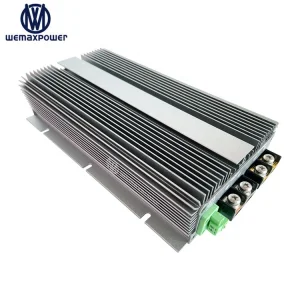
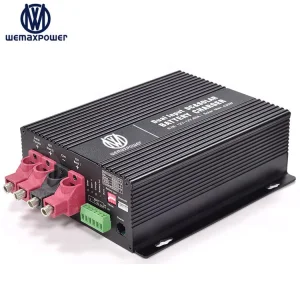
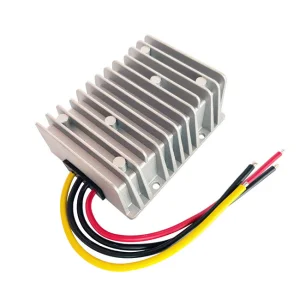
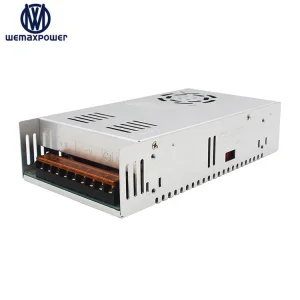
Explore our high-wattage power modules, specialized battery chargers, and adjustable switching mode industrial power supplies.
 Wemax Power