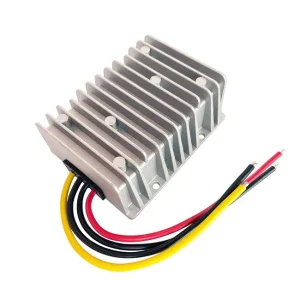
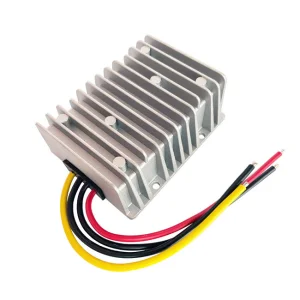
Engineered to integrate seamlessly with lithium battery packs, vehicle grids, and advanced Battery Energy Storage Systems (BESS).
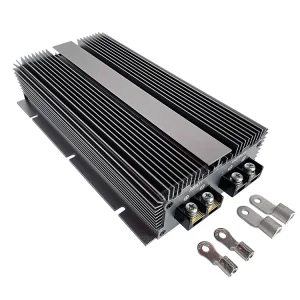
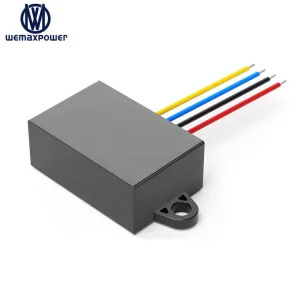
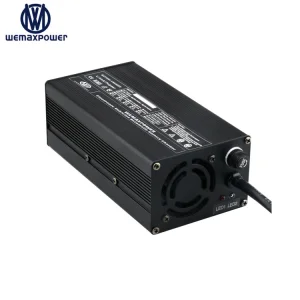
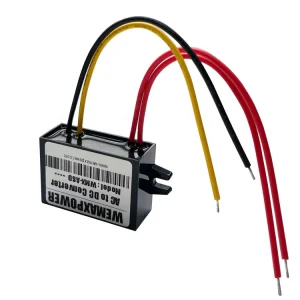
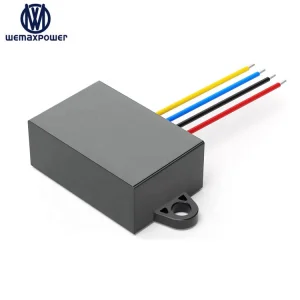
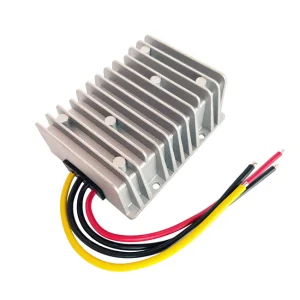
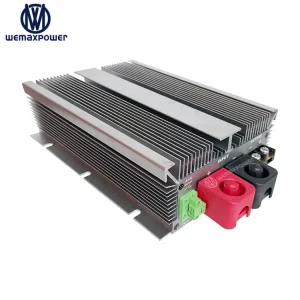
The global transition towards zero-carbon grids has transformed Battery Energy Storage Systems (BESS) from auxiliary backup modules into critical infrastructure assets. Industrial and utility-scale deployments demand robust topologies capable of handling rapid charge-discharge profiles, high thermal loads, and sustained operational stress. As renewable penetration increases, BESS integration requires advanced DC-DC conversion and active power correction to reconcile voltage variations between massive battery packs and local microgrids.
Key technological shifts indicate a migration towards high-voltage DC architectures (exceeding 1000V DC operating ranges) to minimize current loss and cable weight. However, this shift places enormous pressure on auxiliary DC-DC converters, which must convert variable, high-voltage battery stack outputs down to regulated low voltages (such as 12V, 24V, or 48V) to drive local control logic, cooling fans, and sensor hubs. Without high-efficiency, isolated conversion units, systemic failures stemming from ground faults and transient spikes can degrade entire battery strings.
Migration towards 1500V architectures demands advanced galvanic isolation to decouple power electronics from delicate control microprocessors.
Integrated thermal structures must operate at elevated ambient ranges (-40°C to +85°C) without suffering thermal derating or efficiency drops.
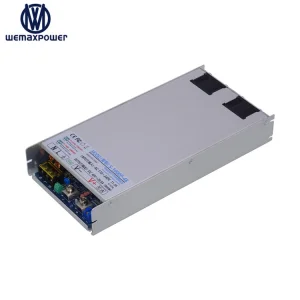
Integration of Active PFC (Power Factor Correction) ensures high utility compliance and limits grid harmonic disruptions in heavy industrial systems.
Modern enterprise procurement processes in Europe, North America, and Asia-Pacific prioritize structural reliability over component cost. Engineers and project coordinators specify conversion topologies based on rigorous reliability profiles. A standard BESS bid document often details exact compliance demands, demanding certifications like CE, RoHS, and FCC, and stressing the importance of Low Voltage Protection and over-current, over-voltage, and thermal shutdowns.
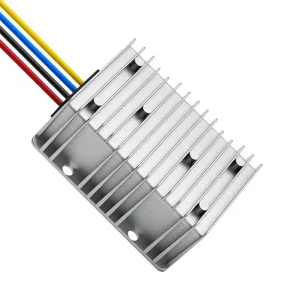
For fleet electrification (including electric buses, heavy-duty utility trucks, and specialized golf carts), converters must exhibit high levels of vibration tolerance and ingress protection (IP67/IP68). In marine and heavy vehicle environments, constant exposure to moisture, dust, and sudden structural jolts will quickly ruin unsealed power modules. Engineers demand encapsulated aluminum alloy housings that distribute heat passively, doing away with physical fans that can fail in dirty field conditions.
Established with a mission to develop rugged, highly-efficient power solutions, Shenzhen Wemaxpower Technology Co., Ltd. brings over 7 years of specialized manufacturing experience to the global market. Our catalog features high-precision programmable DC power supplies, high-power DC-DC converters, battery chargers, and specialized power modules. Engineered for resilience and long lifespans, our systems support commercial and industrial clients in more than 30 countries.
Reliability in power electronics isn't an accident; it is the result of strict design guidelines and systematic quality control. At Wemaxpower, every power converter and charging module goes through our rigorous 4-step quality control flow. This protocol prevents defective components from moving to the next stage, keeping field returns near zero.
Strict component verification (capacitors, MOSFETs, and inductors) before entering assembly lines.
Automated optical inspections (AOI) and in-circuit tests (ICT) on assembled PCBs to detect trace anomalies.
Comprehensive functional profiling, verifying conversion efficiency, ripple voltage, and safety thresholds.
Active burn-in under thermal and electrical loads for extended periods to filter out early component mortality.
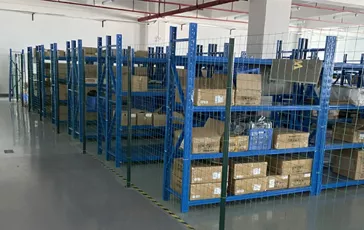
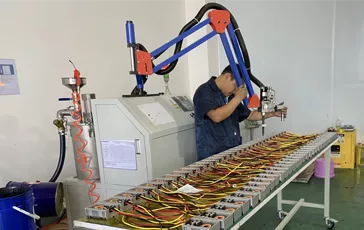
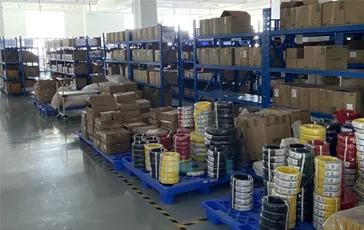
To back up our quality process, our factory floor operates under modern ERP control tracking systems. This allows our production team to trace raw component batches down to the specific day and hour of assembly. Below is a look inside our manufacturing facility, highlighting the scale and organization of our production workflows:
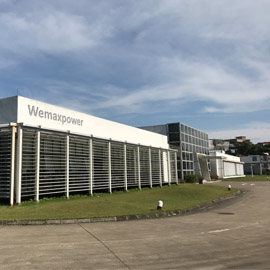
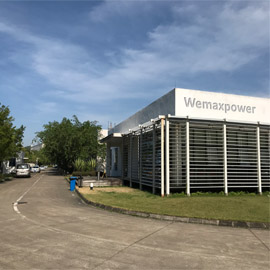
Automated Assembly & Quality Testing Process

Wemaxpower architectures address complex challenges across multiple heavy industries. Our power components provide the underlying stability needed to support diverse systems:
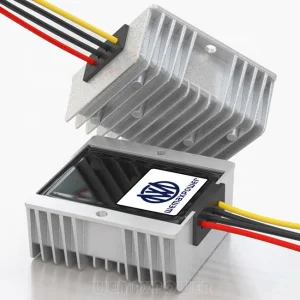
By using aluminum shells filled with thermally conductive epoxy resin, our waterproof converters excel in dusty, humid, and vibrating environments. This packaging choice preserves component lifespans, cutting maintenance overhead for municipal transit and remote telecom installations.
Entering international markets requires deep knowledge of regional electrical standards. Wemaxpower products carry CE approval, RoHS compliance, and meet strict FCC regulations. We design our components to conform to international safety protocols, shielding downstream applications from electrical faults. Our isolated converters prevent high-voltage surges on battery strings from jumping to low-voltage consumer electronics, preserving user safety and system integrity.
To support global supply chains, we offer thorough documentation, localized technical assistance, and customized electrical tuning. Whether adjustments are needed for low-voltage shutdown parameters, thermal limits, or custom output voltages, our engineering team works directly with client design teams. This collaborative approach shortens integration cycles and guarantees field performance.
Advanced Electronics Integration & Final Inspection
The next generation of power conversion lies in wide-bandgap (WBG) semiconductors. Wemaxpower is currently integrating Silicon Carbide (SiC) and Gallium Nitride (GaN) components into our high-power converters. These materials permit higher switching frequencies, which reduces magnetics sizes, boosts power density, and pushes conversion efficiency beyond 97%.
We are also focusing on bidirectional converter communication. Future versions of our power modules will feature CAN bus or Modbus communication. This addition lets operators monitor temperatures, voltages, currents, and component health in real time, enabling predictive maintenance schedules and minimizing unscheduled downtime.
Answers to key engineering questions about isolation, thermal performance, and system integration.
Galvanic isolation physically separates the input and output circuits, preventing DC current loops and high-voltage spikes from reaching low-voltage control systems. In large battery packs, isolation blocks system noise and protects microprocessors, sensors, and communication buses from destructive voltage differentials.
Active PFC (Power Factor Correction) aligns the input current waveform with the grid voltage, boosting the power factor to 0.95 or higher. This cuts harmonic distortion, complies with local utility rules, minimizes reactive power waste, and improves overall electrical efficiency in high-power setups.
Our converters are housed in die-cast aluminum enclosures and filled with thermally-conductive epoxy resin. This design meets IP67 waterproof standards and shields components from high vibrations, making them suitable for vehicles, marine hulls, and outdoor BESS cabinets.
Yes. We provide custom modifications for various parameters, including input ranges, output voltage configurations, preset low-voltage cutoff limits, and custom connector types to meet specific project needs.
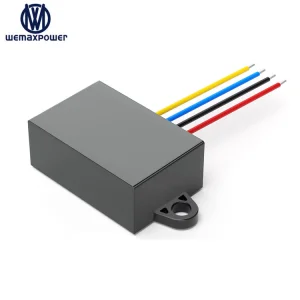
Explore our line of isolated step-down modules, high-efficiency boosters, and PFC switching power supplies.
 Wemax Power