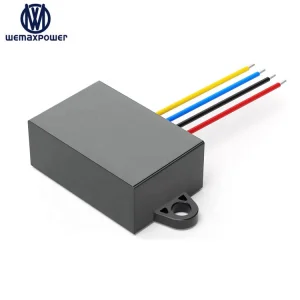
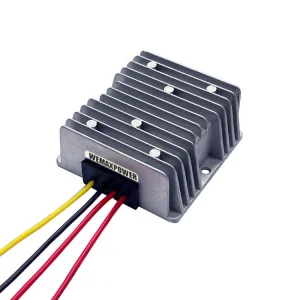
Explore our premium range of highly efficient buck converters, adjustable industrial power systems, and rugged waterproof modules designed for stable power conversion.
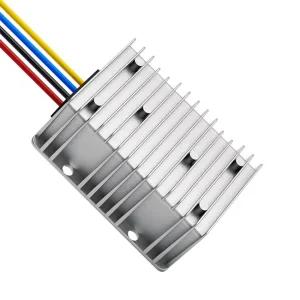
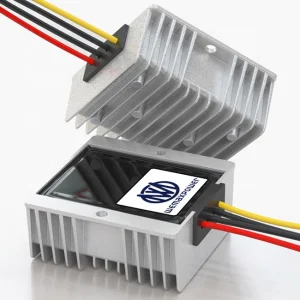
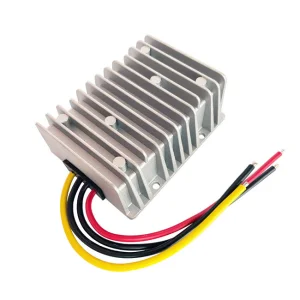
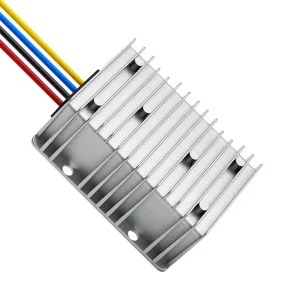
An in-depth analysis of efficiency, heat dissipation, galvanic isolation, and structural design requirements for high-performance DC-to-DC step-down converters.
For industrial automation and clean energy integration, standard voltage lines such as 48V, 72V, 96V, or 120V must be stepped down to stabilized voltages like 24V, 12V, or 5V to drive electronic controls, microcontrollers, and communication hardware. In this domain, the choice between isolated buck converters and non-isolated buck regulators is critical.
Non-isolated step-down converters share a common ground pathway between input and output circuits. Their main benefits include small physical size, high power density, and conversion efficiencies exceeding 95%. However, they offer no protection against high-voltage surges crossing from the primary side to the secondary load.
Conversely, isolated DC-DC step-down converters utilize high-frequency planar transformers to achieve electrical isolation. Galvanic isolation prevents hazardous ground loop currents and protects delicate microprocessor circuits from transient surges, essential in high-reliability marine and telecom environments.
Leveraging Shenzhen's leading electronics supply chain, Shenzhen Wemaxpower Technology Co., Ltd. delivers high-precision power solutions with rigorous quality standards.
The Chinese electronics manufacturing sector, centered in Shenzhen, provides a competitive advantage for power electronics fabrication. With immediate access to high-grade magnetic cores, reliable semiconductor channels, and fast automated assembly facilities, Shenzhen Wemaxpower Technology Co., Ltd. offers reliable, cost-efficient manufacturing services for global partners.
Our facility operates a comprehensive 4-step quality control process to verify performance, durability, and safety across all manufacturing steps:
Our dedicated factory team works to deliver quality-guaranteed orders on schedule, ensuring performance and long-term field reliability.
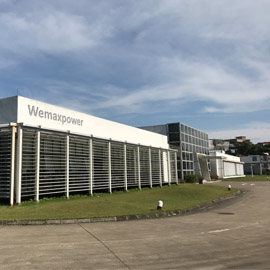
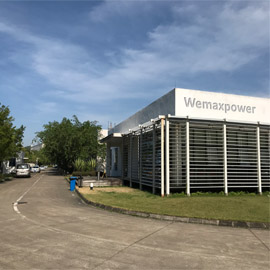

How we help international engineers and sourcing managers meet technical requirements, safety certifications, and logistics needs.
All step-down DC-DC modules are built to meet European CE, North American UL, and global RoHS directives. We provide full compliance documentation for trouble-free import clearance and local utility approval.
We offer multi-channel shipping (air, sea, express) alongside customs documentation handling. This minimizes lead times and ensures prompt component delivery directly to your production facility.
Our application engineers provide layout recommendations, circuit review, thermal design advice, and system customization to help you successfully integrate our converters into your equipment.
Our step-down power solutions are deployed in diverse operational environments worldwide:
Key technological shifts shaping the next generation of industrial power conversion systems.
The integration of Gallium Nitride (GaN) and Silicon Carbide (SiC) switches enables higher switching frequencies. This dramatically reduces the size of passive components like inductors and capacitors, resulting in ultra-compact designs with higher power density.
The transition from legacy analog control loops to microcontroller-driven digital systems allows for real-time monitoring. Standard buses like PMBus enable continuous tracking of output voltage, current, and temperature, facilitating predictive maintenance.
As battery chemistry configurations trend toward higher voltages (e.g., 400V and 800V in heavy equipment and automotive systems), step-down converters must directly step down high inputs to low levels in a single stage. This maintains system efficiency without requiring multiple conversion steps.
Explore our industrial AC-DC power supplies, smart battery chargers, and specialized vehicle voltage regulators.
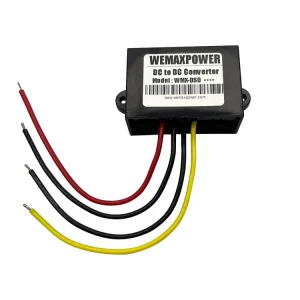
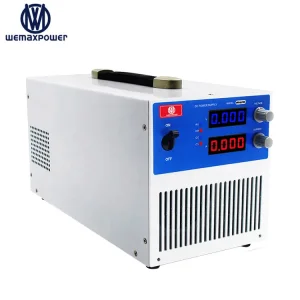
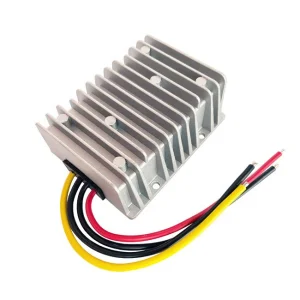
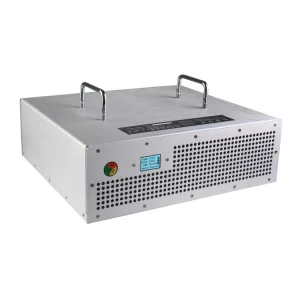
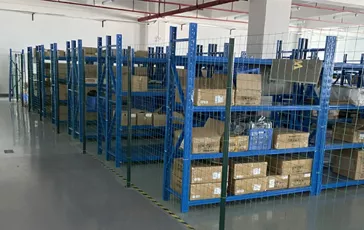
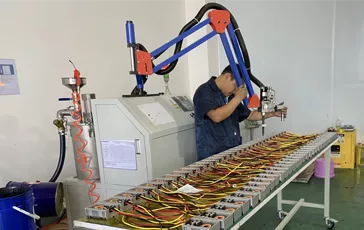
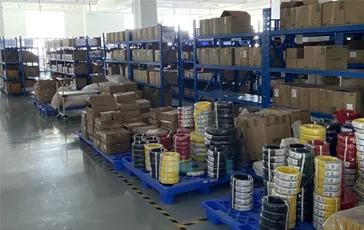
Take a virtual tour through our production floor, testing bays, and assembly processes at Wemaxpower.
Expert answers to the most common questions regarding step-down DC-DC converter selection, operation, and safety standards.
An isolated step-down converter utilizes a high-frequency transformer to physically and electrically separate the input circuit from the output circuit, preventing ground loops and protecting delicate downstream loads from high-voltage surges. A non-isolated buck converter uses a common ground line and is typically smaller and more efficient, but does not provide protection against high-voltage faults on the input side.
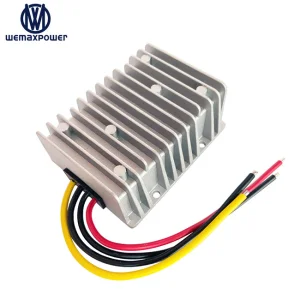
As the ambient operating temperature increases, the converter's capacity to dissipate heat decreases. Thermal derating refers to the practice of operating the converter below its maximum rated load at higher temperatures to keep internal component temperatures within safe limits. Proper thermal management, such as using external heat sinks or active forced-air cooling, helps maintain high efficiency and reliability.
Our DC-DC step-down converters are designed with internal multi-stage LC pi-filters to suppress conducted EMI along input and output leads. We also utilize grounded metal enclosures and optimized PCB layout practices to control radiated emissions, helping our products meet strict industrial standards, including EN 55032 Class A/B.
An IP67 rating ensures that the converter is completely sealed against dust ingress and can withstand temporary immersion in water up to 1 meter deep. This protection is critical for golf carts, marine vessels, and outdoor telecom systems, where exposure to rain, washdowns, road moisture, and high humidity is common.
Standard step-down converters should not be connected directly in parallel without current-sharing logic. Slight differences in output voltage can cause one unit to supply the entire load, leading to thermal overload. For applications requiring higher current, we recommend using converters designed specifically for parallel configuration, or contacting our engineering team for a customized, high-power single-module solution.
 Wemax Power