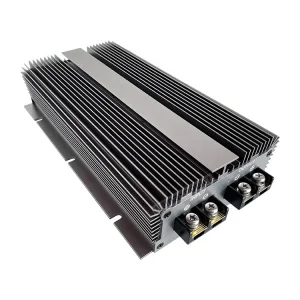
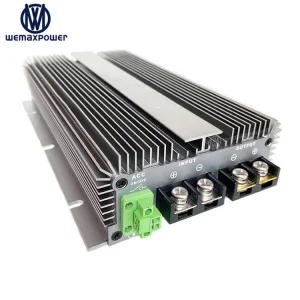
Explore our top-tier marine, vehicular, and industrial power conversion systems, meticulously designed to meet the rigorous demands of global buyers.
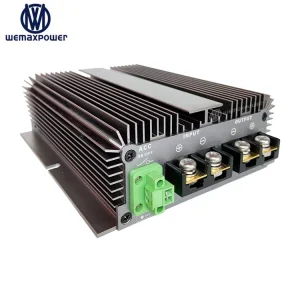
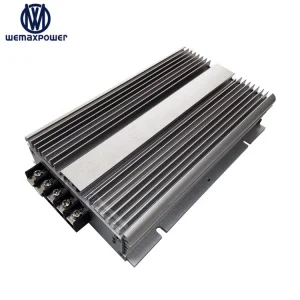
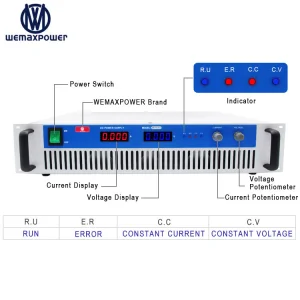
Empowering next-generation marine, automotive, and industrial hardware architectures with high-resiliency power supply technology.
In modern industrial and vehicular operations, electrical systems are subject to unprecedented environmental stresses. Traditional converters and charging systems, designed for climate-controlled equipment racks, fall short when exposed to the high humidity of marine environments, the corrosive salt fog of coastal installations, or the intense mechanical vibrations of heavy-duty transport vehicles. This vulnerability has catalyzed the rapid evolution of IP67 and IP68 waterproof chargers and converters.
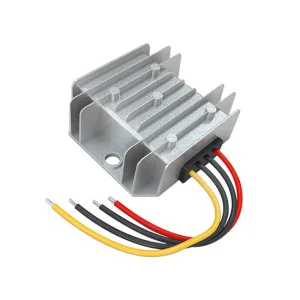
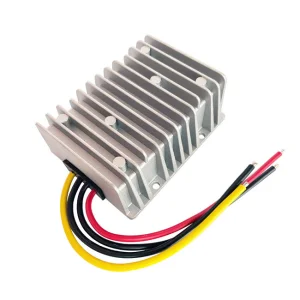
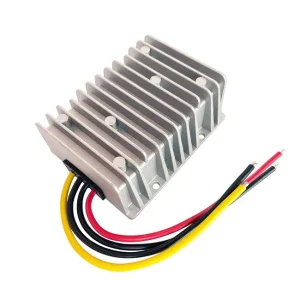
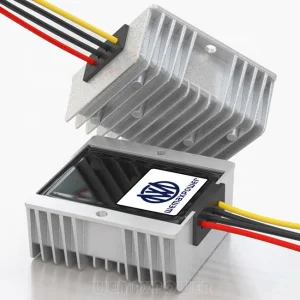
Unlike standard ventilation-cooled power units, an industrial waterproof charger must utilize hermetic sealing, typically achieved via high-conductivity silicone or epoxy potting compounds. This design blocks liquid and particulate ingress while functioning as a primary heat conduit, routing internal thermal load directly to the outer aluminum alloy heat sink chassis. Consequently, thermal management operates via conduction rather than convection, presenting a significant engineering challenge that only advanced power engineering facilities can successfully resolve.
B2B procurement agents, systems integrators, and OEM engineers evaluate power components based on holistic life-cycle reliability, compliance footprint, and performance efficiency. Key procurement vectors include:
Standard versus Industrial-Grade Waterproof Charging Systems:
| Parameters | Commercial-Grade | Industrial-Grade |
|---|---|---|
| Ingress Protection | IP20 - IP54 | IP67 - IP68 (Submersible) |
| Thermal Potting | Air Cooled / Fan | Thermally Conductive Epoxy |
| Vibration Tolerance | Low (<1G) | High (MIL-STD-810G compliant) |
| Conversion Eff. | 80% - 88% | 92% - 97% (Synchronous) |
| Operating Temp. | 0°C to +40°C | -40°C to +85°C (Derated) |
Our manufacturing portfolio integrates state-of-the-art power conversion technologies to deliver consistent, safe, and efficient power under any operational scenario.
Integrated microcontrollers implement precise multi-stage charging profiles (Constant Current, Constant Voltage, and Float) optimized for LiFePO4, AGM, and lead-acid battery chemistries to maximize battery life cycles.
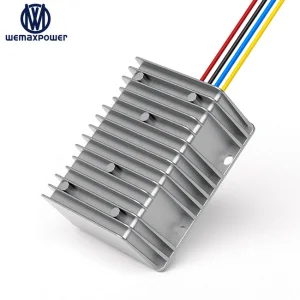
Using premium epoxy resin with high thermal conductivity, our modules eliminate air pockets, preventing moisture condensation and enabling highly efficient passive cooling through the heavy-duty aluminum shell.
Equipped with hardware-level safeguards, including over-voltage protection (OVP), short-circuit recovery, thermal shutdown, and reverse polarity protection, ensuring total operation site safety.
Shenzhen Wemaxpower Technology Co., Ltd. is a leading manufacturer with over 7 years of specialized experience in power supply engineering. Our product portfolio spans programmable DC power supplies, DC-DC converters, and robust waterproof power modules engineered for the global B2B procurement market.
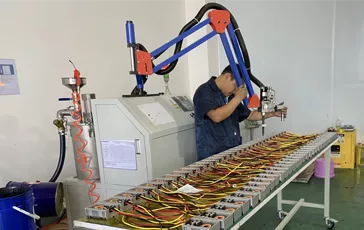
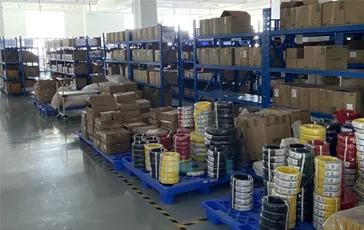
Based in China's Silicon Valley—Shenzhen—we leverage a highly concentrated supply chain to optimize component sourcing, prototyping speed, and assembly automation. This logistics capability ensures we can handle large-scale OEM/ODM runs with consistent precision.
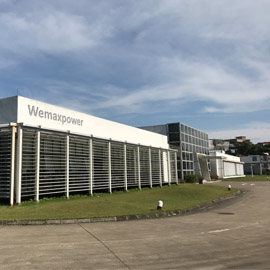
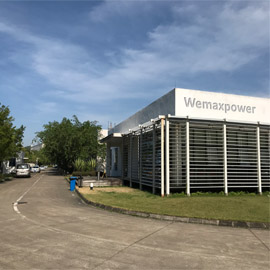
All products undergo a strict validation regime to guarantee defect-free operation under challenging field conditions.
Incoming semiconductors, magnetic cores, capacitors, and aluminum enclosures are subjected to strict parametric verification before production.
Automated Optical Inspection (AOI) and circuit testing check component placement, soldering joints, and transformer turns-ratios.
Units undergo dynamic input/output load testing, ripple factor analysis, and high-potential (hipot) isolation tests to ensure compliance.
Every charger runs under continuous full load in environmental ovens. This process forces infant mortality failures in the factory, preventing field breakdowns.
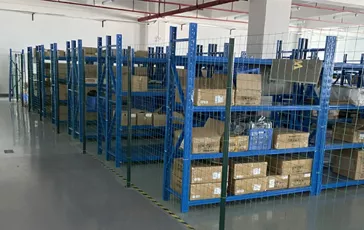
The factory team will deliver you quality-guaranteed orders
Through ISO9001-certified workflows, we guarantee shipment consistency for logistics and installation schedules globally.

As micro-mobility, electrification, and off-grid automation scale globally, industrial power systems face higher operational standards. According to current global market indices, the demand for ruggedized IP67 power units has increased, driven by growth in marine logistics, recreational vehicles, and automated industrial complexes.
In North America and Northern Europe, fleet operators are retrofitting conventional vehicles with advanced auxiliary lithium battery systems (LiFePO4). This migration requires intelligent DC-to-DC chargers capable of operating alongside smart alternators without causing starter battery depletion or damage to alternator rectifiers. In Asia-Pacific and South America, the focus is on rural electrification, telecommunications infrastructure, and automated mining operations where severe dust and monsoon rains render open-frame switch-mode power supplies (SMPS) obsolete within weeks.
Salt spray accelerates electrochemical corrosion on PCB copper traces. Our hermetically sealed DC-DC chargers operate reliably when installed in boat engine compartments, charging auxiliary 36V or 48V trolling motor banks from the primary engine battery.
Modern RVs require constant battery-to-battery charging while driving. Our intelligent 12V-to-14.6V modules regulate variable voltages from the starter alternator, delivering a stable, temperature-compensated profile to onboard battery storage.
Automated Guided Vehicles in industrial warehouses run long duty cycles, exposing them to concrete dust, debris, and high-frequency vibrations. Solid-state, potted buck-boost regulators withstand these forces, keeping control microchips powered.
Answers to critical electrical engineering and logistics questions from our technical support team.
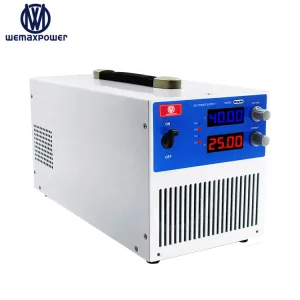
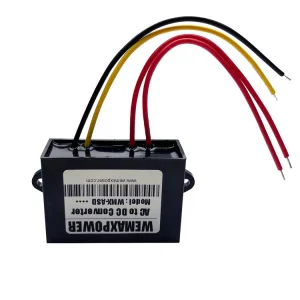
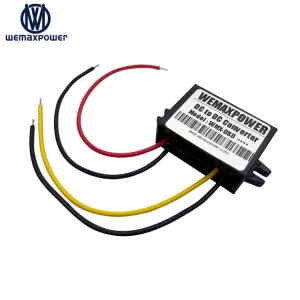
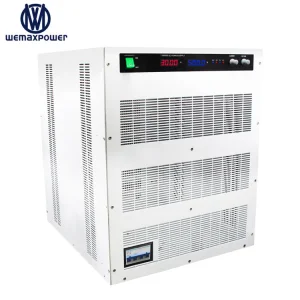
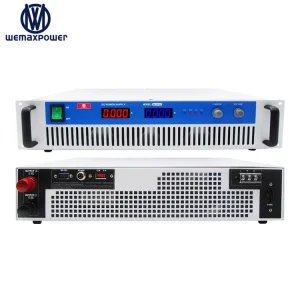
Complete your deployment with our range of buck-boost regulators, industrial-grade AC-DC converters, and laboratory switching power supplies.
 Wemax Power