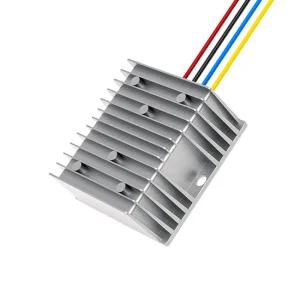
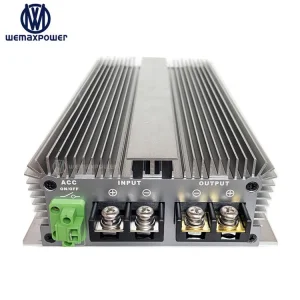
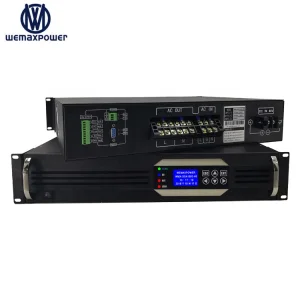
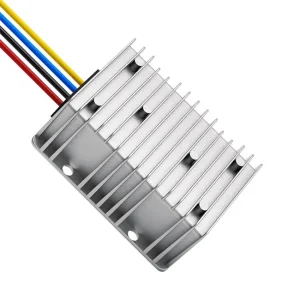
Explore our state-of-the-art intelligent power management chargers and boost converters, built for reliable industrial operations.
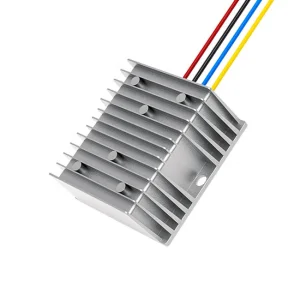
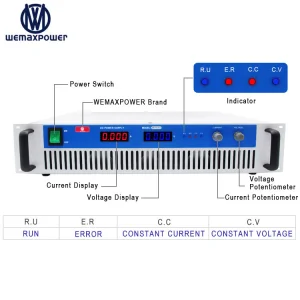
Understanding the vital role of galvanic isolation in modern high-power and commercial applications.
As smart cities and advanced grid frameworks expand worldwide, the requirement for robust power isolation has reached critical levels. Industrial isolated DC-DC converters act as fundamental safety elements, blocking loop currents, reducing noise, and protecting sensitive computational chips from catastrophic high-voltage failures.
The electric vehicle industry relies heavily on galvanic isolation to isolate high-voltage traction batteries (often ranging from 400V to 800V) from the low-voltage auxiliary controls and infotainment electronics. A failure in isolation could jeopardize passenger safety and control architecture.
In solar PV systems and wind energy harvesting, isolated converters facilitate bidirectional power flow between storage elements (such as LiFePO4 batteries) and the power grid. They guarantee clean energy management, stable output parameters, and prevent reverse feed faults.
In today's highly integrated industrial networks, electrical safety, noise rejection, and system protection are paramount. Galvanic isolation physically and electrically decouples the input and output circuits, allowing energy transfer exclusively through electromagnetic or optical couplings. Without it, standard voltage spikes or common-ground noise can easily disrupt low-voltage control systems or damage expensive equipment. As a leading CE-certified isolated converter manufacturer, Shenzhen Wemaxpower Technology Co., Ltd. builds ruggedized solutions designed to perform under harsh industrial conditions, ensuring uninterrupted performance in telecommunications, marine operations, and critical infrastructure.
The shift toward high power density, wide bandgap semiconductors, and intelligent monitoring.
Traditional silicon-based components are approaching physical limits. The industry is rapidly adopting wide-bandgap (WBG) materials like GaN and SiC. These materials allow converters to operate at higher switching frequencies, reducing the physical size of inductors and transformers while keeping efficiency levels above 96%.
Modern battery chargers are no longer unidirectional. The rise of Vehicle-to-Grid (V2G) and smart battery management mandates bidirectional converters. The ability to return power dynamically from auxiliary battery packs back to primary grid systems or onboard vehicle electronics is a core focus for engineering teams globally.
To reduce profile heights in rack-mount and automotive configurations, custom planar windings printed directly onto the multilayer PCB are replacing heavy, wound wire transformers. This design enhances thermal performance, lowers leakage inductance, and improves overall power density.
Modern installations feature digital isolation telemetry. Microcontrollers on isolated converter systems log parameters like heat dissipation, input voltage dips, and current output. This allows real-time communications over CAN bus, PMBus, or Modbus protocols to enable predictive maintenance.
A deep comparative review of isolated vs. non-isolated converters across standard industrial parameters.
| Parameter/Feature | Isolated DC-DC Converters | Non-Isolated DC-DC Converters | Application Significance |
|---|---|---|---|
| Galvanic Isolation | Yes (Up to 3kVAC dielectric strength) | No (Common Ground) | Protects low-voltage control units from high-voltage transients. |
| Noise Immunity | Excellent (Breaks ground loops completely) | Moderate to Poor | Critical for precise medical instruments and sensor readings. |
| Efficiency Profile | 88% - 96% (Depending on LLC/Phase-shift topology) | 92% - 98% | Slight compromise in isolated converter efficiency due to transformer losses. |
| Safety Standard Compliance | CE, UL, EN 62368-1, EN 60601-1 (Medical) | Minimal standard options | Essential for human safety and system certifications. |
| Component Size / Weight | Larger (Due to magnetic transformer component) | Compact / Lightweight | Addressed by high-frequency planar transformer integration. |
| Operational Cost Factor | Higher (Advanced circuitry, custom magnetics) | Lower | High return on investment (ROI) by preventing system-wide hardware failures. |
A trusted manufacturing partner for global export markets, specializing in high-performance power modules.
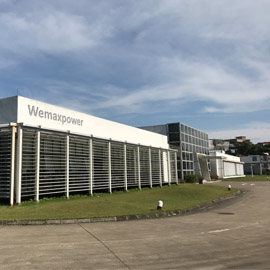
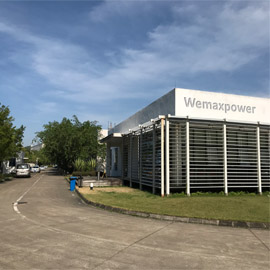
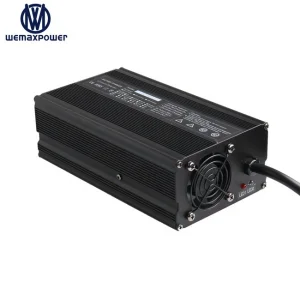
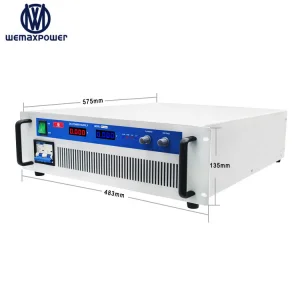
Shenzhen Wemaxpower Technology Co., Ltd. is a specialized manufacturer with 7 years of industrial expertise. Our extensive product catalog includes high-quality programmable DC power supplies, step-up/step-down isolated DC-DC converters, smart battery chargers, and specialized power modules designed to perform under demanding conditions.
We focus on supplying global markets with dependable product quality and robust customer support. To ensure we meet international quality standards, every unit leaving our production line undergoes a comprehensive, mandatory 4-step Quality Control (QC) process:
Thorough testing of inbound components, capacitors, diodes, magnetic cores, and semiconductors before they reach the production lines.
In-circuit testing and checking sub-assemblies to identify component defects early in production.
Complete calibration of voltage, current limits, safety isolations, and protective circuitry against operational profiles.
Each unit undergoes continuous burn-in testing under full thermal load to ensure operational stability and weed out infant mortality failures.
"The factory team will deliver you quality-guaranteed orders."

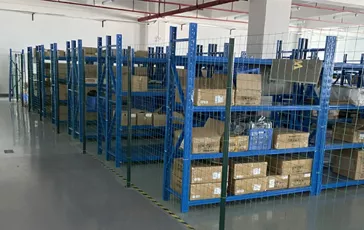
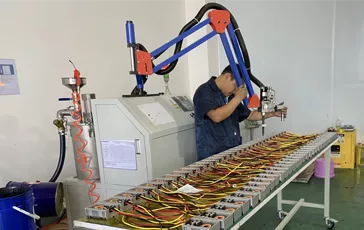
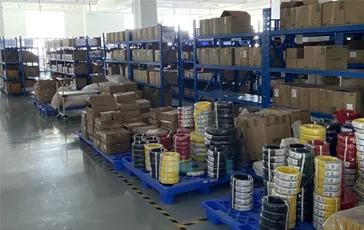
Engineered to deliver stability and safety in challenging real-world deployment scenarios.
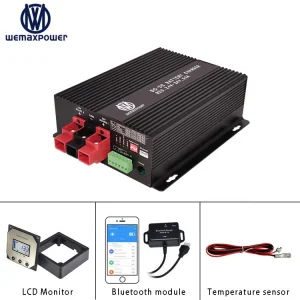
Auxiliary LiFePO4 batteries require precise charging algorithms. Our isolated buck-boost chargers, designed with integrated ACC functionality, allow campervan electrical systems to charge secondary battery packs directly from the vehicle alternator. Isolation prevents cross-current loops and keeps voltage fluctuations away from sensitive RV electronics.
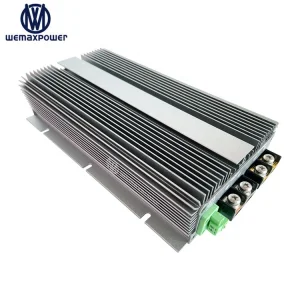
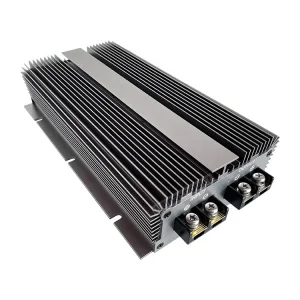
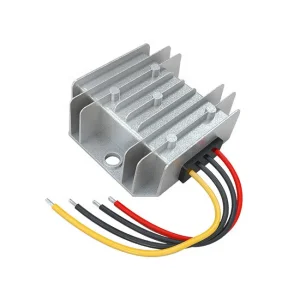
Modern electric weeders, tractors, and agricultural equipment rely on stable low-voltage outputs to power GPS steering and computerized mapping systems. Our high-efficiency DC-DC isolated converters step down high traction voltages to stable outputs, preventing electromagnetic interference from high-power electric motors.
Moisture and salt water create conductive paths, increasing the risk of short-circuits. Isolated step-down converters with IP65-IP67 ingress ratings provide a barrier against hull corrosion. They stabilize voltages to safely power navigation screens, communication gear, and bilge pumps.
Deep engineering insights into how isolated converters optimize safety and performance.
Designing isolated power converters requires balancing efficiency, magnetic integration, thermal performance, and electromagnetic compatibility (EMC). High-efficiency topologies, such as LLC resonant converters, phase-shifted full-bridge architectures, and active clamp forward converters, minimize switching losses. By incorporating a high-frequency transformer, the physical connection between input and output is severed, eliminating common-mode noise and protecting downstream electronics from severe voltage fluctuations.
In applications using wide input voltage ranges (such as 20V to 120V down to a stable 12V output), the converter must handle high transient voltages. To prevent circuit damage, our engineers integrate custom transient voltage suppressors (TVS diodes) and high-quality ceramic capacitors alongside magnetic transformers featuring low inter-winding capacitance. This design reduces EMI coupling across the isolation barrier, facilitating compliance with CE standards like EN 55032 and EN 55035.
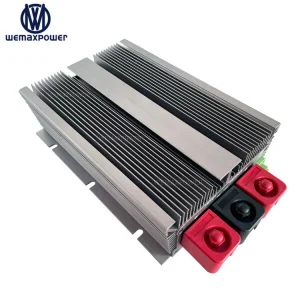
Thermal management is another critical design factor. By using high-thermal-conductivity potting materials and CNC aluminum enclosures, heat is transferred efficiently from internal components to the outer shell. This design enables operation across extended temperature ranges (-40°C to +85°C) without requiring loud, failure-prone active cooling fans.
Browse our robust voltage regulators, high-voltage variable power units, and pure sine wave inverters.
Get authoritative answers on safety standards, installation requirements, and power efficiency.
 Wemax Power