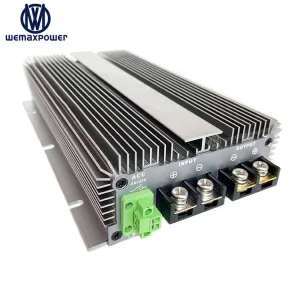
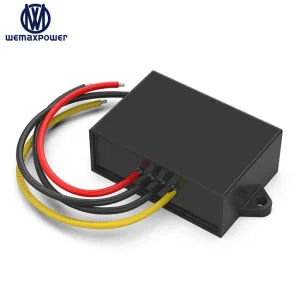
Explore our core selection of state-of-the-art power converters, engineered to deliver exceptional efficiency, stability, and high performance in demanding commercial environments.
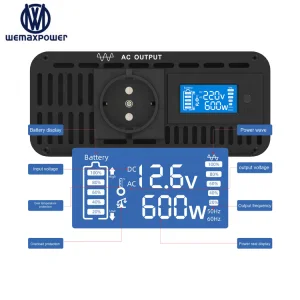
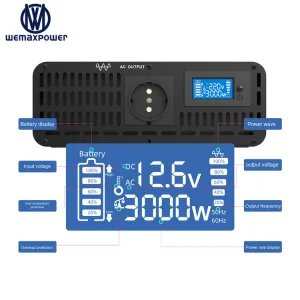
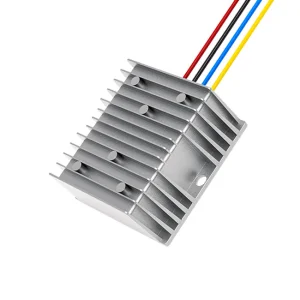
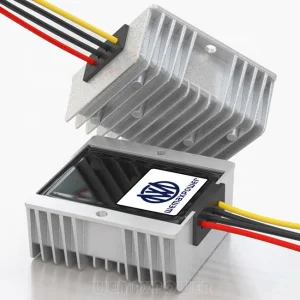
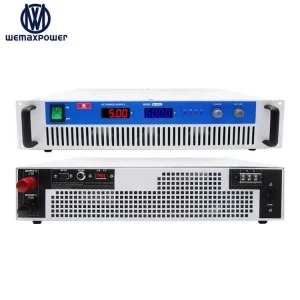
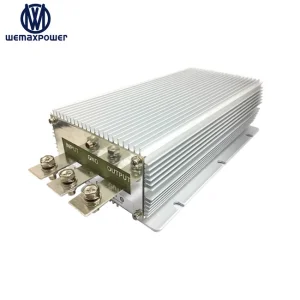
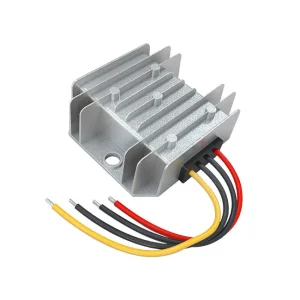
An in-depth analysis of global energy dynamics, cutting-edge semiconductor technologies, and structural advantages of modern Chinese power module manufacturing.
In modern electronic systems, high voltage power supplies (HVPS) function as the foundational critical subsystem. These devices convert standard input voltages into stable, highly-regulated high-voltage outputs ranging from hundreds to tens of thousands of volts. As industrial applications trend towards higher energy densities and stricter electromagnetic compliance (EMC), manufacturing precision-grade programmable DC power supplies and rugged DC-DC converters has become highly specialized.
Shenzhen Wemaxpower Technology Co., Ltd. stands at the forefront of this industrial sector. With over 7 years of specialized manufacturing experience, our enterprise designs and deploys advanced solutions including programmable DC power supplies, highly isolated DC-DC converters, and specialized marine-grade charging modules. By integrating state-of-the-art switching topologies with rigorous thermal and mechanical architectures, we supply global industries with robust, high-efficiency power electronics tailored for uninterrupted operations.
The power electronics sector is experiencing a massive paradigm shift, driven by innovations that push the boundaries of power density, thermal dissipation, and conversion efficiency:
The integration of Silicon Carbide (SiC) and Gallium Nitride (GaN) transistors allows for significantly higher switching frequencies compared to traditional silicon counterparts. This reduces the footprint of passive magnetic components (transformers and inductors), lowering system weight while elevating efficiency to over 96-98%.
Modern programmable power systems rely on High-Speed DSPs (Digital Signal Processors) to execute real-time loop control algorithms. This delivers ultra-low ripple voltage, fast transient recovery times, and complex programmable profiles through digital communication protocols like CAN-bus, Modbus, or RS485.
By using planar transformers directly on multilayer PCBs instead of traditional wire-wound models, manufacturers achieve consistent leakage inductance, excellent thermal conduction, and low-profile packaging required for slim industrial racks.
Industrial buyers and systems integrators face strict constraints when sourcing power conversion units. The key technical considerations include:
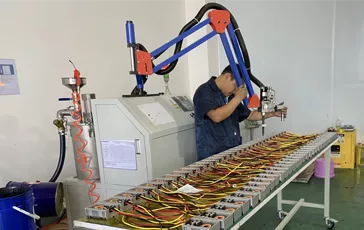
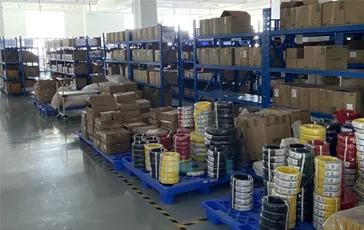
Manufacturing power supplies with long MTBF (Mean Time Between Failures) requires robust quality control and advanced production ecosystems. Shenzhen's technology cluster gives Wemaxpower access to trace-tested raw components, state-of-the-art wave soldering systems, and automatic optical inspection (AOI) machines.
Every single power supply and converter manufactured in our facility undergoes a rigorous 4-step Quality Control (QC) process to ensure it operates reliably in demanding real-world conditions:
Every active component, capacitor, inductor, and enclosure is tested for electrical compliance and structural integrity before entering the assembly line.
Sub-assemblies and populated PCBs undergo in-circuit testing (ICT) to verify trace values, solder quality, and component orientations.
Fully assembled units are subjected to static and dynamic electrical loads, testing line regulation, load regulation, and safety isolation parameters.
Completed units undergo extended burn-in runs under high temperatures and full-rated load conditions to eliminate early life cycle failure rates.
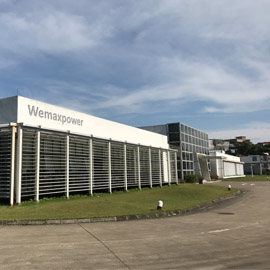
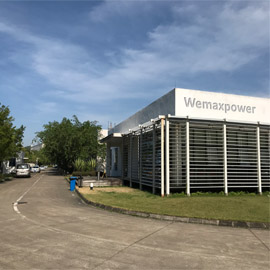
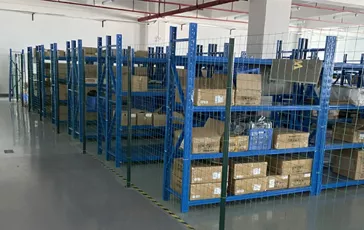

Our comprehensive power conversion systems are deployed across diverse applications worldwide, providing stable and efficient power:
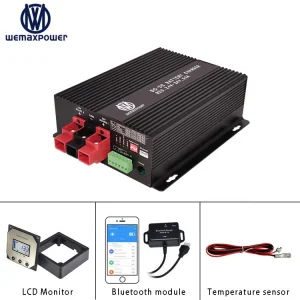
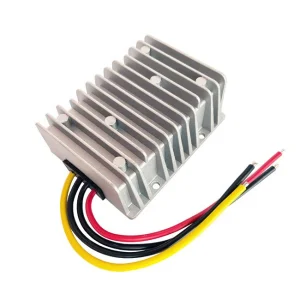
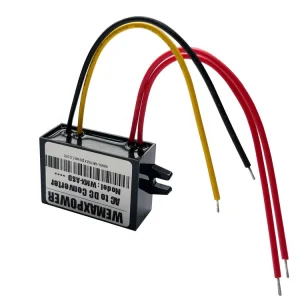
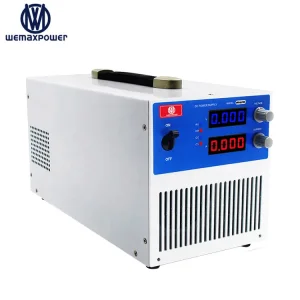
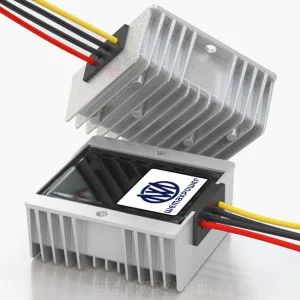
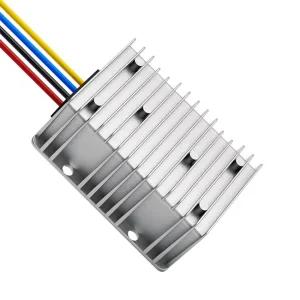
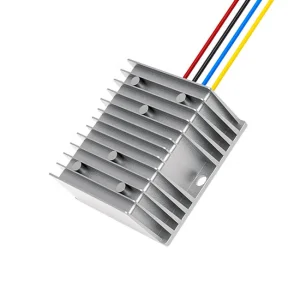
Explore our high-efficiency battery chargers, waterproof step-down converters, and variable AC-DC power supplies configured to meet high industrial design standards.
Expert answers addressing the practical engineering queries, selection metrics, and operational guidelines for high voltage and DC conversion topologies.
 Wemax Power